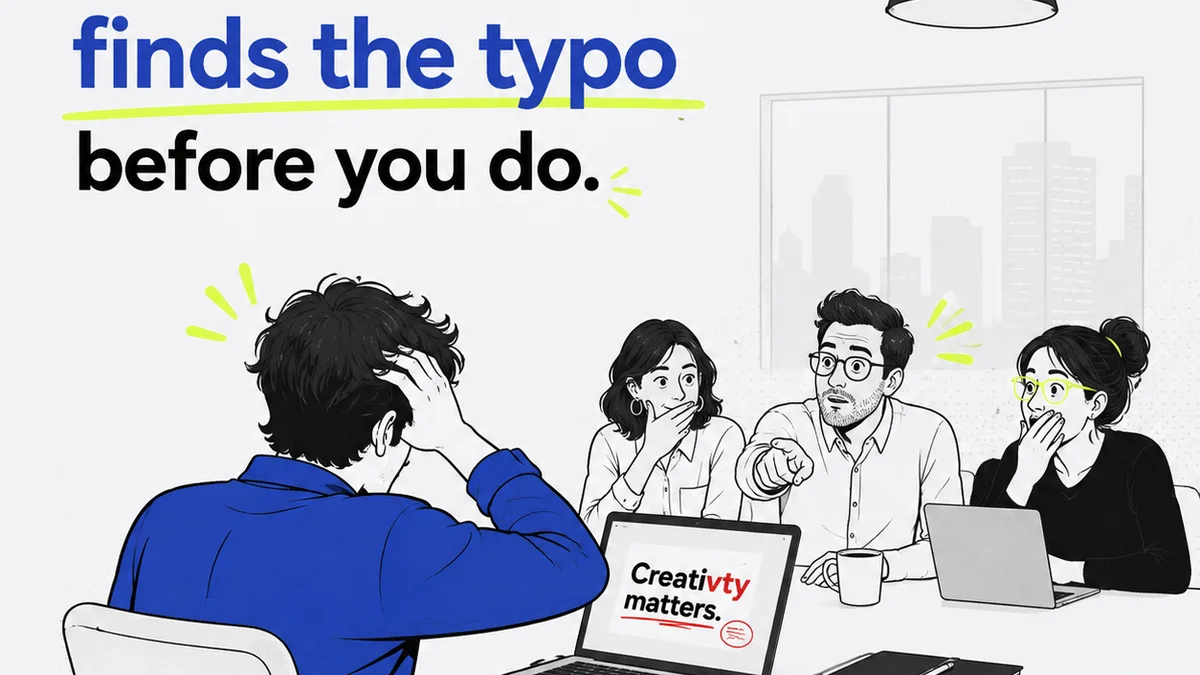
Everyone knows you need a design QA checklist. It’s the bedrock of a professional creative process. It prevents embarrassing errors, streamlines revisions, and keeps clients happy.
But is yours actually working? Most checklists are static, generic, and quickly become outdated. They’re treated like a compliance document, not a living tool for quality improvement. That's the common assumption:
Frequently asked questions
What is the main purpose of a design QA checklist?
The primary purpose of a design QA checklist is to ensure that creative work meets established standards for quality, accuracy, and functionality before it's delivered to clients or published. It helps catch errors, inconsistencies, and deviations from the brief.
How often should a design QA checklist be updated?
A design QA checklist should be reviewed and updated regularly, ideally quarterly or after significant project debriefs. It needs to evolve with new project types, client feedback trends, and technological changes.
What are the common pitfalls of design QA checklists?
Common pitfalls include making the checklist too generic, treating it as a static document, not involving the whole team in its creation or updates, and failing to check for context-specific requirements. Over-reliance on automated checks without human oversight is also an issue.
Who should be involved in creating or updating a design QA checklist?
Ideally, the entire creative team should be involved. This includes designers, project managers, QA specialists (if you have them), and even account managers who interact directly with clients. Different perspectives ensure comprehensive coverage.