Everyone agrees that clear communication is key to a successful design project. You’ve probably heard it a thousand times: listen to your client, understand their needs, and iterate. None of that is wrong. But it’s incomplete.
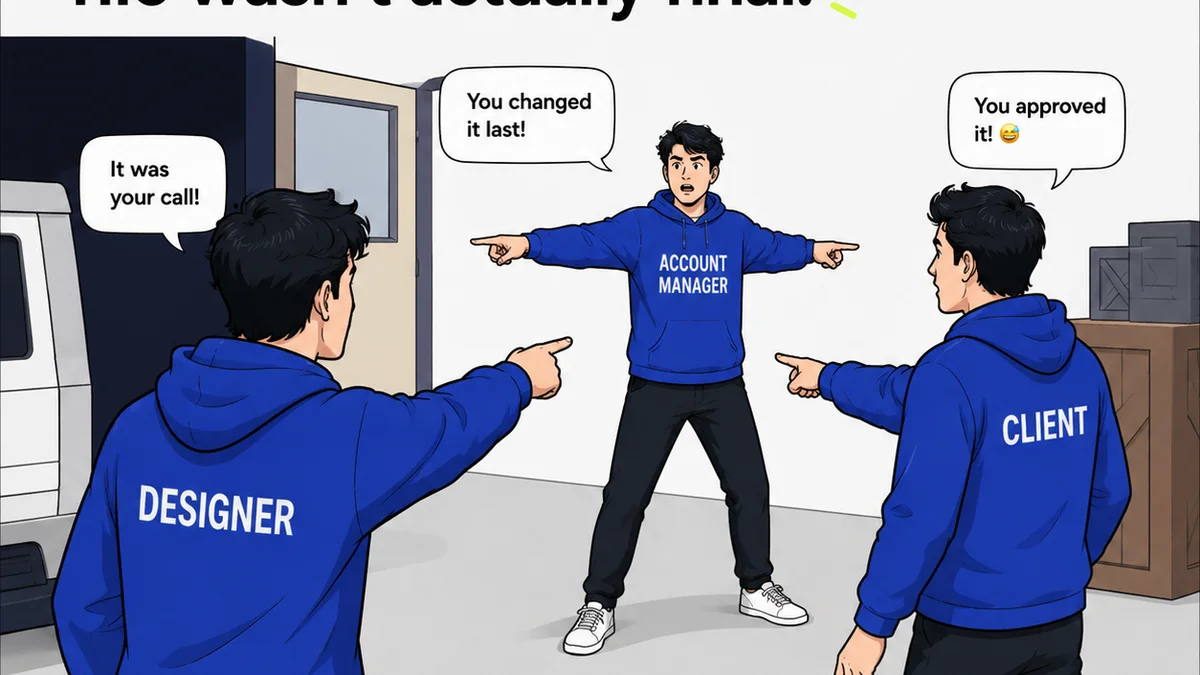
The hard truth? Most agencies are drowning in a sea of scattered feedback, missed revisions, and subjective critiques. This chaos isn't just frustrating; it's actively costing you time, money, and client trust. Improving design review isn't about better listening; it's about better systems.
1. The Myth of the 'Perfect Brief'
Agencies often assume that if the initial brief is solid, the rest will flow. They put all their energy into the kickoff, believing that a signed-off brief is a shield against future problems. This is a dangerous oversimplification.
A brief is a starting point, not a destination. Client needs evolve. Stakeholders change. New ideas emerge. Expecting a static document to govern a dynamic creative process is unrealistic.
The Real Problem: Static Information
The real issue is treating the brief as a final artifact rather than a living document. This leads to:
- Misaligned expectations later in the project.
- Clients feeling their evolving needs aren't heard.
- Designers feeling like they're working in a vacuum.
- Endless
Frequently asked questions
What are the biggest challenges in design review for agencies?
Common challenges include scattered feedback across multiple channels (email, Slack, calls), unclear or subjective critiques, difficulty tracking revision history, managing multiple stakeholders with conflicting opinions, and the sheer time spent chasing approvals and clarifications.
How can agencies centralize client feedback?
Using a dedicated platform like Revue allows all feedback, comments, and annotations to live in one place, directly on the creative assets. This eliminates the need to sift through emails or messages and ensures everyone is referencing the same version.
What's the difference between design review and design approval?
Design review is the process of providing feedback and critique on creative work. Design approval is the formal sign-off, indicating that the client accepts the work as complete. Both are critical stages, but review often involves iteration before approval can be given.
How can technology help improve design review?
Technology, specifically specialized tools, can automate communication, centralize feedback, provide version control, track revision history, and streamline the approval process. This reduces manual effort and minimizes errors.