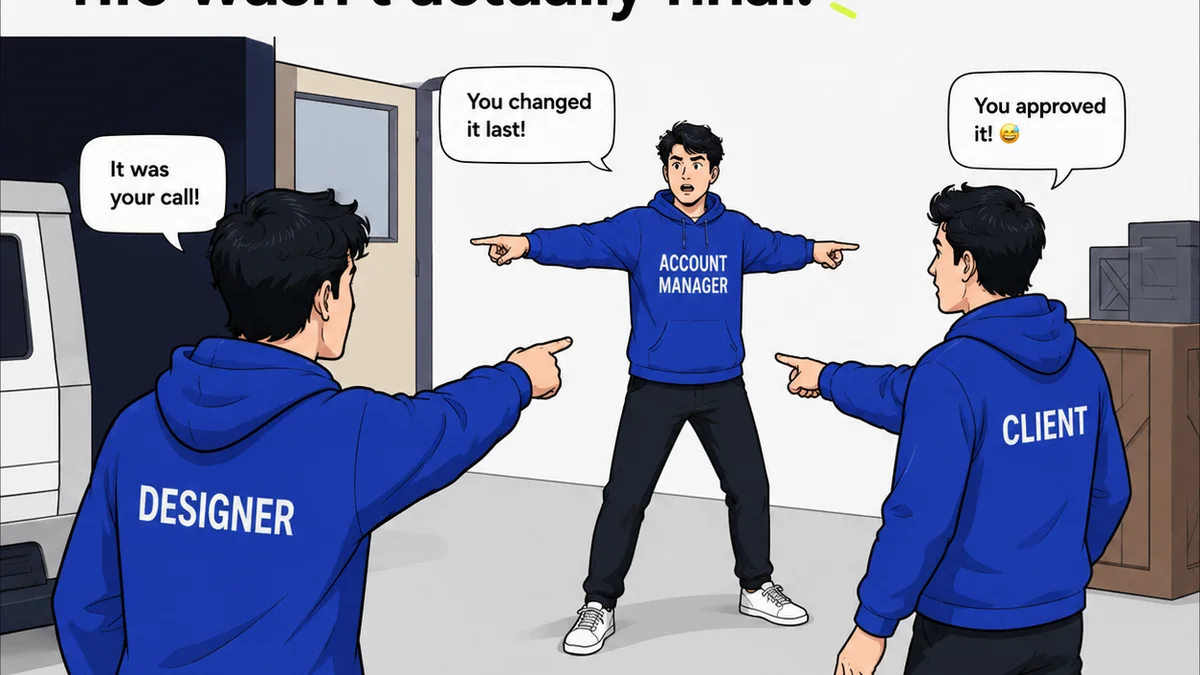
Everyone knows design review is crucial. You’ve probably heard it all before: communicate clearly, give constructive feedback, and iterate. None of that is wrong. But it’s incomplete.
The hard truth is that most in-house design review processes are broken because they’re built on assumptions that don’t match the reality of creative work. We assume feedback is always clear, that revisions are straightforward, and that everyone’s on the same page. They rarely are.
This leads to wasted time, frustrated designers, and clients who don’t get what they need. It’s a cycle that kills productivity and erodes creative quality. But it doesn’t have to be this way.
Let's break down how to fix your in-house design review process.
1. Stop Treating Feedback as an Event, Start Treating it as a Process
The biggest mistake is viewing design review as a single meeting or a single email chain. It’s not. It’s a continuous flow of information, decisions, and actions.
When you treat it like an event, you get:
- Vague, high-level comments that are impossible to act on.
Frequently asked questions
What are the biggest challenges in in-house design review?
Common challenges include unclear or conflicting feedback, lengthy revision cycles, lack of clear approval steps, difficulty tracking changes, and misalignment between designers and stakeholders. This often leads to missed deadlines and decreased creative quality.
How can I ensure feedback is actionable?
Actionable feedback is specific, objective, and directly tied to project goals. Avoid vague statements. Instead of 'I don't like this,' try 'This headline doesn't clearly communicate the core benefit, which is X. Can we revise it to be more direct?' Providing context and examples also helps.
What's the role of a centralized platform in design review?
A centralized platform like Revue acts as a single source of truth for all project assets, feedback, revisions, and approvals. This eliminates scattered communication, ensures everyone sees the latest version, and provides a clear audit trail, significantly reducing confusion and speeding up the process.
How do I manage revisions effectively?
Effective revision management involves clear version control, defined scope for each revision round, and a structured way to track who requested what and what was changed. Using a dedicated tool helps maintain context and prevents outdated feedback from being acted upon.