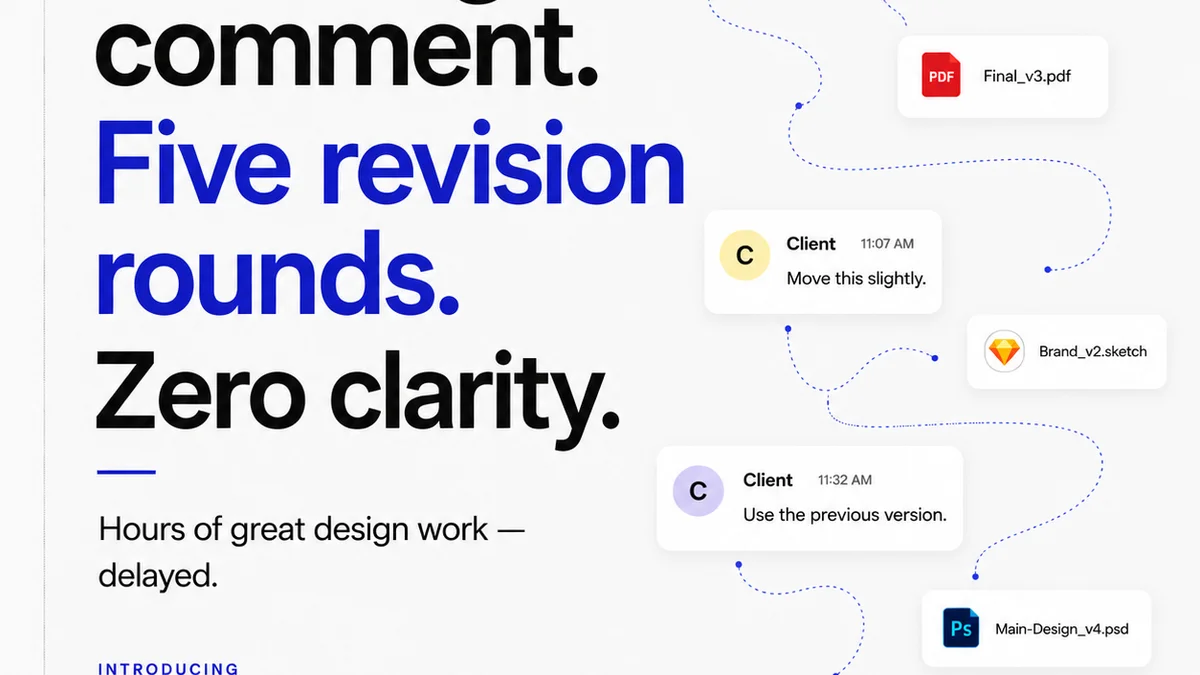
Everyone assumes remote design reviews are just like in-person ones, only with more Zoom calls. That’s not wrong, but it’s a massive oversimplification. It misses the fundamental disconnect that happens when you can’t just lean over someone’s shoulder or gather around a single monitor.
The hard truth? Remote design review isn't just a logistical challenge; it’s a fundamental workflow problem. It requires a complete rethink of how feedback is gathered, processed, and acted upon.
1. Embrace Asynchronous Feedback
The default for remote teams is often synchronous communication: hop on a call, share your screen, talk it out. This feels efficient in the moment, but it’s a killer for deep work and detailed feedback.
Meetings are disruptive. They pull people out of flow state. They often devolve into quick, surface-level comments rather than considered critiques. And for global teams, time zone differences make synchronous review a logistical nightmare.
The Problem with 'Live' Reviews
- Interrupts focused design time.
- Encourages rushed, shallow feedback.
- Creates scheduling headaches for distributed teams.
- Doesn't create a clear, documented record of feedback.
Instead, prioritize asynchronous feedback. This means giving team members structured time and tools to review work on their own schedule.
Think detailed comments on specific elements, annotated screenshots, and clear, written critiques. This allows for more thoughtful input and builds a comprehensive record.
2. Define Clear Review Stages and Roles
A common failure point is ambiguity. Who is reviewing? What are they looking for? When is feedback due? Without clarity, remote reviews become chaotic.
Establish distinct stages for design review. Not every stakeholder needs to weigh in on every iteration.
Typical Review Stages
- Internal Team Review: Designers, art directors, project managers. Focus on technical execution, adherence to brief, and overall quality.
- Client/Stakeholder Review: The final decision-makers. Focus on strategic alignment, user experience, and brand consistency.
- QA/Technical Review: Developers, QA testers. Focus on feasibility, implementation details, and bug identification.
Clearly define the role of each reviewer. Are they providing approval? Suggesting minor tweaks? Identifying major blockers? This prevents conflicting feedback and streamlines the process.
Assign Specific Reviewers
Don't rely on a general
Frequently asked questions
What is asynchronous design review?
Asynchronous design review means providing and receiving feedback on design work without requiring all parties to be present at the same time. This allows team members to review materials on their own schedule, leading to more thoughtful and documented feedback.
How can remote teams improve client feedback?
Remote teams can improve client feedback by using tools that centralize comments and revisions, clearly defining review stages and roles, and encouraging detailed, written feedback rather than relying solely on live meetings.
What are the benefits of structured design reviews?
Structured design reviews ensure that feedback is targeted, actionable, and comes from the right people at the right time. This reduces confusion, prevents conflicting comments, and speeds up the revision process, especially for remote teams.
How does Revue help with remote design reviews?
Revue helps remote teams by providing a centralized platform for collecting and managing client feedback, tracking revisions and approvals, and ensuring all stakeholders have visibility into the review process. This reduces reliance on scattered emails and chaotic meetings.