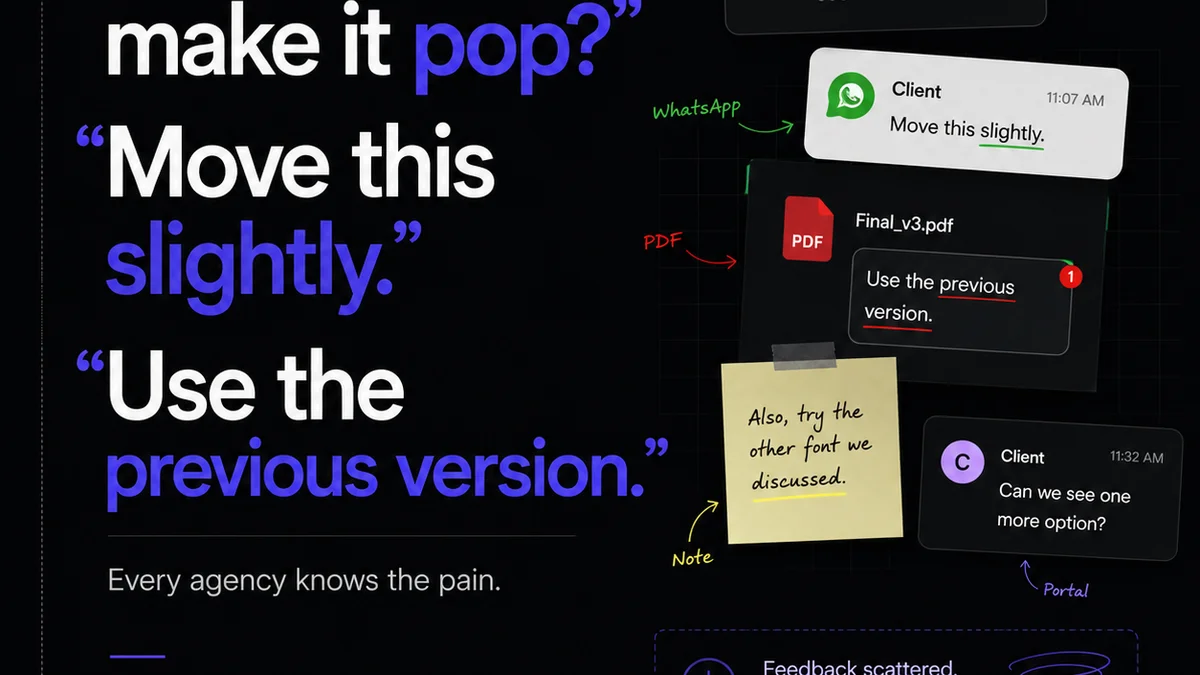
Everyone wants faster design review turnaround time. Clients demand it. Project managers plead for it. Creative directors just want to get on with the next thing. The common assumption? It’s the designers. They’re slow. They’re easily distracted. They’re not prioritizing effectively.
None of that is wrong. But it’s incomplete.
The real bottleneck for design review turnaround time isn’t usually the creative execution. It’s the communication and management *around* the creative work. It’s the chaos of feedback, the endless revisions, and the lack of clear process.
1. The Feedback Avalanche: Too Much, Too Soon, Too Vague
Client feedback is the lifeblood of good design. But it’s often delivered like a firehose: a torrent of subjective opinions, conflicting requests, and outright demands that feel impossible to parse.
This isn’t just annoying; it actively slows down the review process. Designers get bogged down trying to decipher meaning, prioritize conflicting inputs, and then re-do work that might have been perfectly fine if the feedback had been clearer.
Symptoms of Feedback Chaos
- Feedback arrives in scattered emails, Slack messages, and even text messages.
- Multiple stakeholders provide conflicting directions without a clear point person.
- Comments are vague: “I don’t like it,” “Make it pop,” “This feels wrong.”
- Feedback is often reactive, not proactive, coming *after* significant work is done.
- There's no clear way to track which feedback has been addressed and which hasn't.
The result? Designers spend more time trying to understand the feedback than implementing it. This kills momentum and inflates the timeline.
2. The Revision Rollercoaster: Endless Cycles, No Clear End
Design review isn't a single event; it's a process. But when that process is undefined, it can easily become a rollercoaster of endless revisions. Each cycle adds time, cost, and frustration.
The problem often stems from a lack of defined scope for revisions. What constitutes a 'revision' versus a 'new request'? When is the design 'done'?
Why Revisions Go Rogue
- No clear definition of done for each revision cycle.
- Clients or stakeholders aren't aware of the scope of revisions included in the original brief.
- Lack of a clear approval gate before starting major revisions.
- The design team doesn't have a system for tracking changes and ensuring all feedback is addressed systematically.
- No mechanism to push back on unreasonable revision requests that fall outside the scope.
Each
Frequently asked questions
What is the biggest cause of slow design review turnaround time?
The biggest cause is typically inefficient communication and management around the creative work, not the creative execution itself. Vague feedback, scattered communication channels, and undefined revision processes create bottlenecks.
How can I get clearer feedback from clients?
Establish a structured feedback process. Use a centralized tool where clients can leave specific comments directly on the design. Provide clear guidelines on what type of feedback is expected and who the primary point person is. Schedule dedicated feedback sessions rather than relying on ad-hoc messages.
What are the signs of a chaotic design review process?
Signs include feedback arriving through multiple scattered channels (email, Slack, text), conflicting directions from different stakeholders, vague comments like 'make it pop,' and endless revision cycles without a clear definition of 'done'.
How can I prevent endless revision cycles?
Clearly define the scope of revisions upfront in your project brief. Implement clear approval gates before starting revisions. Use a system to track all feedback and ensure each item is addressed systematically. Don't be afraid to push back on requests that fall outside the agreed scope.