Everyone agrees that digital asset Quality Assurance (QA) is essential. It’s the final gate before client delivery, the last chance to catch typos, broken links, or misaligned logos. You’re probably already doing it. You’ve got a checklist. Maybe you’ve even got a dedicated QA person.
None of that is wrong. But it’s incomplete.
The hard truth? A simple checklist isn’t enough. True digital asset QA isn’t just about spotting surface-level errors. It’s about ensuring the asset *works* – that it meets strategic objectives, aligns with brand guidelines, and is technically sound for its intended platform. It’s about preventing problems before they even get to the final review stage.
1. Beyond the Checklist: Defining True QA
Most teams think QA means finding visual glitches. A misplaced comma. A color that’s slightly off. A button that doesn’t quite align.
This is *part* of QA, sure. But it’s the easiest part. And often, the least important.
The real challenge lies in ensuring the asset is:
- On-brief: Does it actually solve the client’s problem?
- On-brand: Does it adhere to all brand guidelines?
- Technically sound: Is it built correctly for its intended use (e.g., correct file formats, responsive design, accessibility)?
- Error-free: Yes, this includes typos and visual bugs, but also functional errors like broken links or non-working features.
Focusing only on the visual polish means you might deliver a stunning-looking asset that completely misses the mark strategically or fails technically. That’s not good QA. That’s just proofreading.
2. The Root Causes of QA Failures
Why do so many digital asset QA processes fall short? It usually boils down to a few core issues:
a. Unclear Briefs and Scope Creep
If the initial brief was vague, how can anyone QA effectively? If the scope changed midway through production without updating the core objectives, QA becomes a guessing game.
Assets are often built based on evolving requirements, not a fixed, understood goal. This makes it nearly impossible to verify if the final output truly addresses the original need.
b. Siloed Feedback and Communication Breakdowns
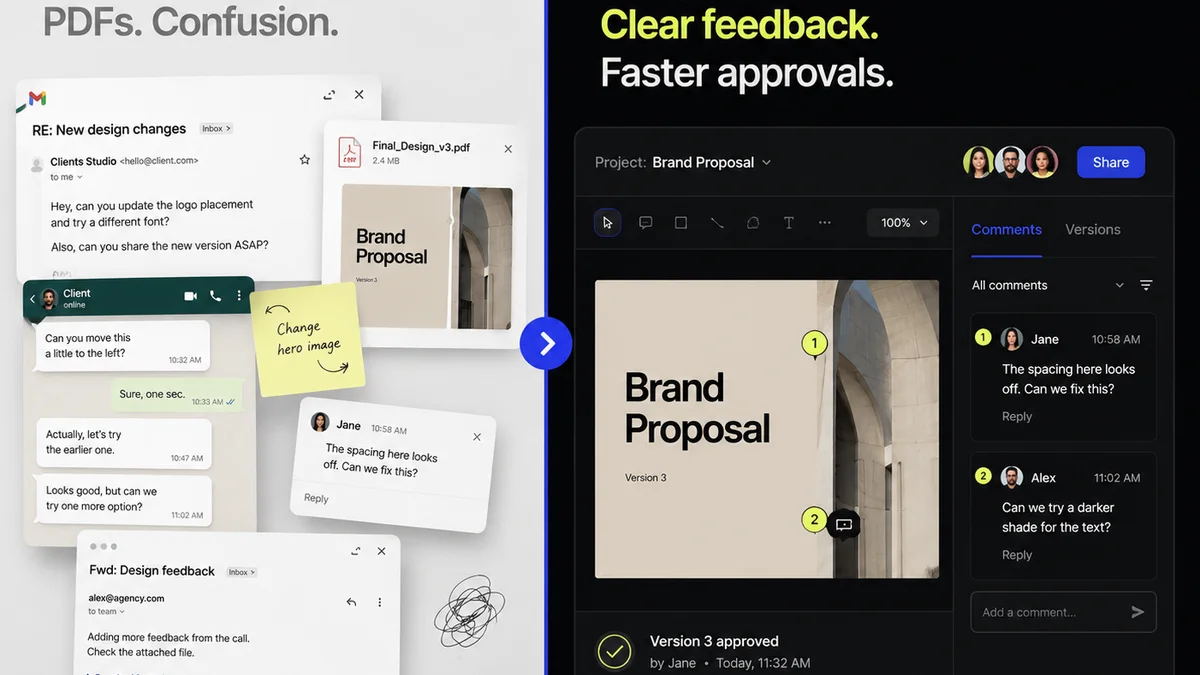
When feedback comes in disconnected chunks, or from multiple sources without context, the team building the asset (and the QA team) can easily misunderstand requirements. This leads to assumptions and errors that aren't caught until the eleventh hour.
Did the client *really* mean to change the CTA? Was that feedback for the desktop version or mobile? Without a clear thread, misinterpretations are inevitable.
c. Rushed Timelines and Lack of Resources
QA is often the first step to get squeezed when deadlines loom. Teams might skip thorough checks or rely on the same overworked designer to give it a quick once-over.
This isn’t just bad practice; it’s a false economy. The time saved in QA is invariably lost (and then some) dealing with client revisions or fixing post-launch issues.
d. Inconsistent Standards and Processes
Does every team member know what constitutes a
Frequently asked questions
What's the difference between basic QA and strategic QA for digital assets?
Basic QA focuses on surface-level errors like typos and visual glitches. Strategic QA goes deeper, verifying if the asset meets the original brief, aligns with brand guidelines, and is technically sound for its intended platform.
How can unclear briefs lead to QA problems?
If the initial brief lacks clarity or objectives, the team building the asset may make incorrect assumptions. This makes it difficult for QA to verify if the final output truly addresses the client's needs, leading to potential rework or client dissatisfaction.
What are the biggest time-wasters in digital asset QA?
Rushed timelines, siloed feedback, lack of clear standards, and focusing only on visual errors are major time-wasters. These issues often lead to missed requirements, unnecessary revisions, and costly post-launch fixes.
Can a dedicated QA tool help improve digital asset QA?
Yes, specialized tools can streamline the QA process by centralizing feedback, tracking revisions, and providing a clear audit trail. This reduces miscommunication and ensures all stakeholders are working with the most up-to-date information.