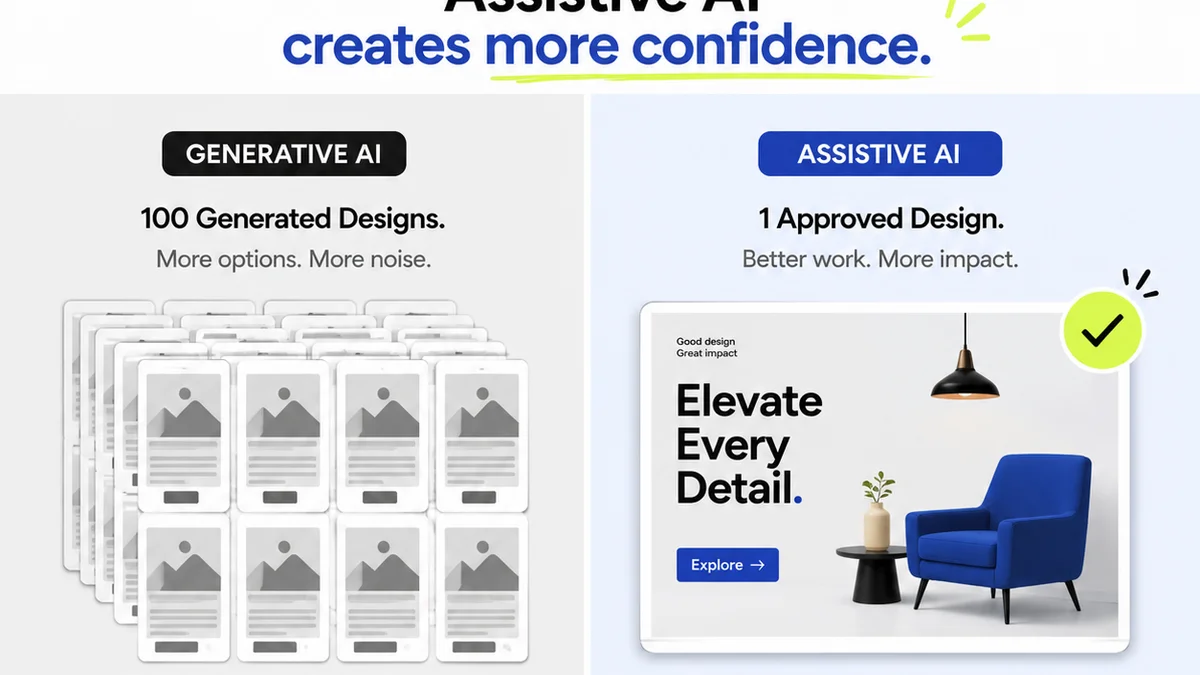
Everyone talks about streamlining enterprise creative workflow. They push for faster turnaround times, fewer revisions, and more output. It sounds good. It sounds like progress.
But that's not the whole story. Focusing only on speed misses the real problem.
The hard truth? True improvement in enterprise creative workflow isn't about doing things faster. It's about doing them *better*. It’s about building a system that can handle complexity, absorb unexpected changes, and consistently deliver high-quality creative work without burning out your teams.
1. Define Your Actual Workflow, Not the Ideal One
Most organizations have a documented workflow. It looks great on paper. It's a series of perfectly linear steps, with clear handoffs and zero ambiguity. It’s a fantasy.
Your *real* workflow is messier. It involves:
- Ad-hoc requests that bypass the system.
- Unclear feedback loops that create rework.
- Missed deadlines due to unforeseen dependencies.
- Teams working in silos, unaware of each other's progress.
- A constant scramble to find the latest version of a file.
You can't fix what you don't acknowledge. Start by mapping out what *actually* happens, not what you wish would happen.
Mapping the Reality
Gather your teams. Use a whiteboard or a digital tool. Trace the path of a typical project from initial brief to final delivery. Be brutally honest about:
- Where does feedback come from? Who gives it?
- How is feedback collected and consolidated?
- What are the typical revision cycles?
- Who signs off at each stage?
- What tools are used at each step, and how do they connect (or not connect)?
- Where are the bottlenecks? Where does work get stuck?
This exercise is crucial for any enterprise creative workflow initiative.
2. Centralize Feedback and Approvals
Scattered feedback is the enemy of efficient creative production. Emails, Slack messages, verbal notes, sticky notes on printouts – this is chaos. It leads to misinterpretations, missed comments, and endless back-and-forth.
For enterprise teams, this chaos multiplies. Imagine dozens of stakeholders, multiple projects, and distributed teams. It’s a recipe for disaster.
The Cost of Dispersed Feedback
- Version Control Nightmares: Which version is the latest? Which feedback applies to this version?
- Lost in Translation: Ambiguous comments or notes misinterpreted by the creative team.
- Endless Chasing: Creatives spending more time chasing down feedback than doing creative work.
- Scope Creep: Uncontrolled feedback leading to features or changes that were never agreed upon.
- Delayed Approvals: Key stakeholders unavailable or comments buried, holding up the entire project.
A centralized system for feedback and approvals isn't a luxury; it's a fundamental requirement for a robust enterprise creative workflow.
What Centralization Looks Like
This means having a single source of truth for all project-related communication and decisions. Think:
- A platform where stakeholders can leave comments directly on the creative asset.
- Clear workflows for feedback submission and approval.
- Automated notifications to keep everyone informed.
- A transparent audit trail of all feedback and decisions.
This is where you gain control over the most unpredictable part of the creative process.
3. Standardize Your Processes, Not Your Creativity
There's a common misconception that standardizing processes stifles creativity. This is usually true when standardization means rigid templates and prescriptive rules that dictate *how* to be creative.
But that's not what we mean here. We're talking about standardizing the *operational* aspects of your workflow. The surrounding structure, not the core creative act.
What to Standardize
- Briefing Intake: A consistent template for project briefs ensures all necessary information is captured upfront.
- File Naming Conventions: Prevents confusion and makes it easier to track assets.
- Asset Handoffs: Clear procedures for how files are delivered to the next stage or external partners.
- Quality Assurance Checklists: A defined set of criteria for reviewing work before it goes live.
- Communication Protocols: When to use email, when to use the project management tool, when to schedule a meeting.
Standardizing these operational elements creates a predictable environment. This predictability frees up creative energy, rather than draining it. It reduces cognitive load on your teams so they can focus on the actual creative problem-solving.
The Benefits of Operational Standardization
When the operational scaffolding is solid, you see:
- Reduced errors and rework.
- Faster onboarding for new team members.
- Improved collaboration across departments.
- Greater accountability and transparency.
- A more resilient workflow that can handle disruptions.
This is key to improving enterprise creative workflow at scale.
4. Embrace Agile Principles (Wisely)
Agile methodologies, often associated with software development, can be incredibly beneficial for creative teams. But applying them rigidly, without adaptation, can backfire spectacularly.
The goal isn't to run daily stand-ups for a print campaign. It's about adopting the *spirit* of agile: iterative development, flexibility, and continuous feedback.
Key Agile Concepts for Creatives
- Iterative Design: Instead of a single, massive delivery, break down projects into smaller, manageable chunks. Present work in stages for feedback.
- Cross-Functional Teams: Bring together designers, copywriters, strategists, and project managers early and often.
- Adaptability: Be prepared to pivot based on feedback or changing market conditions. Don't get locked into a single vision.
- Regular Retrospectives: After key project phases or at the end of a project, discuss what went well, what didn't, and how to improve next time.
This iterative approach allows for course correction before significant resources are invested in the wrong direction. It’s a powerful tool for improving enterprise creative workflow by reducing risk.
Avoiding Agile Pitfalls
Be mindful of:
- Over-Scrumming: Don't let process become more important than the work.
- Unrealistic Sprints: Creative work doesn't always fit neatly into two-week sprints.
- Feedback Overload: Ensure your feedback loops are managed, not just frequent.
Adapt agile principles to fit your creative context, don't force your creative context into a rigid agile mold.
5. Implement Robust Quality Assurance
This is often the step that gets rushed or skipped entirely. The pressure to deliver means QA can become an afterthought. But for enterprise-level creative work, this is a critical failure point.
Poor quality doesn't just look bad; it can have significant business consequences: damaged brand reputation, legal issues, or simply wasted marketing spend.
What Does Quality Mean?
It’s more than just checking for typos. Robust QA in creative production includes:
- Brand Consistency: Does the work adhere to brand guidelines?
- Technical Accuracy: Are specifications met (e.g., print specs, digital specs, accessibility standards)?
- Functional Correctness: Does the interactive element work as intended?
- Legal & Compliance: Are all necessary disclaimers, trademarks, and legal requirements present?
- Accessibility: Does the creative meet accessibility standards (e.g., WCAG)?
- Client/Stakeholder Requirements: Does it fulfill the brief?
Having a defined QA process, with checklists and designated reviewers, is essential.
Building QA into the Flow
Don't treat QA as a final gate. Integrate it throughout the process:
- Self-Review: Creatives should review their own work against a checklist before submitting.
- Peer Review: A colleague reviews the work for a fresh perspective.
- Manager Review: A team lead or manager checks for strategic alignment and quality.
- Specialist Review: Legal, accessibility, or technical experts review at appropriate stages.
This layered approach ensures that issues are caught early, when they are cheapest and easiest to fix. It's a non-negotiable for improving enterprise creative workflow.
Where Revue Fits In
Improving enterprise creative workflow is about bringing order to complexity. It’s about creating clear lines of communication, managing feedback efficiently, and ensuring quality.
Revue is built to address these exact challenges.
It provides a centralized platform for all creative assets, making version control a non-issue. Stakeholders can provide consolidated, contextual feedback directly on the work, eliminating ambiguity and endless email chains. Revision tracking is built-in, giving you full visibility into the approval process and who signed off on what, and when.
This structured environment reduces friction, minimizes rework, and ensures that your teams can focus on delivering exceptional creative work, not on wrangling chaotic feedback. It’s the operational backbone that supports a more resilient and effective creative workflow.
Final Thought
The pursuit of faster creative output is understandable. But true progress lies in building a workflow that is not just fast, but resilient, transparent, and high-quality. It’s about creating a system where great work can consistently emerge, even amidst the inevitable complexities of enterprise operations.
Are you building a faster machine, or a better one?
Frequently asked questions
What is the biggest mistake companies make when trying to improve creative workflow?
The biggest mistake is focusing solely on speed and output volume. This often leads to cutting corners on quality, increasing rework, and burning out creative teams. True improvement comes from building a resilient, transparent, and efficient system that supports high-quality creative delivery.
How can I get stakeholders to provide clear and consolidated feedback?
Implement a centralized feedback platform where comments are tied directly to the creative asset. Standardize the briefing process to ensure all necessary context is provided upfront. Clearly define who is responsible for providing feedback at each stage and establish clear approval workflows. This reduces ambiguity and ensures feedback is actionable.
Is it possible to use agile principles in a non-software creative environment?
Yes, but with adaptation. Focus on the core agile principles of iteration, collaboration, and flexibility. Break down large projects into smaller phases for feedback, encourage cross-functional team involvement, and conduct regular retrospectives to learn and improve. Avoid rigid adherence to software-specific agile ceremonies.
How important is Quality Assurance (QA) in creative workflow?
QA is critical, especially in enterprise settings. It goes beyond checking for typos to include brand consistency, technical accuracy, functional correctness, legal compliance, and accessibility. Integrating QA throughout the process, rather than treating it as a final step, ensures issues are caught early and cost-effectively.