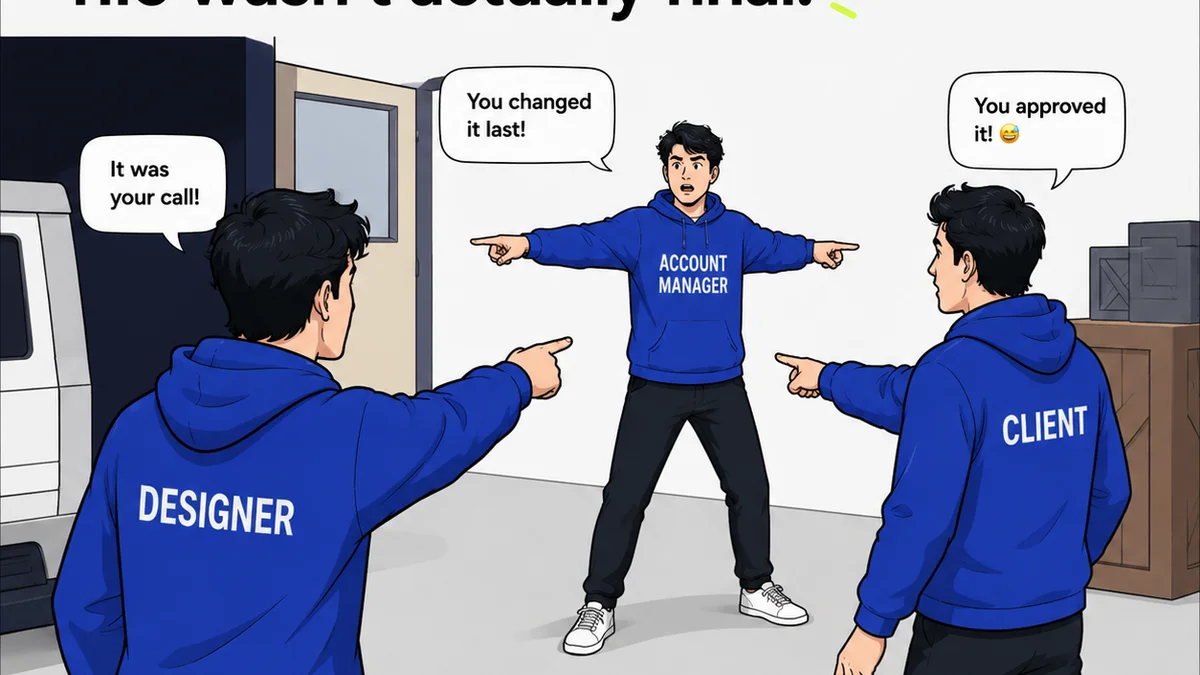
Everyone agrees that clear, actionable feedback is crucial for good design. Especially in large organizations. It’s the bedrock of efficient creative workflows. That’s the common wisdom, anyway.
But if that’s true, why is enterprise design feedback so often a chaotic mess? Why do projects get bogged down in endless revision cycles? Why do the best ideas get lost in translation?
The hard truth is that
Frequently asked questions
What are the biggest challenges in enterprise design feedback?
Common challenges include scattered communication channels (email, chat, docs), lack of clear ownership for feedback, subjective critiques without justification, and difficulty tracking revisions. This leads to delays, misunderstandings, and decreased creative quality.
How can I ensure feedback is actionable?
Actionable feedback is specific, objective, and states the desired outcome. Instead of 'I don't like this,' try 'The button contrast is too low according to WCAG AA guidelines, making it difficult to read for users with visual impairments. Please increase the contrast.' Providing context and rationale makes feedback more useful.
What role does technology play in improving feedback?
Technology can centralize communication, provide version control, and create audit trails. Tools that allow for direct annotation on designs, structured comment systems, and integrated approval workflows are key to overcoming the chaos of manual feedback processes.
How do I get buy-in for new feedback processes in a large enterprise?
Start by demonstrating the pain points of the current system through concrete examples of delays or errors. Pilot new tools or processes with a small, receptive team to show measurable improvements in efficiency and output quality. Quantify the benefits (time saved, fewer revisions) to build a case for wider adoption.