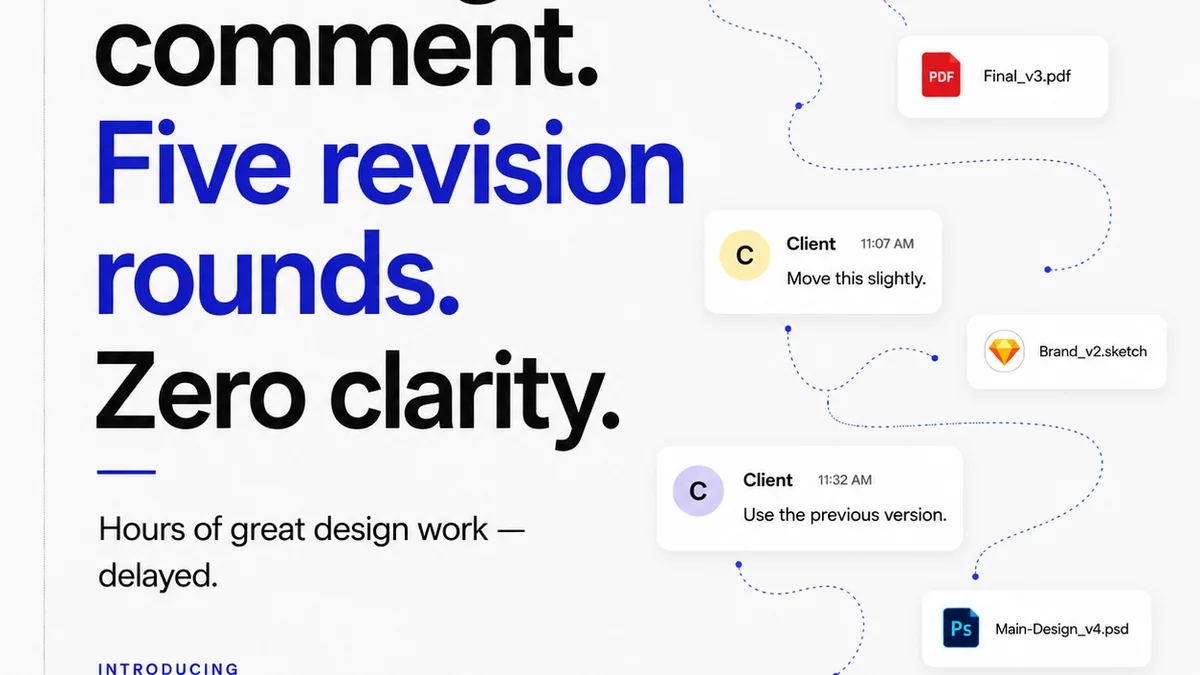
Everyone talks about marketing approval software as a way to speed things up. Get feedback faster, get sign-off quicker, launch on time. It’s the promise of efficiency, the dream of frictionless creative delivery.
None of that is wrong. But it’s incomplete.
The hard truth? Most marketing approval software doesn't inherently make your process better. It just digitizes your existing bottlenecks. The real improvements aren't in the software's feature set, but in how you *use* it to reshape your actual workflow.
1. The Illusion of Speed: Why More Tools Don't Equal Faster Approvals
You bought the software to accelerate approvals. But what if your current process is the real drag? Adding a fancy tool to a broken system is like putting a turbocharger on a unicycle. It won't get you where you want to go, any faster.
Think about it:
- Are you getting bogged down by endless rounds of vague feedback?
- Does your team spend more time chasing down stakeholders than reviewing creative?
- Are revisions lost in email chains or Slack messages?
- Is there confusion about who needs to approve what, and when?
If any of this sounds familiar, your approval process is the problem, not the absence of a specific software feature. The software just makes the existing pain more visible.
The Real Bottleneck: Misaligned Expectations and Unclear Briefs
Approvals aren't slow because the software is clunky. They're slow because the foundation is shaky.
A clear, concise brief is the bedrock of any successful project. Without it, stakeholders can't provide targeted feedback, leading to subjective critiques and endless revisions. This isn't a software issue; it's a strategic one.
When expectations are fuzzy from the start, the approval cycle becomes a guessing game. The software just becomes the scoreboard for that game.
2. Centralization: More Than Just a Shared Folder
Many marketing approval tools tout centralization as a key benefit. And it is. But what does
Frequently asked questions
What is the biggest misconception about marketing approval software?
The biggest misconception is that the software itself will automatically speed up your process. In reality, it's how you *use* the software to improve your underlying workflow that drives efficiency. A tool can't fix a fundamentally broken process.
How can I reduce vague feedback in my approval process?
Focus on the brief. Ensure it's crystal clear, outlines specific goals, and defines success metrics. Use annotation tools within your approval software to provide precise feedback, rather than general comments. Train stakeholders on how to give actionable feedback.
What are the key benefits of centralizing feedback?
Centralization ensures all feedback, revisions, and approvals are in one place, creating a single source of truth. This reduces confusion, prevents lost comments, speeds up communication, and provides a clear audit trail for project history.
How does better workflow improve marketing approval software usage?
When your workflow is optimized for clarity, defined roles, and timely input, the approval software becomes a powerful enabler, not just a digital filing cabinet. It facilitates communication, streamlines reviews, and makes tracking progress seamless.