Everyone agrees that getting client proofing approvals quickly is crucial for agency success. It keeps projects moving, cash flowing, and everyone sane. You've probably heard the usual advice: better briefs, clearer communication, more proactive client management. None of that is wrong. But it’s incomplete.
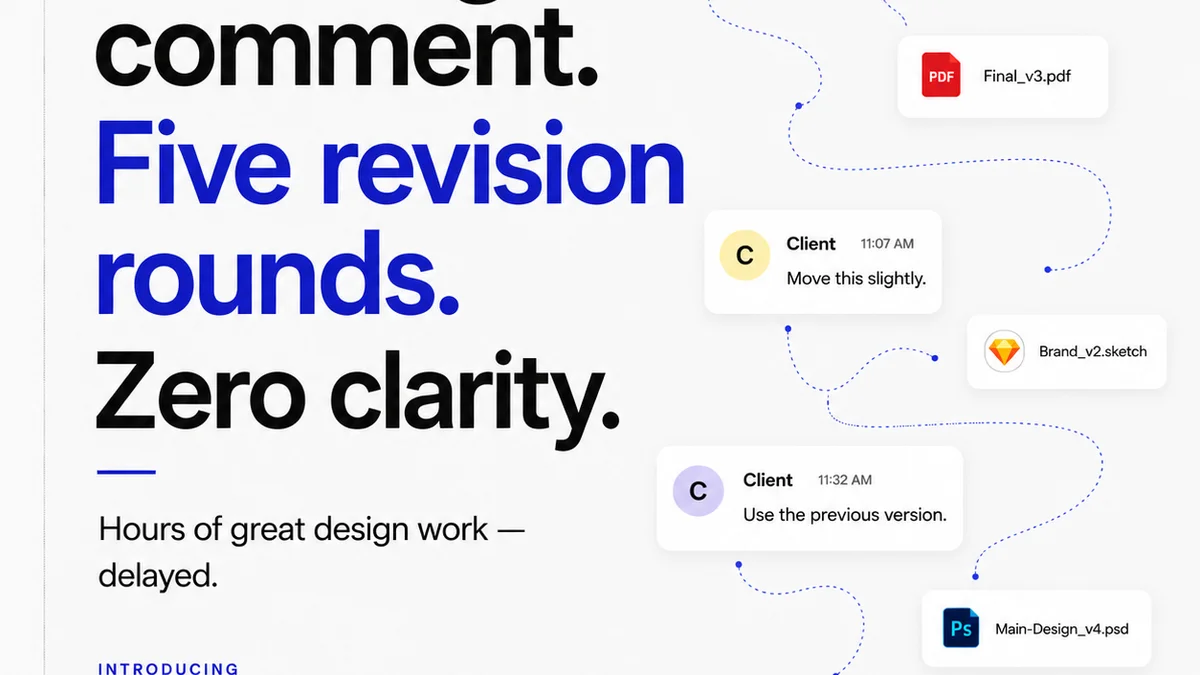
The hard truth? The bottleneck isn't usually a lack of communication. It's a lack of clarity and a broken process for handling feedback. You can brief a client perfectly, but if the review process is messy, you'll still face delays.
1. The Real Enemy: Feedback Chaos
Think about the last time a project stalled waiting for approval. Was it because the client didn't understand the brief? Unlikely. More often, it’s because:
- Feedback was vague or contradictory.
- Multiple stakeholders weighed in, with conflicting opinions.
- The review process itself was a black hole, with no clear ownership or timeline.
- Revisions were made without clear direction on what to change.
This chaos isn't just frustrating; it's expensive. It eats up billable hours, demoralizes your team, and strains client relationships. The core problem is how feedback is collected, managed, and actioned.
The Myth of the 'Final' Brief
A great brief is the foundation. But even the best brief can't account for the messy reality of client review. Clients change their minds. New stakeholders emerge. Market conditions shift. Relying solely on the initial brief to prevent approval delays is setting yourself up for disappointment. The proofing process needs its own robust structure.
2. Deconstructing the Approval Bottleneck
Let's break down where things typically go wrong in the creative proofing process:
The Feedback Avalanche
Clients often feel pressure to provide *all* their feedback at once. This can lead to a massive dump of comments, making it hard to prioritize or even understand what's most important. Sometimes, they'll send one round of feedback, then immediately have more thoughts after seeing the revised work.
The Email Chain Black Hole
Feedback buried in long email threads is a disaster. It's hard to track, easy to miss, and impossible to get a clear overview of the requested changes. Important comments get lost, leading to rework and frustration.
The 'Design by Committee' Syndrome
When multiple client contacts are involved, each with their own opinion, the creative team gets pulled in a dozen directions. Without a clear decision-maker or a structured way to consolidate feedback, the result is often a diluted, compromised design that satisfies no one.
The Vague Comment Trap
Phrases like “Make it pop,” “I don’t like it,” or “Needs more energy” are the bane of creative teams. They offer no actionable direction. The proofing workflow must encourage specificity.
Lack of Version Control
Clients might review an outdated version, or the creative team might miss incorporating a crucial revision. Without clear version tracking, misunderstandings are inevitable. This is a common cause of delayed approvals.
3. Building a Proofing Process That Actually Works
Improving proofing approvals isn't about magic. It's about implementing a structured, transparent process. Here’s how:
Establish Clear Roles and Responsibilities
Before the first round of proofing, define:
- Who is the *single* point of contact for feedback on the client side?
- Who has the final sign-off authority?
- Who is responsible for consolidating and communicating feedback internally?
This prevents the 'design by committee' issue before it starts.
Define Feedback Guidelines
Educate your clients on how to provide effective feedback. This might include:
- Requesting specific, actionable comments.
- Asking them to focus on the brief and objectives.
- Setting a deadline for feedback submission.
- Explaining what constitutes a 'revision' versus a 'new request'.
This sets expectations and encourages better input. For instance, instead of “I don’t like the blue,” encourage “The blue feels too corporate; can we explore warmer tones that align with our friendly brand personality?”
Centralize All Feedback
This is non-negotiable. All communication related to a specific proof should live in one place. This could be:
- A dedicated project management tool.
- A specialized creative proofing platform.
- A shared document with strict version control.
Avoid letting feedback scatter across emails, Slack messages, and random notes.
Implement Staged Approvals
Break down the approval process into manageable stages. For complex projects, consider:
- Initial concept approval.
- Layout and content approval.
- Final design approval.
This allows for course correction early on, when changes are less costly and time-consuming. It also helps manage client expectations about the iterative nature of creative work.
Use Visual Annotation Tools
Allowing clients to click directly on the artwork and leave comments is a game-changer. This visual context eliminates ambiguity and ensures feedback is precise. It’s far more effective than describing a change with text alone.
Set Clear Timelines and Expectations
Communicate turnaround times for both feedback and revisions upfront. If a client knows they have 48 hours to provide feedback, and you have 24 hours to implement it, the workflow becomes predictable. Be explicit about what happens if deadlines are missed.
4. Where Revue Fits In
Managing client feedback and approvals efficiently is what Revue was built for. It’s not just about collecting comments; it’s about bringing order to the chaos. Revue provides a central hub where:
- All feedback is consolidated: No more digging through emails. Comments are attached directly to the creative asset.
- Revisions are tracked: You can see exactly what changed between versions, and clients can easily compare them. This clarifies the approval history.
- Approvals are explicit: Clients can formally approve or reject versions, creating a clear audit trail.
- Communication is contextual: Discussions happen directly on the proof, ensuring everyone is on the same page.
This structured approach minimizes misunderstandings, reduces back-and-forth, and speeds up the entire proofing and approval cycle. It transforms a potential pain point into a streamlined, transparent process.
5. The Human Element: Managing Client Relationships
Even with the best tools and processes, human dynamics play a huge role. Building trust and rapport with your clients is paramount.
Educate, Don't Dictate
When introducing new processes, explain the 'why' to your clients. Frame it as a benefit to them – faster turnaround, clearer communication, better final results. This fosters collaboration rather than imposing rules.
Be Proactive, Not Reactive
Anticipate potential issues. If you know a client is prone to vague feedback, gently steer them towards specificity during the review. If you foresee scope creep, address it early and professionally.
Celebrate Wins
When an approval cycle goes smoothly, acknowledge it. A quick thank-you to the client for their clear feedback and timely approvals can go a long way in reinforcing positive behavior for future projects.
Final Thought
Improving proofing approvals isn't about finding a magic bullet. It's about recognizing that the traditional, email-heavy, fragmented feedback process is fundamentally broken. By implementing clear structures, centralizing communication, and fostering collaboration, you can move beyond the blame game and create a truly efficient creative workflow. Are you ready to stop chasing feedback and start getting approvals?
Frequently asked questions
What is the biggest mistake agencies make with proofing approvals?
The biggest mistake is relying solely on the initial brief and assuming clear communication will prevent issues. The real problem often lies in a chaotic, unstructured feedback and revision process that lacks clarity, centralization, and defined roles, leading to delays and rework.
How can I get clients to provide better feedback?
Educate your clients on providing specific, actionable feedback tied to project objectives. Establish clear guidelines for feedback submission, including deadlines, and use visual annotation tools that allow them to pinpoint comments directly on the creative assets.
What are the benefits of using a dedicated proofing tool like Revue?
Dedicated tools centralize all feedback, track revisions clearly, provide explicit approval/rejection capabilities, and keep communication contextual. This significantly reduces misunderstandings, speeds up the review cycle, and creates a transparent audit trail, saving time and reducing frustration for both the agency and the client.
How important is version control in the proofing process?
Version control is critical. It ensures that clients are reviewing the most current version of the work and that the creative team has a clear record of all changes made. Without it, misunderstandings about which version is being discussed or approved are common, leading to significant delays and rework.