Everyone says remote design feedback is hard. They talk about time zones, communication tools, and asynchronous workflows. None of that is wrong. But it’s incomplete.
The real problem isn't the tools or the time. It's that we haven't adapted our feedback *process* for a distributed world. We're still trying to jam old habits into new workflows.
This leads to:
- Endless comment threads.
- Vague, unactionable notes.
- Missed revisions.
- Frustrated designers.
- Unhappy clients.
Sound familiar?
Let’s cut through the noise. Here’s how to improve remote design feedback and get better results, faster.
1. Define Feedback Stages and Cadence
Feedback isn't a free-for-all. It needs structure. Think about the different types of feedback and when they should happen.
We often conflate different feedback needs. A client might want to check brand alignment, while a legal team needs to verify compliance, and a designer needs to know if a specific UI element is confusing.
These are distinct. They require different people, different levels of detail, and different timelines.
Pre-Production Feedback
This happens before any significant design work begins. It's about strategy, goals, and understanding the brief.
What to cover:
- Project objectives and KPIs.
- Target audience.
- Brand guidelines and voice.
- Competitive landscape.
- Technical constraints.
This isn't about liking a mood board. It's about ensuring everyone is aligned on the 'why' before we get to the 'what'.
In-Progress Feedback
This is where most of the iteration happens. It needs to be focused and actionable.
Break it down:
- Concept review: High-level direction. Is the core idea resonating?
- Design critique: Specific design elements. Usability, aesthetics, hierarchy.
- Functional review: Does it work as intended? Especially for interactive prototypes.
Crucially, set expectations for *when* feedback will be given and *how* it will be consolidated. A daily flood of individual comments is a recipe for disaster.
Final Approval Feedback
This is the last check. It should be a confirmation, not a place for major strategic shifts.
Focus on:
- Meeting the brief's objectives.
- Adherence to brand and technical requirements.
- Catching any final errors.
If major changes are requested here, it signals a breakdown earlier in the process.
2. Centralize and Consolidate Feedback
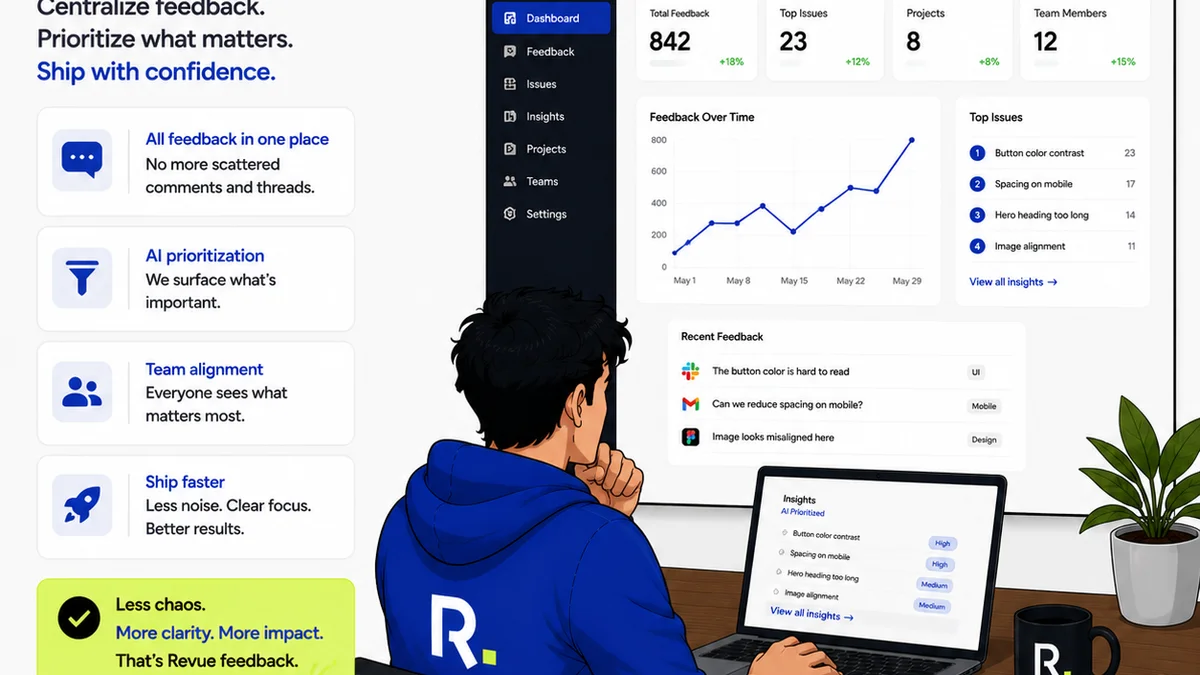
Scattered feedback is the enemy of efficient iteration. Emails, Slack messages, random notes on a PDF — it's chaos.
You need a single source of truth for all feedback related to a specific creative asset. This isn't just about convenience; it's about clarity.
When feedback is centralized, you can:
- See the full context of a comment.
- Track the history of revisions.
- Assign specific feedback items to team members.
- Ensure no comments get lost in the shuffle.
This requires a system. Whether it's a dedicated tool or a well-managed project management board, the goal is the same: one place for all feedback.
Think about the implications:
- No more
Frequently asked questions
What are the biggest challenges with remote design feedback?
The biggest challenges include time zone differences, communication breakdowns, lack of context, scattered feedback across multiple platforms, and difficulty in distinguishing between subjective opinions and objective requirements.
How can I make remote design feedback more actionable?
Make feedback specific, actionable, and contextual. Define clear criteria for success, use annotated comments directly on the design, and ensure feedback providers understand the project goals. Avoid vague statements like 'I don't like it'.
What is the role of a centralized platform in remote feedback?
A centralized platform provides a single source of truth for all feedback, comments, and revisions. It helps track feedback history, assign tasks, reduce miscommunication, and ensures all stakeholders are working with the latest information.
How often should feedback be requested in a remote setting?
The frequency depends on the project stage. Regular, structured check-ins are better than infrequent, overwhelming feedback sessions. Define clear milestones for feedback requests to maintain momentum without causing delays.