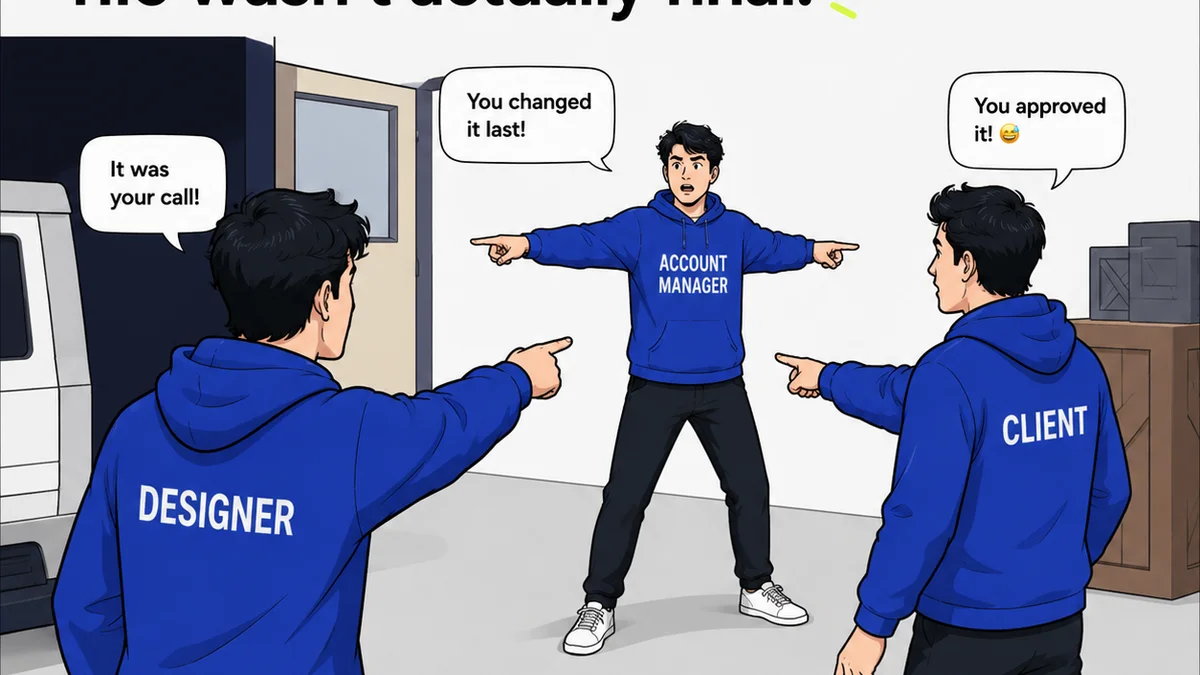
Everyone says that to improve revision rounds, you need to get better feedback. That more time and resources will solve the problem of endless client back-and-forth. None of that is wrong. But it’s incomplete.
The real problem isn't the feedback itself, or even the time it takes. It's the process surrounding that feedback. The lack of clarity, the scattered communication, the absence of a single source of truth. That’s what kills timelines and drains creative energy.
1. The Illusion of 'Just a Few Tweaks'
Clients often underestimate the effort involved in creative changes. They see a button color or a headline, and think, “That’s a five-minute job.” They don’t see the cascading effects: the potential impact on layout, the need for new assets, the ripple through the project scope.
This perception gap is a major driver of inefficient revision rounds. It leads to scope creep disguised as minor edits.
The Root Cause: Lack of Visibility
When clients can't see the full picture of what a change entails, they're less likely to be judicious. They don't have a clear understanding of the effort or the potential downstream consequences.
This is where a structured approval workflow becomes critical. It’s not about limiting feedback; it's about framing it.
- Educate clients on the impact of changes early on.
- Use visual aids or process diagrams to explain workflow.
- Clearly define what constitutes a
Frequently asked questions
What's the biggest mistake agencies make with revision rounds?
Assuming more time or better feedback is the sole solution. The deeper issue is often a lack of structured process, unclear communication channels, and no single source of truth for feedback, leading to scope creep and endless back-and-forth.
How can I reduce the number of revision rounds?
Implement a clear feedback and approval process from the start. Define scope, establish communication protocols, use a centralized platform for all feedback, and ensure all stakeholders sign off on key stages. Educate clients on the impact of changes.
What's the role of a project manager in revision rounds?
A project manager acts as the gatekeeper and facilitator. They ensure feedback is consolidated, clearly communicated, tracked, and that decisions are made efficiently. They manage the client relationship regarding scope and timelines.
How does centralized feedback help?
Centralized feedback eliminates scattered emails, Slack messages, or verbal notes. It provides a single, organized record of all comments, changes, and approvals, reducing confusion, preventing missed feedback, and speeding up the revision process.