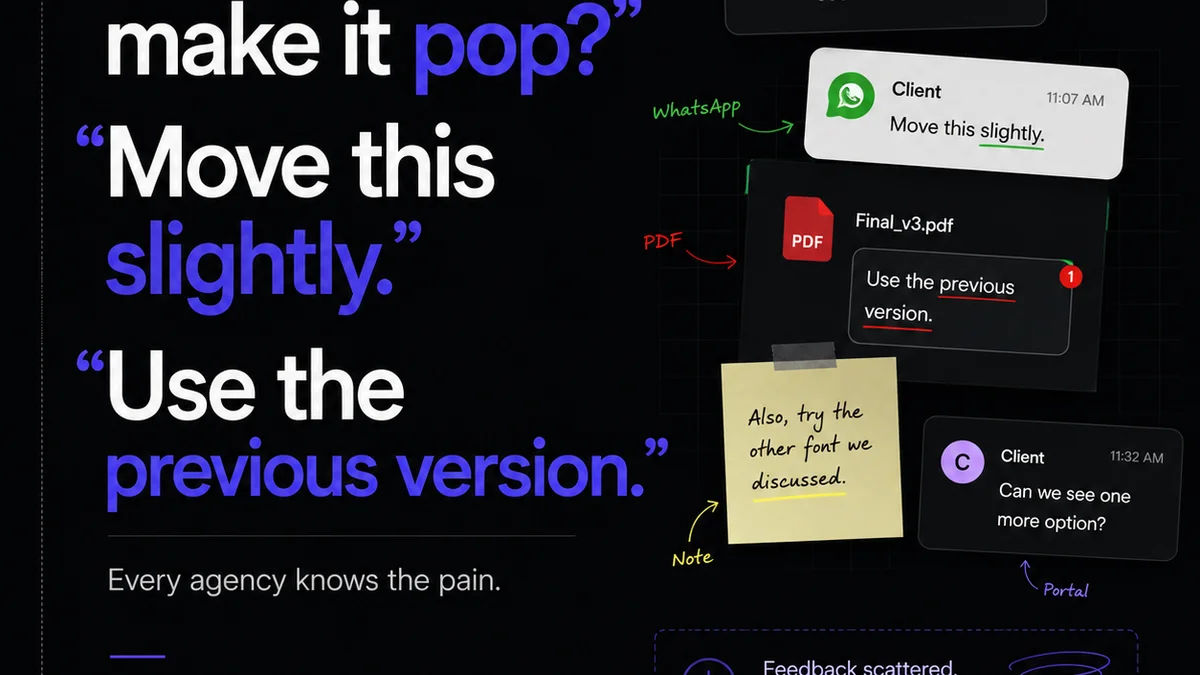
Everyone talks about collaboration. Especially in creative agencies and in-house teams, it’s the holy grail. We’re told better tools, faster communication, and more meetings are the path to improved stakeholder collaboration. None of that is wrong. But it’s incomplete.
The hard truth? Most teams are still struggling because they’re focused on the *symptoms* of poor collaboration, not the *root causes*. They’re trying to put a fancy new coat of paint on a crumbling foundation.
Genuine stakeholder collaboration is an operational discipline, not a feature you can download. It’s built on clarity, accountability, and a shared understanding of goals.
1. Define 'Collaboration' Beyond the Meeting Room
When we say collaboration, what do we actually mean? Is it just getting everyone in a room (virtual or physical) to nod along? Or is it about actively involving stakeholders in a way that leads to better creative outcomes and fewer surprises?
Too often, collaboration is conflated with mere communication. We send more emails, schedule more check-ins, and expect magic. This doesn’t improve collaboration; it just adds noise.
The Real Goal: Shared Understanding and Buy-In
True collaboration means stakeholders understand:
- The project's objectives and how success will be measured.
- Their specific role and what input is expected from them.
- The creative process and its inherent stages, including potential trade-offs.
- The implications of their feedback on timelines and budget.
Without this clarity, meetings become feedback free-for-alls, and
Frequently asked questions
What are the biggest mistakes teams make when trying to improve stakeholder collaboration?
The biggest mistake is focusing solely on communication tools or increasing meeting frequency without addressing underlying process issues. Teams also often fail to clearly define roles, expectations, and project objectives upfront, leading to confusion and misaligned feedback later on.
How can I ensure stakeholders understand the creative process?
Educate them early and often. Provide clear timelines, explain the purpose of each stage (e.g., discovery, concepting, revision), and set expectations for the type and timing of feedback. Visualizing the process, perhaps with a simple flowchart, can be very effective.
What's the difference between communication and collaboration?
Communication is the act of transmitting information. Collaboration is a dynamic process of working together towards a common goal, involving shared decision-making, mutual understanding, and joint effort. You can communicate without collaborating, but effective collaboration requires clear and purposeful communication.
How does centralized feedback help stakeholder collaboration?
Centralized feedback systems consolidate all comments, markups, and approvals in one place. This eliminates scattered email threads and conflicting verbal instructions, providing a single source of truth. It ensures all stakeholders see the same feedback, reducing confusion and misinterpretation, and making the revision process transparent and manageable.