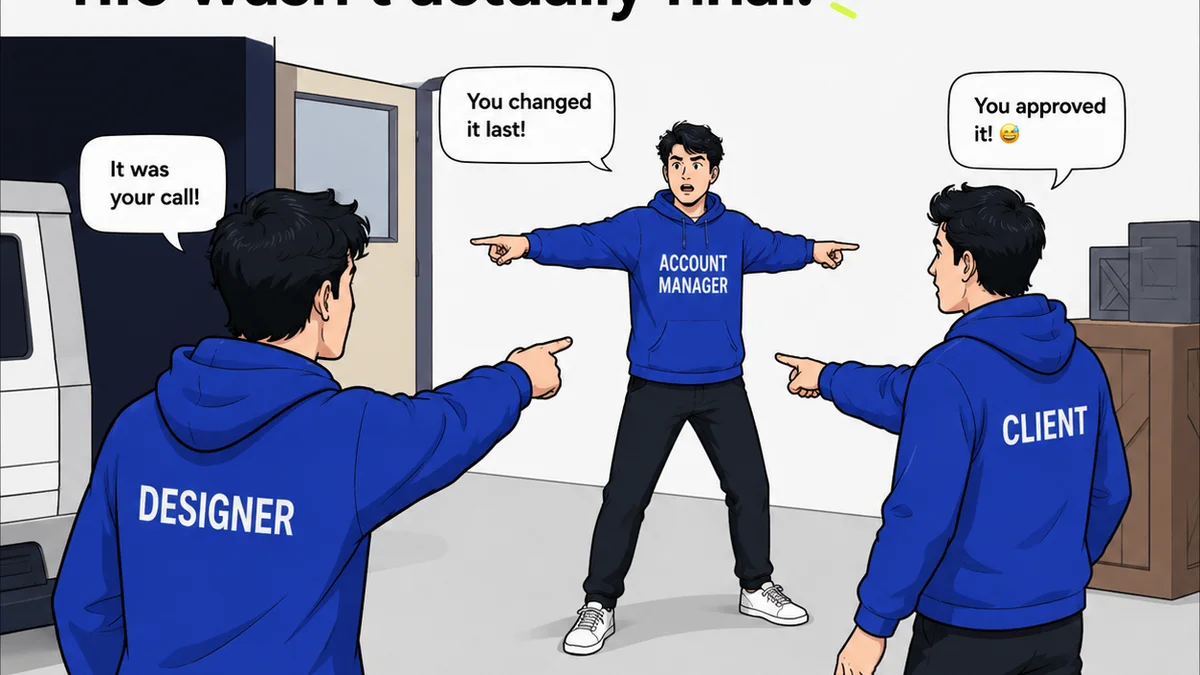
Everyone agrees that getting stakeholder design review right is critical for project success. You’ve probably heard it a million times: clear communication, defined goals, and on-time feedback are key. None of that is wrong. But it’s incomplete.
The hard truth is that most design review processes are fundamentally broken because they treat feedback as a passive event rather than an active, complex system. It’s not just about *getting* feedback; it’s about *managing* its flow, its quality, and its impact on your team's actual work. This is where most agencies and in-house teams stumble, leading to scope creep, endless revisions, and frustrated creatives.
1. The Illusion of "Just a Few Changes"
The most common pitfall is underestimating the ripple effect of seemingly minor stakeholder feedback. A small tweak requested by one person can cascade into significant rework across multiple design elements, pushing timelines and budgets to their breaking point. This isn't malicious; it's a symptom of misaligned expectations and a lack of structured review.
The Scope Creep Spiral
It starts innocently. A stakeholder asks for a color change. Then they notice a font. Then they suggest a new layout for a section they hadn't previously focused on. Each request, individually, might seem reasonable. But together, they form a pattern of scope creep that can derail a project.
This often happens because stakeholders aren't seeing the full picture of the work involved. They might not understand how changing one button impacts the entire UI system or how a minor copy edit requires a full re-render of a video. Their feedback is often based on a snapshot, not a systems view.
The "Expert" Fallacy
Another factor is the assumption that everyone with an opinion is qualified to give design feedback. Clients and stakeholders often have a vision, but that vision might not align with user needs, brand strategy, or technical feasibility. This leads to subjective feedback masquerading as objective requirements.
- Personal aesthetic preferences overriding brand guidelines.
- Requests that contradict user research findings.
- Changes based on what a competitor is doing, without strategic rationale.
Frequently asked questions
What is the biggest mistake teams make in design review?
Treating feedback as a passive event rather than an active system. This leads to underestimating the impact of small changes, scope creep, and misaligned expectations.
How can I prevent scope creep during design review?
Establish clear project goals and scope upfront. Implement structured feedback rounds with defined deliverables and use a centralized platform to track all feedback and changes.
What's the best way to manage subjective feedback?
Refer back to agreed-upon project objectives, brand guidelines, and user research. Frame discussions around strategic alignment rather than personal preference.
How can technology help with stakeholder design review?
Tools like Revue can centralize feedback, provide version control, and offer clear visibility into revisions and approvals, reducing miscommunication and streamlining the process.