Everyone agrees that clear feedback is key to a smooth creative process. You’ve probably heard it a million times: get specific, be constructive, avoid vague terms. None of that is wrong. But it’s incomplete.
The hard truth is that a broken visual feedback workflow isn't just about the quality of individual comments. It’s about the entire system—or lack thereof—that governs how feedback is given, received, and acted upon. Without a robust system, even the best feedback can get lost in translation, leading to endless revisions and frustrated clients.
1. The Illusion of 'Good Enough' Feedback
Many teams operate under the assumption that as long as *someone* is looking at the work and *someone* is writing notes, the process is functional. This often leads to a reactive rather than proactive approach to feedback.
The result? A tangled mess of emails, Slack messages, and scribbled notes that become impossible to track.
Symptoms of a Broken System
- Feedback is scattered across multiple platforms (email, chat, shared docs, even text messages).
- Revisions are made based on conflicting or unclear instructions.
- It’s impossible to tell which version is the latest or what feedback has been addressed.
- Clients feel their feedback isn't being heard, leading to more aggressive or vague comments in later rounds.
- Designers and developers spend more time deciphering feedback than actually making improvements.
This isn't just inefficient; it's a direct drain on profitability and team morale.
2. Establishing a Single Source of Truth
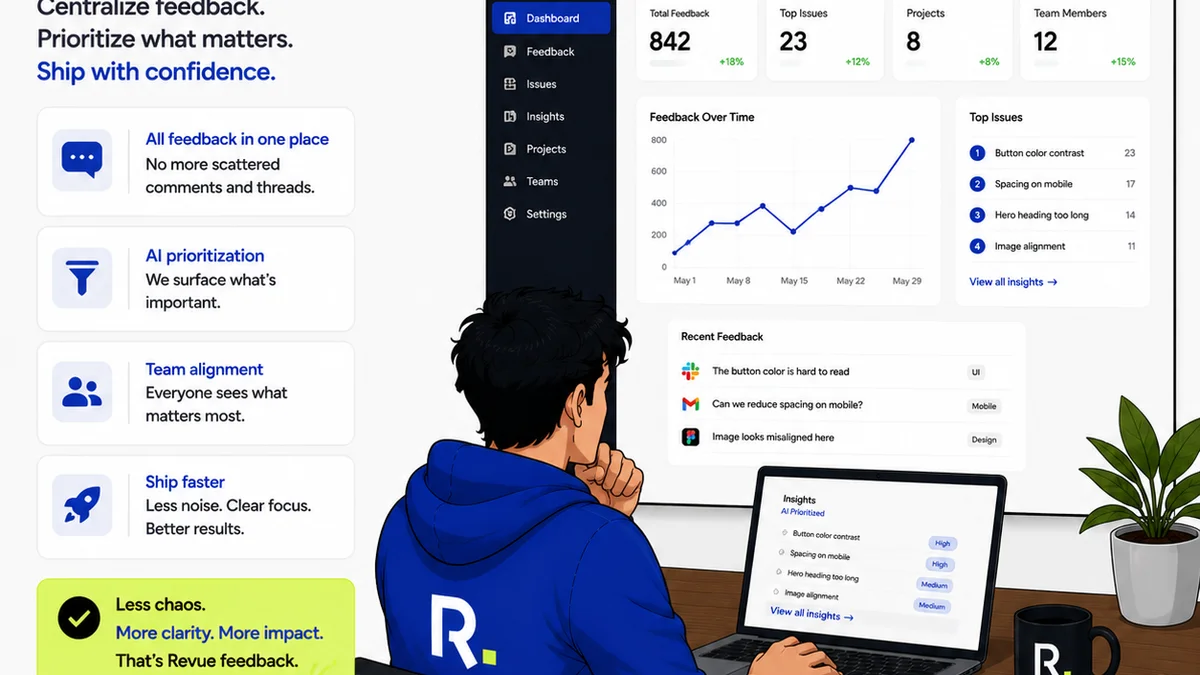
The most effective visual feedback workflows are built on a foundation of centralization. This means having one place where all feedback lives, is organized, and can be tracked.
Think of it like a project management tool, but specifically for creative assets and their associated feedback loops.
Why Centralization Matters
- Clarity: Everyone sees the same feedback, reducing misinterpretation.
- Accountability: It's clear who provided feedback and when it was given.
- Traceability: Every comment and revision can be traced back, creating a clear history.
- Efficiency: Reduces time spent searching for information across disparate tools.
This single source of truth is non-negotiable for managing complex projects with multiple stakeholders.
3. Defining Clear Feedback Roles and Processes
Who is authorized to give feedback? Who needs to approve it? What’s the escalation path for disagreements?
Without defined roles, feedback can become a free-for-all, with every stakeholder chiming in on every detail, regardless of their expertise or role.
Key Process Points
- Designated Approvers: Identify the core stakeholders who have final sign-off authority.
- Feedback Providers: Clearly list who can offer input, and distinguish between general comments and critical feedback.
- Review Rounds: Structure feedback into distinct rounds (e.g., initial concept, detailed review, final polish).
- Response Protocol: Outline how feedback will be acknowledged and addressed (e.g.,
Frequently asked questions
What is a visual feedback workflow?
A visual feedback workflow is the structured process a team uses to gather, organize, and act upon feedback for visual creative assets like designs, videos, or websites. It ensures feedback is clear, actionable, and tracked efficiently.
Why is a centralized feedback system important?
A centralized system prevents feedback from being scattered across emails, chats, and documents. It creates a single source of truth, improving clarity, accountability, and efficiency, and reducing misinterpretations and lost comments.
How can I get more specific feedback from clients?
Clearly define the scope of feedback for each review round. Provide specific questions or areas for clients to focus on. Educate clients on the impact of vague feedback and emphasize the benefits of constructive, detailed input.
What are common pitfalls in visual feedback?
Common pitfalls include feedback being too vague or subjective, lack of clear decision-makers, feedback scattered across multiple channels, unclear revision history, and not distinguishing between opinions and critical requirements.