You think a great landing page for a manufacturing company is all about slick visuals and a clear call to action. None of that is wrong. But it’s incomplete.
The hard truth? For industrial clients, a landing page is less about aesthetics and more about demonstrating deep technical credibility and solving specific, complex problems. It’s a high-stakes sales tool, not just a digital brochure.
1. Clarity on the Core Problem You Solve
Manufacturers aren't buying a feeling; they're buying a solution to a critical business challenge. Your landing page must immediately and unequivocally state what problem you solve for them.
This isn't about your company's history. It's about their pain points.
Define the Target Persona's Struggle
Who are you talking to? A plant manager? A procurement officer? A R&D engineer? Each has distinct needs and speaks a different language.
- A plant manager cares about uptime, efficiency, and cost reduction.
- A procurement officer focuses on ROI, supplier reliability, and contract terms.
- An R&D engineer is interested in material science, innovative capabilities, and performance metrics.
Your headline and sub-headline must speak directly to the primary persona's most pressing issue. If they have to hunt for what you do, they'll leave.
Quantify the Impact (If Possible)
Can you hint at the scale of the problem you address? This adds weight and urgency.
Instead of: "We provide advanced machining services."
Try: "Reduce lead times for critical components by up to 30%."
2. Showcase Technical Expertise and Credibility
In manufacturing, trust is built on demonstrated capability, not just promises. Your landing page needs to scream competence.
This means showing, not just telling.
Detail Your Core Competencies
What specific processes, materials, or technologies do you excel at? Be precise.
Examples:
- CNC Machining (5-axis, Swiss-style)
- Precision Injection Molding (multi-shot, insert molding)
- Advanced Materials Expertise (titanium alloys, high-performance polymers)
- Industry-Specific Solutions (aerospace, medical devices, automotive)
Use clear, unambiguous language. Avoid vague marketing fluff.
Highlight Certifications and Standards
These are non-negotiable trust signals in manufacturing.
- ISO 9001:2015
- AS9100D (Aerospace)
- IATF 16949 (Automotive)
- FDA Compliance / GMP
- ITAR Registered
Display these prominently, perhaps near the footer or in a dedicated section. They signal that you understand and meet rigorous industry requirements.
Feature Case Studies and Success Stories
This is where you prove your value. Generic testimonials won't cut it.
Your case studies should:
- Identify the client's initial problem.
- Detail your specific solution and the process involved.
- Quantify the results achieved (e.g., cost savings, performance improvements, time reductions).
Use real company names if possible, or at least detailed industry descriptions.
3. Product/Service Specificity and Detail
Manufacturers need to know if you can handle *their specific* needs. Broad strokes are insufficient.
If the landing page is for a specific service (e.g., custom metal fabrication), dive deep.
Technical Specifications and Capabilities
What are the limits? What can you handle?
- Material Thickness Ranges
- Part Size Capabilities
- Tolerances Achievable
- Surface Finish Options
- Tooling Capabilities
This information helps engineers and procurement professionals quickly assess fit.
Visual Aids That Matter
While not purely aesthetic, visuals are critical for demonstrating capability.
- High-resolution photos of complex parts you’ve produced.
- Short videos of your machinery in action (show the precision).
- Diagrams illustrating your processes or capabilities.
Avoid generic stock imagery. Show your actual work and facilities.
4. Clear, Actionable Next Steps
Once you've established credibility and addressed their needs, what should they do next?
The call to action (CTA) must be crystal clear and highly relevant to the industrial buyer's journey.
Offer Specific, Value-Driven CTAs
Generic CTAs like "Contact Us" are weak. Offer something concrete.
- "Request a Custom Quote"
- "Download Our Capabilities Brochure"
- "Schedule a Technical Consultation"
- "Get a Material Compatibility Assessment"
Ensure the CTA aligns with where the visitor is in their decision process. A first-time visitor might download a brochure; a ready-to-buy prospect will request a quote.
Streamline the Lead Capture Form
Long forms kill conversions, especially for busy professionals.
Ask only for essential information:
- Name
- Company
- Phone Number
- Brief Project Description / Part Number (optional but helpful)
Make it clear what happens after they submit the form and provide an estimated response time.
5. Mobile Responsiveness and Load Speed
This is table stakes for any website, but often overlooked in B2B manufacturing.
Engineers and decision-makers might be accessing your site from anywhere – a factory floor, a trade show, or on the road.
Optimize for All Devices
A poorly formatted page on a phone is a death knell. Ensure your layout adapts seamlessly.
Test on actual devices if possible, not just simulators.
Prioritize Page Load Speed
Slow-loading pages frustrate users and hurt search rankings. Large images or complex scripts can be culprits.
Use tools like Google's PageSpeed Insights to identify and fix bottlenecks.
A fast, reliable experience signals professionalism and efficiency.
Where Revue Fits In
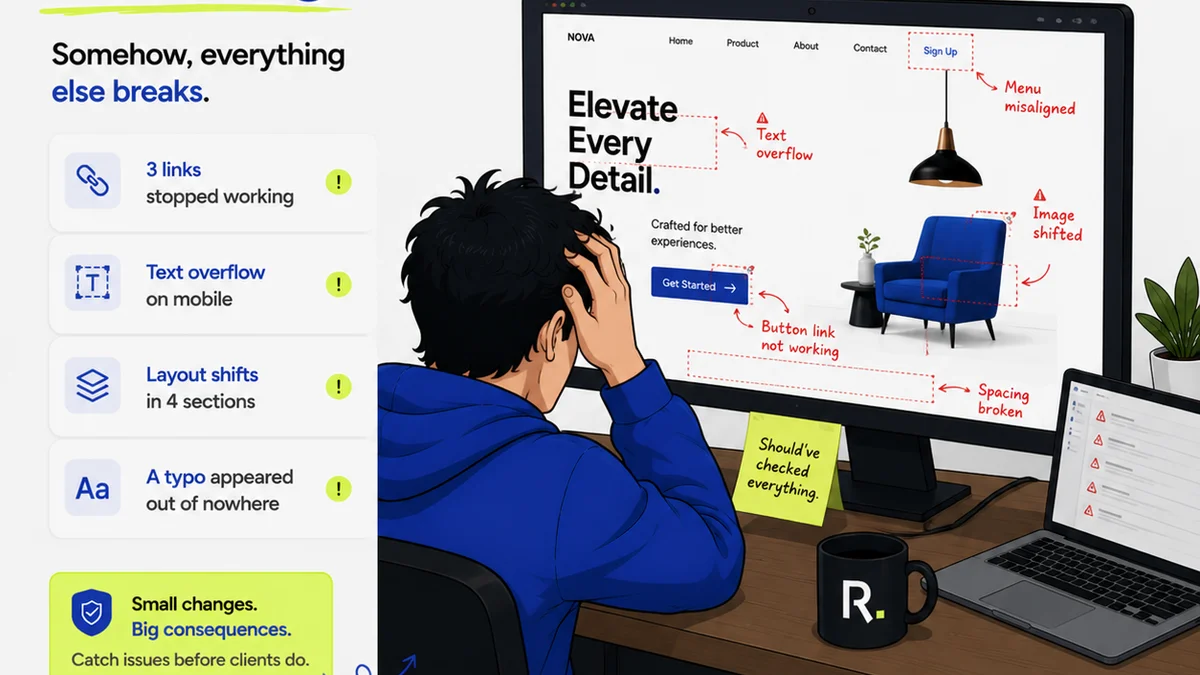
Managing the creation and approval of landing pages, especially those with critical technical details, can become chaotic.
Feedback gets lost in email threads. Revisions aren't tracked. Stakeholders miss approvals.
Revue centralizes the entire creative review and approval process.
Stakeholders can leave precise, contextual feedback directly on the design assets or mockups. Revisions are clearly versioned, so everyone sees the latest iteration. Approval statuses are transparent, eliminating guesswork and speeding up your go-to-market timelines.
This ensures your manufacturing landing pages are not only well-designed but also perfectly aligned with technical requirements and marketing goals, free from the usual communication friction.
Final Thought
Is your manufacturing landing page just a digital business card, or is it a high-performance engine driving qualified leads and demonstrating undeniable technical authority?
The difference lies in treating it as the critical sales and engineering interface it truly is.
Frequently asked questions
What's the most common mistake in manufacturing landing page design?
The most common mistake is focusing too much on generic marketing language and aesthetics, rather than clearly articulating the specific technical problems solved and demonstrating deep industry credibility. Manufacturers need proof of capability, not just promises.
How important are case studies for a manufacturing landing page?
Extremely important. Case studies are crucial for demonstrating tangible results and building trust. They should detail the client's problem, your specific solution, and quantifiable outcomes. Generic testimonials are far less effective.
Should I include technical specs on my landing page?
Yes, absolutely. For manufacturing, engineers and procurement professionals need to quickly assess if your capabilities (e.g., material tolerances, size limits, specific processes) match their project requirements. Be precise and clear.
How can I make my landing page more credible for an industrial audience?
Highlight relevant certifications (ISO, AS9100, etc.), showcase detailed case studies with quantifiable results, use high-quality visuals of your actual work and facilities, and clearly list your specific technical competencies and equipment.