Everyone talks about landing page design in terms of aesthetics, UX, and conversion rates. None of that is wrong. But for manufacturers, it’s incomplete.
The hard truth? Your landing page’s primary job isn't to look pretty. It’s to function as a high-performance lead generation engine in a complex sales cycle. It needs to filter, inform, and qualify, not just capture an email address.
1. Beyond the Brochure: Defining Your Manufacturing Landing Page Goal
Most manufacturing websites treat landing pages like digital brochures. Big mistake. A brochure aims to inform broadly. A landing page for a manufacturer has a singular, focused objective.
What is that objective? Usually, it’s to generate a qualified lead. This means attracting visitors who are genuinely interested in your specific products or solutions and are ready to engage further.
Understand the Buyer Journey
Consider where your target audience is:
- Awareness: They know they have a problem but don't know about your solution.
- Consideration: They're researching solutions and comparing options.
- Decision: They're ready to buy and evaluating suppliers.
Your landing page should align with one of these stages. A page designed for someone in the decision stage will look very different from one targeting awareness.
Quantify Success
What does a successful conversion look like? It's rarely just a form submission. For manufacturers, it might be:
- Requesting a quote for custom machinery.
- Downloading a detailed spec sheet or technical whitepaper.
- Booking a consultation with a sales engineer.
- Registering for a product demo or webinar.
Define this clearly before you start designing. Your page’s entire structure hinges on this goal.
2. The Core Elements of a High-Converting Manufacturing Landing Page
Forget the flashy animations. Focus on substance. Your landing page needs to build trust and demonstrate expertise quickly.
Compelling Headline
Your headline must immediately resonate with the visitor's specific need or pain point. Use clear, benefit-driven language. For example, instead of "Industrial Pumps," try "Boost Production Efficiency with Our High-Performance Industrial Pumps."
Clear Value Proposition
What makes your offering unique and valuable to this specific audience? Highlight key benefits, not just features. Think about:
- Increased output
- Reduced downtime
- Improved safety
- Cost savings
- Compliance with industry standards
Strong Call to Action (CTA)
This is critical. Your CTA should be prominent, action-oriented, and clearly state what happens next. Use verbs that encourage action.
Examples:
- "Get Your Custom Quote Now"
- "Download the Spec Sheet"
- "Schedule a Free Consultation"
Avoid vague CTAs like "Submit" or "Learn More."
Lead Capture Form
Keep forms concise. Only ask for essential information. For a highly technical audience, asking for too much upfront can deter them. Consider progressive profiling for follow-up.
Essential fields often include:
- Name
- Company Name
- Phone Number
- Brief description of need (optional but useful)
Trust Signals
Manufacturers operate on trust and reliability. Incorporate elements that build credibility:
- Customer testimonials (ideally with company names and logos)
- Case studies (linked or summarized)
- Industry certifications and awards
- Logos of well-known clients
- Guarantees or warranties
Visuals That Inform
Images and videos should be relevant and high-quality. Show your products in action, highlight key features, or provide a glimpse of your manufacturing process. Avoid generic stock photos.
3. Designing for Specific Manufacturing Niches
A landing page for a custom CNC machining service will differ from one for a bulk chemical supplier. Tailor the content and design to your specific niche.
B2B vs. B2C (Even in Manufacturing)
While most manufacturing sales are B2B, understand the decision-makers. Are you targeting engineers, procurement managers, or plant supervisors? Their priorities and technical understanding will vary.
Product Complexity
Highly technical or complex machinery requires more detailed information. Consider using:
- Detailed Spec Sheets: Offer downloadable PDFs.
- Explainer Videos: Demonstrate functionality.
- Interactive Diagrams: Allow users to explore features.
- Technical Whitepapers: Address specific industry challenges your product solves.
Service vs. Product Focus
If you sell services (e.g., contract manufacturing, maintenance), focus on your expertise, process, and client success stories. If you sell physical products, emphasize features, benefits, and reliability.
4. The Technical Side: Optimization and Integration
A great design is useless if it doesn't perform. Technical considerations are paramount for manufacturing landing pages.
Mobile Responsiveness
Ensure your page looks and functions perfectly on all devices. Many buyers will access information on the go.
Page Load Speed
Slow-loading pages kill conversions. Optimize images and code for fast loading times. Use tools like Google PageSpeed Insights to identify issues.
SEO Integration
While landing pages are often promoted via ads, organic search is still crucial. Integrate relevant keywords naturally into your headlines, body copy, and meta descriptions. Focus on long-tail keywords specific to your product or solution.
Tracking and Analytics
Implement robust tracking. Use tools like Google Analytics to monitor traffic, conversion rates, and user behavior. This data is vital for continuous improvement.
CRM Integration
Ensure your lead capture forms integrate seamlessly with your CRM. This automates the lead management process and ensures no opportunity falls through the cracks.
5. Common Pitfalls to Avoid
Many manufacturing companies stumble on the same issues. Steer clear of these.
- Overly Technical Jargon: While your audience is technical, avoid obscure acronyms or internal terminology unless universally understood in the industry.
- Lack of Clear CTA: A buried or ambiguous call to action means lost leads.
- Generic Content: Pages that could apply to any company in your sector fail to stand out.
- Ignoring Mobile Users: A significant portion of traffic will be mobile.
- Too Many Form Fields: Asking for too much information upfront is a conversion killer.
- Poor Load Times: Patience is thin online.
Where Revue Fits In
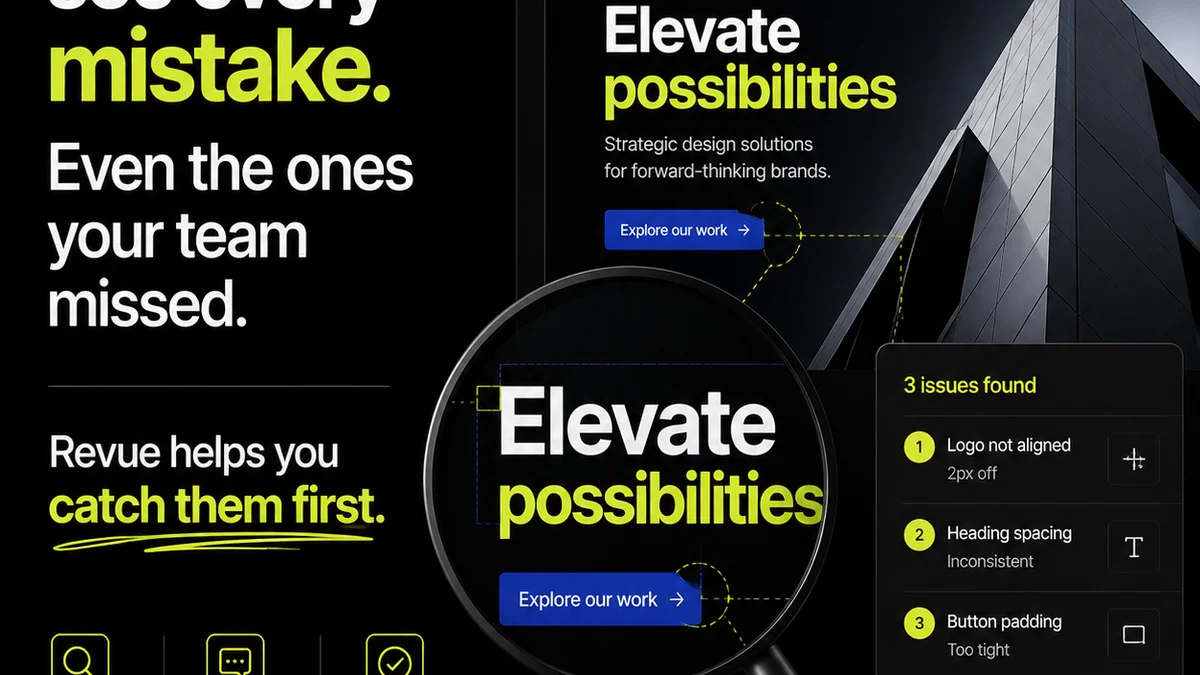
Managing the design and approval process for manufacturing assets, including landing pages, can be complex. Multiple stakeholders, technical reviews, and revision cycles require a streamlined workflow.
Revue helps by centralizing all client feedback and internal communication around specific creative assets. Instead of sifting through endless email chains or scattered documents, your team can see all comments, markups, and approvals in one place.
This visibility is crucial for ensuring that the final landing page design accurately reflects technical specifications and marketing objectives. It speeds up revision cycles, reduces errors, and ensures that quality checks are thorough and documented, leading to more effective lead generation.
Final Thought
Your manufacturing landing page is more than just a web page; it’s a critical touchpoint in your sales funnel. Are you designing it to generate qualified leads, or just to fill space on your website?
Frequently asked questions
What is the primary goal of a manufacturing landing page?
The primary goal is to generate qualified leads by attracting visitors genuinely interested in your specific products or solutions and encouraging them to take a defined next step, such as requesting a quote or downloading technical information.
How can I build trust on a manufacturing landing page?
Build trust by including customer testimonials, case studies, industry certifications, awards, and logos of well-known clients. High-quality visuals of your products or processes also enhance credibility.
What information should I include on a lead capture form for a manufacturing landing page?
Keep forms concise. Essential fields typically include Name, Company Name, Email, and Phone Number. A brief optional field for describing their need can also be very useful.
Why is page load speed important for manufacturing landing pages?
Slow-loading pages can significantly reduce conversion rates. Visitors, especially busy professionals, have little patience for slow websites. Optimizing images and code ensures a fast, positive user experience.