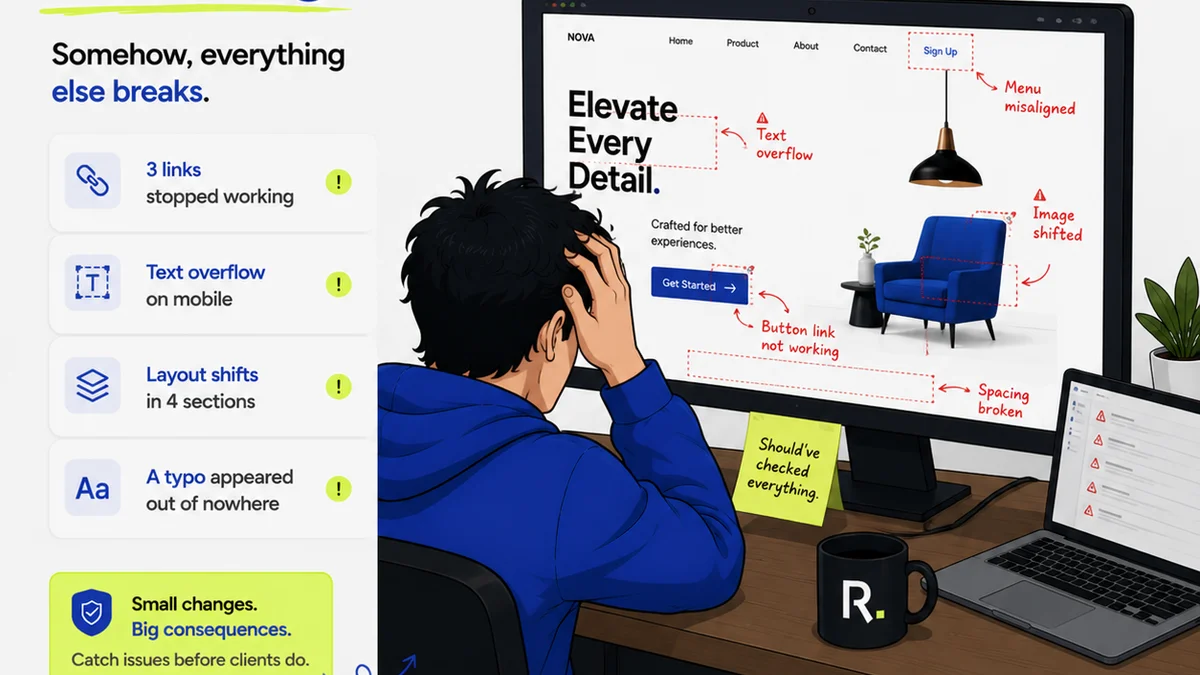
Everyone talks about marketing asset quality assurance (QA). They obsess over proofreading copy, checking image resolution, and ensuring brand guidelines are met. It sounds simple enough.
None of that is wrong. But it’s incomplete.
The hard truth is that marketing asset QA isn't a final step. It's a continuous process woven into the entire creative workflow. Treating it as an afterthought guarantees errors, delays, and ultimately, a weaker final product.
1. Rethink QA: From Gatekeeper to Integrator
Most teams view QA as a gatekeeper. Something that happens *after* the work is done, just before launch. This creates a bottleneck.
It also fosters a culture of blame. If QA finds a mistake, it's the designer's or writer's fault. This isn't productive.
The Operational Reality
Quality assurance is most effective when it’s integrated from the start. Think of it as a continuous refinement process, not a final inspection.
This means building quality checks into every stage: brief, concept, design, copy, development, and final review. Each stage has its own set of potential issues. Catching them early is far cheaper and easier than fixing them late.
- Briefing errors
- Misinterpreting client goals
- Technical spec misunderstandings
- Design inconsistencies
- Copy errors (typos, grammar, tone)
- Usability issues
- Accessibility compliance
- Brand guideline deviations
- Broken links or functionality
When QA is integrated, it becomes a shared responsibility, not a single person's burden.
2. Standardize Your Creative Brief
You can't create quality assets if the starting point is fuzzy. A weak brief is the first domino to fall in a cascade of QA failures.
Your creative brief is the blueprint. It needs to be detailed, unambiguous, and agreed upon by all stakeholders.
Key Elements of a Robust Brief
- Clear project objectives and KPIs
- Target audience definition (demographics, psychographics, pain points)
- Key message(s) to convey
- Mandatory elements (logos, taglines, legal disclaimers)
- Brand guidelines (tone of voice, visual style, do's and don'ts)
- Technical specifications (file formats, dimensions, resolution, accessibility standards)
- Deliverables and timeline
- Approval process and key stakeholders
A standardized brief template ensures consistency and reduces the chances of misinterpretation down the line. It forces clarity upfront.
3. Embed QA into the Design and Copy Process
Quality isn't just about the final output; it's about the process of creation. Designers and copywriters should be building quality checks into their own routines.
This means self-review before submitting work for feedback. It means understanding the technical and brand constraints from the outset.
Designer's QA Checklist (Internal)
- Does the design align with the brief and brand guidelines?
- Are all mandatory elements present and correctly sized/placed?
- Is the visual hierarchy clear?
- Are interactive elements clearly defined?
- Are accessibility standards considered (color contrast, font sizes)?
- Are all assets exported in the correct formats and specs?
Copywriter's QA Checklist (Internal)
- Is the copy accurate, clear, and concise?
- Does it adhere to the brand's tone of voice?
- Are there any grammatical errors or typos?
- Does it meet the defined character/word count limits?
- Are all claims factually correct and legally compliant?
- Are calls to action clear and compelling?
This internal QA step catches the low-hanging fruit, saving review cycles and speeding up the overall process.
4. Streamline Feedback and Revisions
Mismanaged feedback is a primary source of errors and frustration. Vague comments, conflicting opinions, and endless revision rounds erode quality.
The goal is clear, actionable feedback that leads to precise revisions.
Common Feedback Pitfalls
- Subjective opinions disguised as requirements (“I don’t like the blue.”)
- Lack of context for the feedback
- Conflicting feedback from different stakeholders
- Feedback that contradicts the original brief
- Delayed feedback causing rework
A centralized system for feedback is crucial. It ensures all comments are recorded, attributed, and linked directly to the asset being reviewed. This transparency prevents confusion and ensures revisions are based on agreed-upon requirements.
When feedback is contextual and actionable, revisions become efficient. The team knows exactly what needs to be changed and why.
5. Define and Automate Technical Checks
Some aspects of QA are objective and can be automated. Relying solely on human review for technical details is inefficient and prone to error.
This applies to everything from code to image files to PDF exports.
Examples of Automatable QA
- Code: Linters, automated testing frameworks (e.g., for broken links, JavaScript errors).
- Images: Scripts to check file size, resolution, color profiles.
- PDFs: Preflight checks for print-ready files (e.g., bleed, color modes, font embedding).
- Web Accessibility: Automated tools can check for basic WCAG (Web Content Accessibility Guidelines) compliance issues like missing alt text or insufficient color contrast. WCAG 2.2 provides detailed criteria.
- Cross-browser/Device Testing: While not fully automatable, tools can simulate various environments to catch rendering issues.
Automating these checks frees up human reviewers to focus on more subjective aspects like brand alignment and message effectiveness.
6. The Human Element: Strategic Review
Even with robust processes and automation, the human eye is irreplaceable. Strategic review focuses on the bigger picture.
This isn't about nitpicking. It's about ensuring the asset effectively meets its strategic goals.
What Strategic Review Covers
- Does the asset resonate with the target audience?
- Is the key message clear and compelling?
- Does it align with the overall marketing campaign narrative?
- Are there any unforeseen implications or potential misinterpretations?
- Does it meet the defined success metrics?
This stage often involves senior team members or the client themselves, providing a final layer of validation before the asset goes live.
Where Revue Fits In
Managing marketing assets and their associated feedback, revisions, and QA can quickly become chaotic. Especially for agencies juggling multiple clients and projects.
Revue is built to bring order to this chaos. It centralizes client feedback, making it contextual and actionable. No more digging through emails or Slack threads.
The platform provides clear visibility into the revision and approval process. Every comment, every change, is tracked. This transparency ensures everyone is working from the same page and reduces the risk of missed instructions.
Crucially, Revue facilitates the *quality check* phase by keeping all asset versions and feedback in one place. This makes it easier to verify that all requested revisions have been implemented correctly and that the final asset meets all requirements before sign-off.
Final Thought
Is your marketing asset QA process a frantic scramble at the finish line, or a seamless part of your creative engine? The difference isn't just about catching errors; it's about building a fundamentally more efficient and effective creative operation.
Frequently asked questions
What is the biggest mistake teams make with marketing asset QA?
The biggest mistake is treating marketing asset QA as a final, separate step. It should be an integrated part of the entire creative process, from brief to final delivery, to catch issues early and efficiently.
How can I make my creative briefs more effective for QA?
Ensure your creative briefs are detailed, unambiguous, and cover objectives, target audience, key messages, mandatory elements, brand guidelines, technical specs, and approval processes. A standardized template helps maintain consistency.
What are some examples of technical QA checks that can be automated?
Automated checks can include code linters, broken link testers, image file size/resolution verification, PDF preflight checks, and basic web accessibility scans for issues like missing alt text or poor color contrast.
How does centralized feedback improve QA?
Centralized feedback systems like Revue ensure comments are contextual, attributed, and tracked against specific asset versions. This clarity prevents misinterpretations, reduces conflicting feedback, and makes it easier to verify that all required revisions are implemented correctly.