Everyone thinks marketing asset Quality Assurance (QA) is about catching typos and broken links. None of that is wrong. But it’s incomplete.
The hard truth? Effective QA is about protecting your agency’s reputation, streamlining client relationships, and ensuring the work you deliver actually performs. It’s not a final step; it’s an integrated part of your creative workflow.
1. The Real Cost of Skipping QA
You’ve got deadlines. Clients are breathing down your neck. Sometimes, it feels easier to just ship it. That’s a dangerous shortcut.
Subpar assets erode client trust. They can lead to embarrassing public errors, wasted ad spend, and, worst of all, a perception that your agency cuts corners.
Think about it:
- Client complaints about errors.
- Re-work that eats into your margins.
- Damage to your agency’s brand reputation.
- Lost future business.
These aren't abstract risks. They’re real operational costs that can cripple a creative business.
2. Building a Comprehensive Marketing Asset QA Checklist
A robust QA process goes beyond a simple proofread. It needs to cover multiple dimensions of quality, from technical execution to strategic alignment.
Brand Consistency
Is the asset on-brand? This is non-negotiable.
- Logo usage correct (size, placement, clear space)?
- Brand colors accurate (hex codes, CMYK, RGB)?
- Typography matches brand guidelines?
- Tone of voice consistent with brand messaging?
- Imagery style aligns with brand aesthetic?
Technical Accuracy
Does it work as intended?
- File formats correct for intended use (JPG, PNG, MP4, PDF)?
- Dimensions and resolution appropriate?
- Color profiles correct (e.g., sRGB for web, CMYK for print)?
- File sizes optimized for performance (web, email)?
- For digital assets: Links functional? Interactive elements responsive? Accessibility standards met?
Content Integrity
Is the message clear and error-free?
- All copy accurate and free of typos/grammatical errors?
- Claims and statistics verifiable?
- Call to action (CTA) clear and prominent?
- Contact information (phone, email, URL) correct?
- Legal disclaimers, terms, and conditions present and accurate?
- Product names, features, and pricing up-to-date?
Strategic Alignment
Does it serve the marketing goal?
- Does it clearly communicate the intended message?
- Does it align with the campaign objectives and target audience?
- Does it meet the brief's requirements?
- Is the CTA appropriate for the campaign stage?
Platform Specifics
Has it been tailored for where it will live?
- Social media: Correct aspect ratios, character limits, tagging conventions?
- Email: Mobile responsiveness, preheader text, unsubscribe link?
- Web: SEO considerations, loading speed, browser compatibility?
- Print: Bleed, trim marks, correct fold lines?
3. Implementing QA: Who, When, and How
A checklist is only as good as its implementation. You need clear roles, defined timings, and consistent execution.
Assign Ownership
Who is ultimately responsible for QA? It shouldn't always be the person who created the asset. Ideally, it’s a fresh pair of eyes. This could be a dedicated QA specialist, a project manager, or a peer reviewer.
Integrate, Don't Append
QA shouldn't be an afterthought. Build review stages into your project timeline. This means:
- Internal review after concept/draft.
- Client review with clear feedback guidelines.
- Final internal QA before client delivery or launch.
Each stage has a purpose. Early reviews catch strategic missteps. Later reviews catch execution errors. Client reviews manage expectations.
Standardize Feedback
Vague feedback kills productivity. Use a structured approach for client input.
Require clients to:
- Provide feedback in one place.
- Be specific with their comments.
- Distinguish between “must-have” changes and “nice-to-have” suggestions.
- Approve or reject specific elements.
This prevents endless back-and-forth and keeps the project on track.
Use Tools Wisely
Spreadsheets and email chains are a recipe for chaos. Centralized platforms streamline the entire process.
Tools can help manage versions, consolidate feedback, track revisions, and automate parts of the QA process. This reduces the chance of errors and ensures everyone is working from the latest version.
4. Where Revue Fits In
Managing marketing asset QA effectively requires a system that keeps everything organized and visible. That’s where Revue comes in.
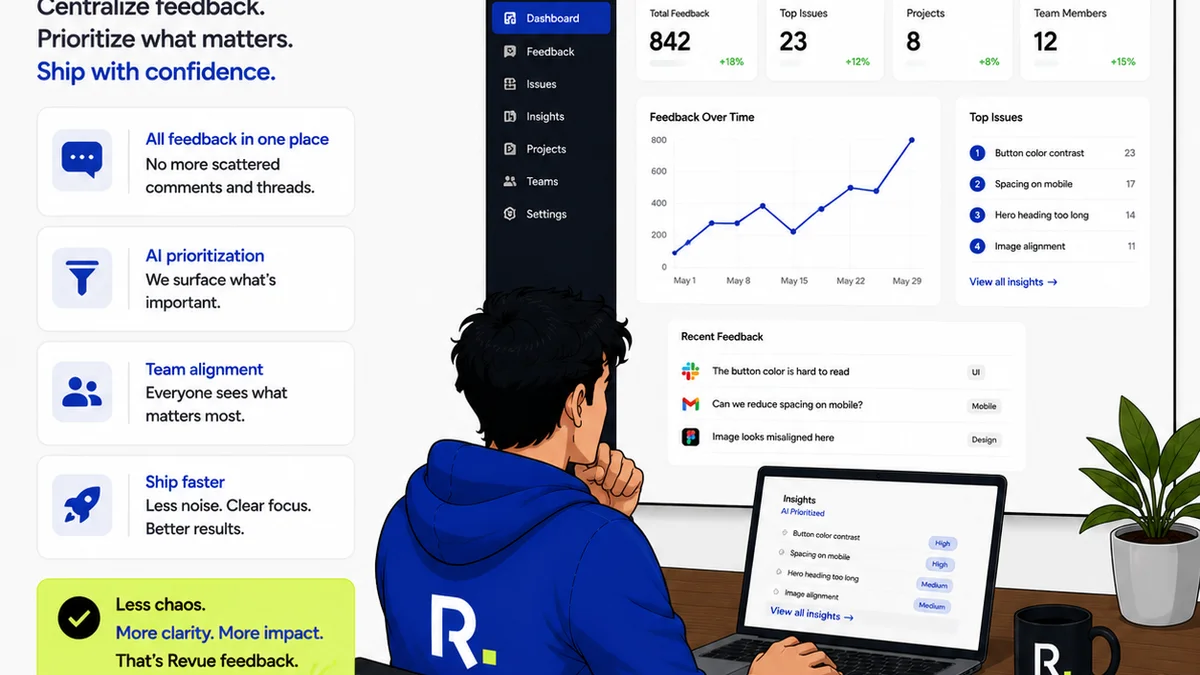
Revue provides a centralized hub for all your creative projects. You can upload assets, gather client feedback in context, manage revisions, and track approvals all in one place.
This means:
- Centralized Feedback: No more hunting through emails or Slack messages. All comments on an asset are in one spot, linked directly to the version being reviewed.
- Revision Visibility: Easily see which versions have been approved, which are pending, and what changes were made between versions. This clarifies the revision history and prevents confusion.
- Streamlined Approvals: Digital sign-offs mean clear accountability and a documented trail, reducing disputes and speeding up the final go-ahead.
- Integrated Quality Checks: By having all assets and feedback consolidated, your team can perform more thorough and consistent QA checks before final delivery.
Revue helps transform QA from a chaotic chore into a structured, manageable part of your workflow, ensuring higher quality output and happier clients.
5. Final Thought
Is your marketing asset QA checklist just a document, or is it a living, breathing part of your operational DNA?
The difference isn't just about avoiding mistakes. It's about building a more resilient, efficient, and trusted creative agency.
Frequently asked questions
What is the most important aspect of marketing asset QA?
While accuracy (typos, links) is crucial, the most important aspect is ensuring the asset aligns with brand guidelines, strategic objectives, and technical requirements for its intended platform. This holistic view prevents errors that impact performance and brand perception.
How often should QA be performed?
QA should be integrated throughout the workflow, not just at the end. This includes internal reviews at key stages (e.g., after initial design, after copy finalization) and structured client review cycles before final delivery or launch.
Who should be responsible for QA?
Ideally, QA should be performed by someone who didn't create the asset to ensure fresh eyes catch errors. This could be a dedicated QA specialist, a project manager, or a peer reviewer within the team.
How can I make client feedback for QA more efficient?
Use a centralized platform like Revue for feedback. Provide clients with clear guidelines on how to submit feedback (e.g., specific comments tied to elements, distinguishing critical vs. suggested changes) to avoid ambiguity and endless revisions.