Everyone thinks marketing asset Quality Assurance (QA) is about catching typos and broken links. That’s not wrong. But it’s incomplete.
The hard truth is that robust marketing asset QA is an operational discipline that prevents costly rework, protects brand integrity, and builds client trust. It’s not an afterthought; it’s a critical gatekeeper for your creative output.
1. Why Basic QA Isn't Enough
Most teams perform a cursory check. A quick read-through, a glance at the visuals. Maybe a link click or two. This approach assumes errors are obvious and easily fixed.
It misses the subtle but damaging issues that erode brand perception and waste significant resources. Think brand misrepresentation, off-brand tone, or assets that don’t actually meet strategic goals.
The Real Costs of Inadequate QA
- Brand dilution
- Client dissatisfaction and churn
- Wasted media spend on flawed assets
- Reputational damage
- Internal friction and blame
These aren't minor hiccups. They're business derailers.
2. Defining Comprehensive Marketing Asset QA
Comprehensive QA is a systematic process designed to ensure that marketing assets are not only error-free but also strategically sound, on-brand, and performant. It’s about validating the asset against its intended purpose and all relevant requirements.
This goes far beyond proofreading. It’s a multi-faceted evaluation.
Key Pillars of Comprehensive QA
- Functional QA: Do all interactive elements work? Are links correct? Does the asset load properly across devices and platforms?
- Content QA: Is the copy accurate, on-brand, and free of errors? Does it align with the brief? Is the messaging clear and compelling?
- Brand QA: Is the visual identity (logos, colors, fonts) applied correctly? Does the tone of voice match brand guidelines?
- Strategic QA: Does the asset effectively communicate the intended message and achieve its campaign objective? Is it targeted correctly?
- Technical QA: Does the asset meet technical specifications (file formats, sizes, resolution, accessibility standards)?
Each of these areas needs dedicated attention.
3. Building Your QA Workflow
A structured workflow is non-negotiable. Ad-hoc checks lead to missed details. You need a repeatable process that everyone understands and follows.
Start by defining clear checklists tailored to different asset types.
Checklist Essentials
- Asset Type Specifics: A social ad has different needs than a website banner or a video.
- Brand Guidelines Reference: Always have the latest brand book handy.
- Campaign Brief Alignment: Does the asset fulfill the strategic goals outlined?
- Technical Specs: File size, format, resolution, aspect ratios.
- Call to Action (CTA): Is it clear, compelling, and correctly linked?
- Legal/Compliance: Disclaimers, terms, and conditions are present and accurate.
- Accessibility Standards: Consider WCAG guidelines for digital assets.
Don't reinvent the wheel. Adapt existing templates and best practices.
The QA Handoff
Who performs the QA? This is crucial. It should ideally be someone not directly involved in the asset's creation to ensure an objective review.
Consider a tiered approach:
- Internal Creative Review: A peer review within the creative team.
- Dedicated QA Specialist/Manager: For larger teams or critical assets.
- Client Review: The final gate, but ideally after internal validation.
This layered approach catches more errors before they reach sensitive stages.
4. Mastering Different Asset Types
Each marketing asset presents unique QA challenges. Understanding these nuances is key to effective quality control.
Digital Ads (Banners, Social, Video)
- Placement & Sizing: Do they fit the ad unit precisely? No cropping issues?
- Click-Through URLs: Are they correct and directing to the intended landing page?
- Tracking Pixels: Are they implemented correctly?
- Video Specs: Aspect ratio, duration, audio levels, subtitles.
- Animation: Does it loop correctly? Is it distracting? Does it meet platform specs?
Website Content (Banners, Landing Pages)
- Cross-Browser/Device Compatibility: Test on major browsers and device sizes.
- Responsiveness: Does the layout adapt correctly?
- Form Functionality: Do forms submit correctly?
- Load Speed: Are images optimized?
- SEO Elements: Meta descriptions, title tags, alt text.
Email Marketing
- Rendering Across Clients: Test in Gmail, Outlook, Apple Mail, etc.
- Personalization Tokens: Are they pulling data correctly?
- Link Tracking: Ensure all links are trackable and correct.
- Preheader Text: Is it optimized and relevant?
Print Collateral
- Bleed & Trim: Are they set up correctly for printers?
- Color Profiles: CMYK vs. RGB. Are they correct for print?
- Resolution: Ensure images are high-res for print quality.
- Font Embedding: Are fonts properly embedded or outlined?
This level of detail prevents expensive print errors or digital glitches.
5. Leveraging Technology for QA
Manual QA is essential, but technology can amplify its effectiveness and efficiency. Don't rely solely on human eyes for every check.
Automated tools can handle repetitive, rule-based checks, freeing up human reviewers for more complex strategic and creative evaluations.
Tools to Consider
- Grammar & Spell Checkers: Beyond basic OS tools, consider advanced options like Grammarly.
- Link Checkers: Tools that crawl your site or specific assets to find broken links.
- Accessibility Checkers: Browser extensions and online tools to audit for WCAG compliance.
- Cross-Browser Testing Platforms: Services like BrowserStack or LambdaTest.
- File Size/Optimization Tools: Image compressors and video converters.
These tools aren't replacements for human judgment, but powerful supplements.
6. Where Revue Fits In
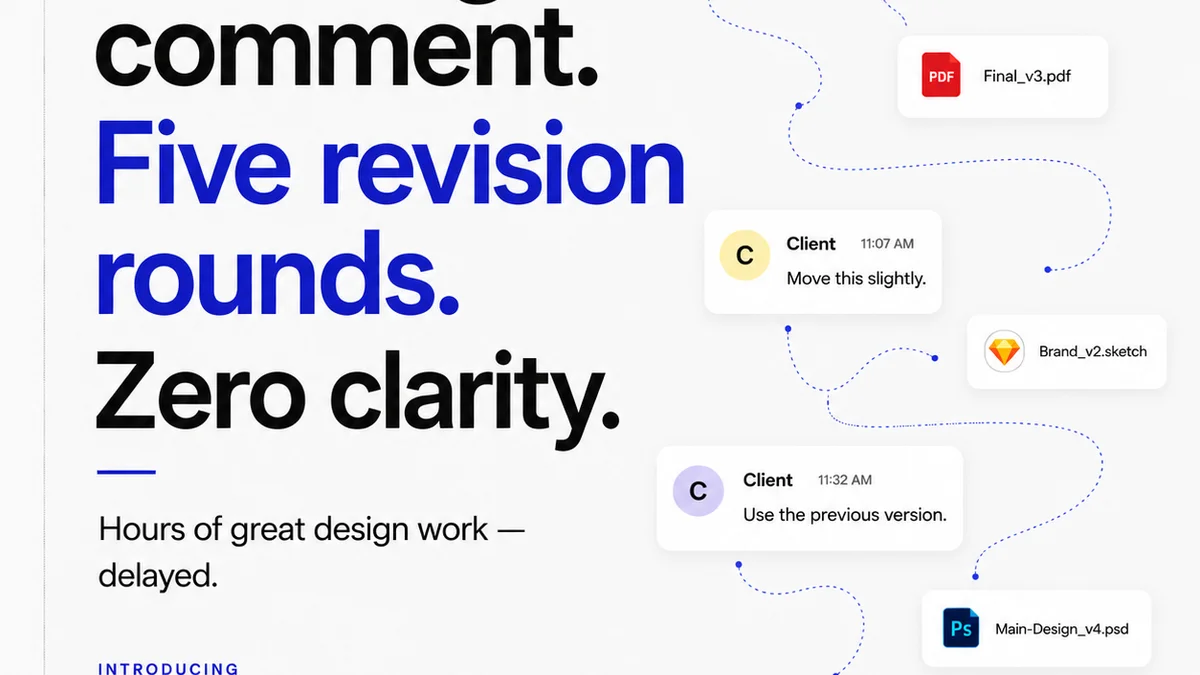
Managing marketing asset QA effectively requires a central hub for feedback, revisions, and approvals. Trying to track these conversations across scattered emails, Slack messages, and ad-hoc documents is a recipe for disaster.
Revue provides that much-needed clarity.
- Centralized Feedback: All client comments and internal reviews live in one place, attached directly to the asset. No more hunting for feedback.
- Version Control & Revision History: Easily track changes, compare versions, and see who approved what and when. This is critical for accountability and preventing scope creep.
- Streamlined Approvals: Clearly defined approval workflows mean everyone knows their role and when an asset is ready for the next stage.
- Visibility into Quality Checks: Document and track the QA process itself, ensuring all necessary checks are performed and signed off.
By bringing structure to feedback and approvals, Revue helps ensure your marketing assets meet quality standards before they go live, saving time and preventing costly mistakes.
7. Final Thought
Is your marketing asset QA process a meticulous guardian of brand integrity and campaign success, or just a hurried check for obvious blunders?
The difference isn't just about catching errors. It's about operational excellence.
It’s about building a reputation for reliability, creativity, and flawless execution.
What's one small change you can implement today to elevate your QA process?
Frequently asked questions
What is the difference between basic and comprehensive marketing asset QA?
Basic QA typically focuses on catching obvious errors like typos and broken links. Comprehensive QA is a systematic process that also validates strategic alignment, brand consistency, technical specifications, and overall performance potential across various platforms and devices.
Who should be responsible for marketing asset QA?
Ideally, QA should be performed by someone not directly involved in the asset's creation to ensure objectivity. This could be a dedicated QA specialist, a project manager, or a peer reviewer within the creative team. Client review should be the final step, not the first.
How can technology improve marketing asset QA?
Automated tools can handle repetitive checks for grammar, broken links, accessibility standards, and cross-browser compatibility. This frees up human reviewers to focus on more nuanced aspects like strategic messaging, brand tone, and creative impact.
Why is version control important in QA?
Version control ensures you're always reviewing the latest iteration and can track all changes made. It provides a clear audit trail of revisions and approvals, preventing confusion and ensuring accountability, especially when multiple stakeholders are involved.