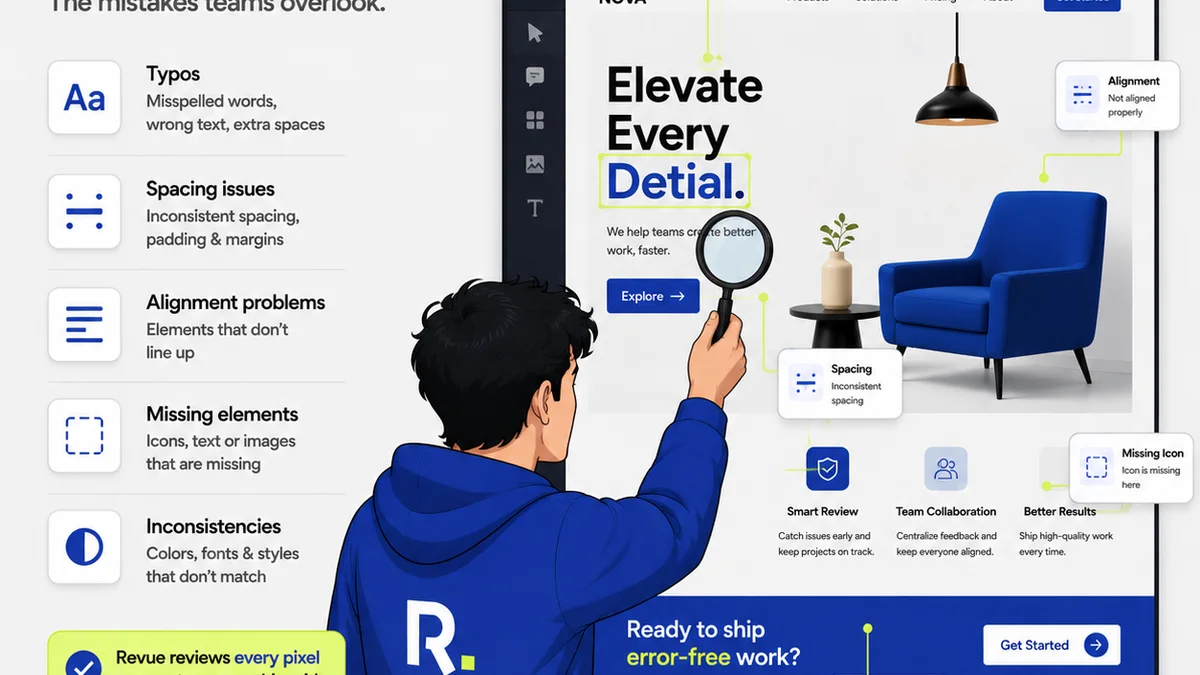
You think a marketing asset review checklist is about ticking boxes. Catching typos. Ensuring the logo is present. None of that is wrong. But it’s incomplete.
The hard truth? A truly effective checklist is a workflow engine, not just a final sanity check. It’s about preventing problems before they start, not just finding them at the end.
This isn't about adding more steps. It's about making the steps you *already* take, smarter. Sharper. Faster.
1. The 'Good Enough' Fallacy
Every agency owner, every creative director, has been here: the asset that keeps getting sent back. The feedback is vague. The revisions are endless. You’re burning billable hours and client goodwill.
Why does this happen? Often, it’s because the initial brief was fuzzy. Or the criteria for approval weren’t clearly defined *before* the work began.
A checklist helps force clarity on the front end. It’s a contract of expectations.
Defining 'Done' Early
Before a single pixel is placed, ask:
- What specific problem does this asset solve?
- Who is the target audience, and what action should they take?
- What are the non-negotiable brand guidelines (color, typography, voice)?
- What are the technical specifications (file format, dimensions, resolution)?
- What are the legal or compliance requirements?
If you can’t answer these clearly, your review process will be a guessing game.
2. The Anatomy of a Killer Checklist
Your checklist needs to be more than a generic template. It needs to reflect your specific client, project, and deliverable.
Think of it as a tiered system. High-level strategic checks, followed by granular execution details.
Tier 1: Strategic Alignment
Does the asset achieve the core objective?
- Does it align with the campaign goals?
- Is the core message clear and prominent?
- Is the call to action (CTA) obvious and compelling?
- Does it resonate with the target audience's needs/desires?
- Does it differentiate from competitors?
Tier 2: Brand & Creative Integrity
Does it look and sound like *us* (or the client)?
- Are brand colors, fonts, and logos used correctly?
- Is the tone of voice consistent with brand guidelines?
- Is the visual hierarchy effective?
- Is the imagery appropriate and high-quality?
- Are there any distracting or unintentional visual elements?
Tier 3: Technical & Functional Accuracy
Does it work as intended and meet specs?
- Are all links functional and correct?
- Are there any typos or grammatical errors?
- Does the asset meet all technical specifications (file size, resolution, format)?
- Are all required disclaimers or legal text present and accurate?
- Is it accessible (e.g., alt text for images, sufficient color contrast)?
Tier 4: Platform-Specific Nuances
Does it fit where it's going?
- Is the aspect ratio correct for the intended platform (social media, web banner, print)?
- Does it adhere to platform-specific best practices or restrictions (e.g., character limits, image guidelines)?
- Are interactive elements functioning correctly on the target device/browser?
This layered approach ensures you’re not just looking for surface-level errors. You’re validating the asset’s purpose and effectiveness.
3. Integrating the Checklist into Workflow
A checklist is useless if it lives in a forgotten folder. It needs to be an active part of your process.
This means integrating it at key milestones: brief, concept, first draft, pre-final, and final review.
The 'Go/No-Go' Decision
Use the checklist as a gate. An asset doesn’t move to the next stage until it passes the relevant checks for the current one.
Think of it like an assembly line. You wouldn’t put a car chassis on the paint line if the wheels weren’t attached. Same principle applies here.
Assigning Ownership
Who is responsible for checking what? Don't assume the designer checks legal, or the account manager checks for typos. Define roles.
- Designer: Technical specs, creative execution adherence.
- Copywriter: Grammar, spelling, tone of voice, legal accuracy.
- Art Director/Creative Lead: Strategic alignment, brand consistency, visual hierarchy.
- Account Manager: Client brief alignment, CTA clarity, overall objective met.
- Legal/Compliance (if applicable): Specific regulatory adherence.
This prevents the
Frequently asked questions
What are the essential elements of a marketing asset review checklist?
An effective checklist covers strategic alignment (goals, message, CTA), brand and creative integrity (logo, colors, tone), technical accuracy (links, specs, typos), and platform-specific requirements. It should be tailored to the specific project and client.
How often should a marketing asset review checklist be used?
The checklist should be integrated at multiple stages of the workflow: during briefing, concept development, first draft review, pre-final review, and final approval. It acts as a gate at each milestone.
Who should be responsible for using the checklist?
Responsibility should be clearly assigned based on expertise. Designers might check technical specs, copywriters grammar and legal, and creative leads strategic and brand alignment. This prevents oversight and clarifies accountability.
Can a checklist help reduce client revision cycles?
Absolutely. By ensuring clarity and adherence to criteria from the outset and at each review stage, a checklist significantly reduces the likelihood of subjective feedback or missed requirements that lead to endless revisions.