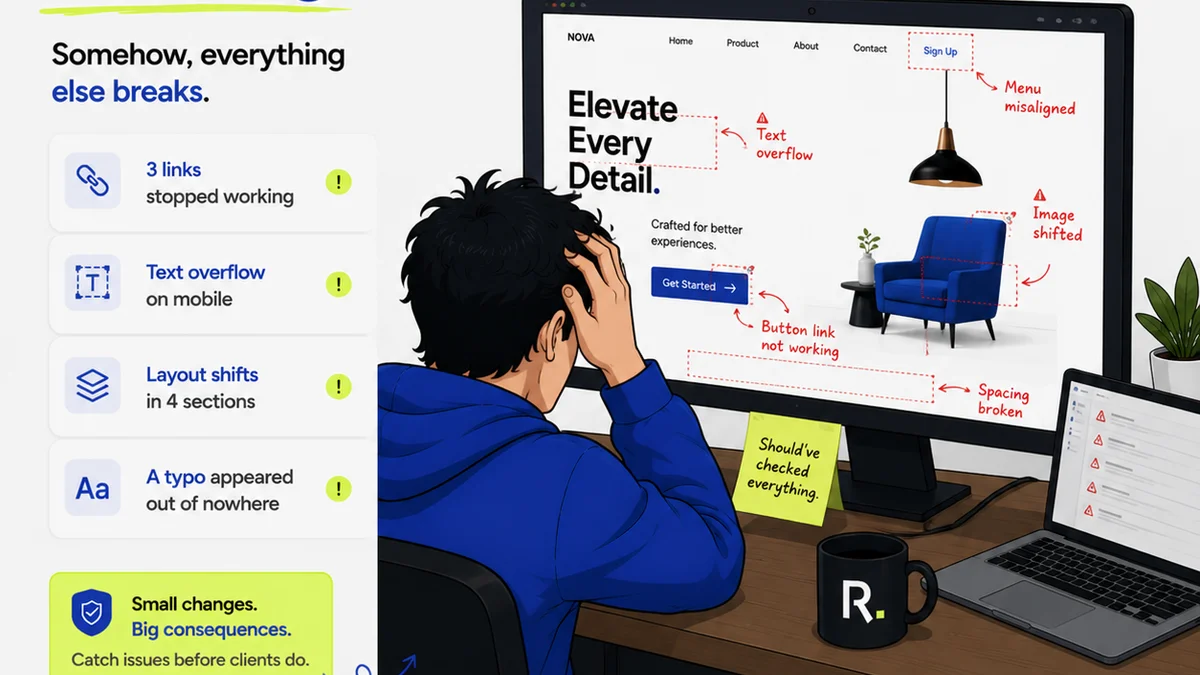
Everyone knows marketing asset revisions are a pain. You get the feedback, you make the changes, you send it back. Rinse and repeat. It’s a necessary evil, right?
None of that is wrong. But it’s incomplete.
The hard truth is that most teams treat revisions as a reactive task, a series of button-pushes to satisfy a client. This view misses the strategic opportunity to refine creative, build client trust, and improve your own processes. It’s not just about fixing things; it’s about the entire revision management lifecycle.
1. The Illusion of 'Fast' Feedback
The common assumption is that faster feedback equals faster revisions. Get the client to comment quickly, and you’ll be done sooner.
This sounds good on paper. In reality, rushed feedback is often vague, contradictory, or based on gut feelings rather than strategic goals. This leads to multiple rounds of clarification and more revisions than if the initial feedback had been more considered.
The Problem with Gut-Feel Feedback
Clients, especially those not steeped in creative specifics, often rely on subjective reactions. “I don’t like the blue.” “It doesn’t feel right.”
This is hard to act on. What does “not right” mean? What kind of blue are they thinking of?
This lack of specificity forces your team to guess, leading to back-and-forth that eats up time and erodes creative integrity.
The Cost of Iteration Without Insight
Every revision cycle costs time and money. When those cycles are driven by unclear or superficial feedback, you’re not just spending resources; you’re potentially degrading the quality of the final asset.
Key Takeaway: Prioritize clarity and strategic alignment over sheer speed of feedback.
2. Defining 'Done' Before You Start
What does a 'finished' marketing asset actually look like? Most agencies don't define this upfront.
This is a major reason why revisions drag on. Without clear criteria for success, the goalposts can shift endlessly.
Establish Clear Objectives and KPIs
Before any design work begins, nail down:
- What is this asset supposed to achieve? (e.g., increase click-through rates, drive sign-ups, build brand awareness)
- Who is the target audience?
- What is the core message?
- What are the non-negotiable brand guidelines?
- What does success look like in measurable terms?
This clarity informs every design decision and provides a benchmark against which feedback can be objectively measured.
Scope Management is Revision Management
Uncontrolled scope creep is a direct driver of endless revisions. If the client asks for things outside the original brief, it’s not a 'revision'; it’s a scope change.
Hard Truth: Treat scope creep as a separate process. Acknowledge new requests, assess their impact on timeline and budget, and get explicit approval before proceeding.
3. The Feedback Loop: Structure, Not Chaos
The way feedback is collected and relayed is critical. A chaotic, fragmented feedback process guarantees messy revisions.
Centralize Your Feedback Channels
Email chains, Slack messages, scribbled notes on PDFs – these are revision nightmares. They create silos of information and make it impossible to track what’s been said, by whom, and when.
Actionable Step: Use a single, dedicated platform for all creative feedback. This ensures all comments are in one place, easily accessible, and auditable.
Designate a Feedback Gatekeeper
Often, multiple stakeholders provide feedback, sometimes conflicting. If everyone can comment directly on the creative, you’re setting yourself up for confusion.
Assign one point person on the client side to consolidate and prioritize feedback. This person becomes the primary liaison, translating stakeholder input into actionable briefs for your team.
Categorize and Prioritize Feedback
Not all feedback is created equal. Differentiate between:
- Strategic Alignment: Does this align with the brief and objectives?
- Brand Compliance: Does this adhere to brand guidelines?
- Usability/Accessibility: Is it easy to understand and use for the target audience? (See WCAG guidelines for accessibility standards.)
- Aesthetic Preference: Subjective likes/dislikes.
This categorization helps you push back on subjective requests that don't serve the project goals.
4. The Revision Brief: More Than Just Notes
A revision brief is the bridge between feedback and action. A bad brief leads to bad revisions.
Translate, Don't Transcribe
Your team shouldn't just be a transcription service for client comments. The person receiving feedback must translate it into clear, actionable instructions. This means interpreting vague comments and asking clarifying questions *before* passing them on.
Reference the Original Brief and Objectives
Every revision request should be evaluated against the initial project goals. If a requested change conflicts with the strategy, that needs to be highlighted.
Example: Client requests a smaller call-to-action button. The revision brief should note: 'Client wants CTA button smaller. *Note: Original brief specified a prominent CTA for conversion optimization.* Suggest alternative placement or wording instead?'
Quantify Changes Where Possible
Instead of 'make text bigger,' aim for 'increase body copy font size from 12pt to 14pt.' Instead of 'move logo,' try 'move logo 10px to the left.'
This level of detail eliminates ambiguity and speeds up the execution of changes.
5. The Art of the 'Final' Review
Even with the best processes, a final review is essential. But how do you ensure this is truly the *final* review?
Implement a Quality Assurance (QA) Checklist
Before any asset goes to the client for final approval, it should pass an internal QA check. This checklist should cover:
- Brand guideline adherence
- Typographical accuracy
- Image resolution and placement
- Link functionality (for digital assets)
- Consistency across all elements
- Adherence to the agreed-upon brief
- Accessibility compliance
A robust QA process catches errors before they reach the client, preventing last-minute nitpicks that derail the 'final' approval.
The 'Sign-Off' Ceremony
Formal sign-off is crucial. This isn't just a verbal 'looks good.' It's a documented agreement that the asset meets all agreed-upon requirements.
Best Practice: Use a formal approval workflow where stakeholders explicitly approve the final version. This creates accountability and prevents 'scope creep' disguised as final tweaks.
Where Revue Fits In
Managing marketing asset revisions effectively requires structure, clarity, and visibility. This is precisely where a tool like Revue excels.
Revue provides a centralized platform to manage the entire feedback and revision cycle. Instead of scattered emails and messages, all feedback lives in one place, linked directly to the creative asset. This ensures nothing gets lost and everyone is working from the latest version.
Our system streamlines the process of collecting, discussing, and acting on feedback. Stakeholders can comment directly on specific elements of the design, and your team can respond, make changes, and track revisions with clear version history. This transparency builds trust and reduces the back-and-forth.
With Revue, you can move from subjective 'likes' to objective, actionable feedback, ensuring that every revision cycle brings the asset closer to its strategic goals. It transforms revisions from a source of frustration into a controlled, productive part of the creative workflow.
Final Thought
Are your marketing asset revisions a necessary evil, or a missed opportunity for strategic refinement and client collaboration? The difference lies not in the tools you use, but in the mindset you bring to the process. It’s time to move beyond 'just fix it' and embrace a more structured, strategic approach to creative delivery.
Frequently asked questions
How can I get clearer feedback on creative assets?
Define clear objectives and KPIs before design begins. Use a centralized platform for feedback, and have a designated client point person to consolidate subjective comments into actionable instructions. Ask clarifying questions before starting revisions.
What's the best way to manage scope creep during revisions?
Treat any request outside the original brief as a potential scope change. Acknowledge the request, assess its impact on timeline and budget, and obtain explicit client approval before proceeding with the work. Document everything.
How do I prevent endless revision cycles?
Establish clear criteria for 'done' upfront. Centralize feedback, prioritize comments based on strategic goals rather than subjective preference, and implement a formal sign-off process. Use a QA checklist before final client review.
Should feedback be prioritized by importance?
Yes. Categorize feedback into strategic alignment, brand compliance, usability/accessibility, and aesthetic preference. Prioritize changes that directly impact the project's strategic goals and brand integrity over subjective aesthetic opinions.