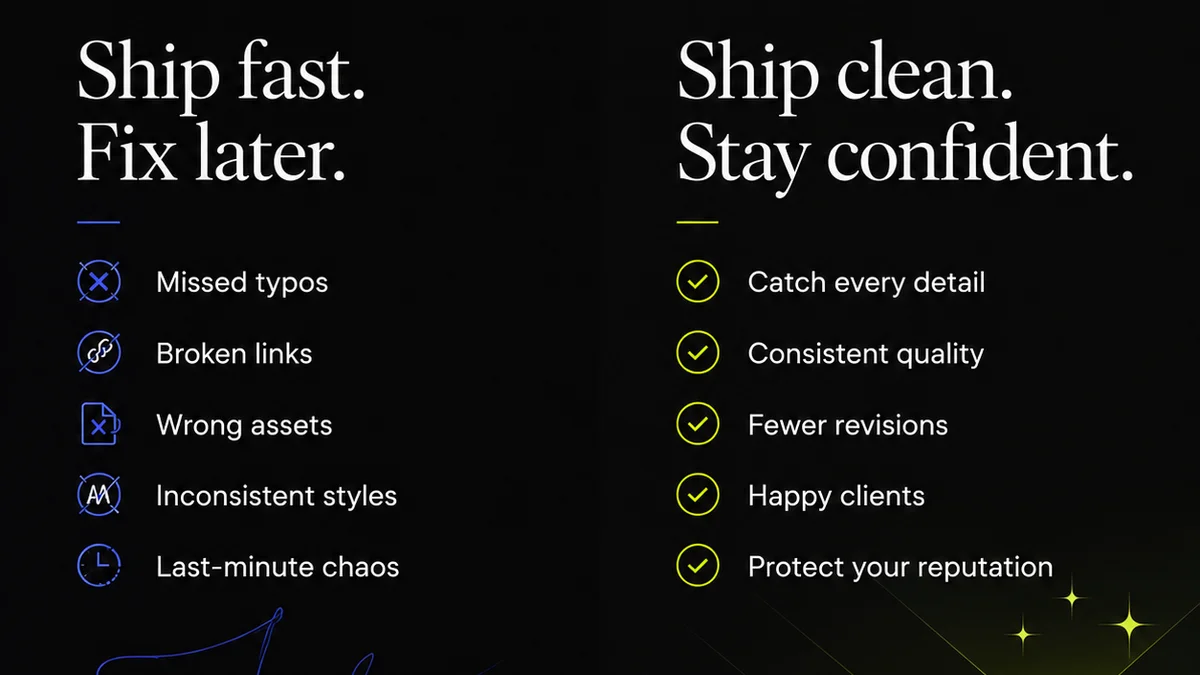
Most agencies and in-house teams think marketing collaboration with legal is all about clear briefs and structured feedback loops. That’s not wrong. But it’s incomplete.
The hard truth is that the real friction in marketing and legal collaboration isn't process; it's perspective. Legal teams operate on risk aversion and precedent. Marketing teams operate on engagement and innovation. Bridging that gap requires more than just a shared document.
1. The 'Black Box' Legal Review
Ever hand off a campaign to legal and then… wait? And wait some more? This is the 'black box' approach. Marketing teams often treat legal review as a mysterious, opaque process. They submit assets, cross their fingers, and hope for the best. This lack of visibility breeds anxiety and delays.
Legal teams, conversely, might feel bombarded with poorly prepared materials or last-minute requests, leading to rushed, less-than-ideal reviews.
Symptoms of a Black Box
- Unpredictable turnaround times.
- Surprise objections or requests that seem to come out of nowhere.
- Marketing teams constantly chasing legal for updates.
- Legal teams feeling blindsided by the scope or complexity of materials.
The solution isn't just to demand faster reviews. It's to demystify the process for everyone involved. This means proactive communication and shared understanding of constraints and objectives.
2. Assuming 'Legal Speak' Translates
Legal professionals use precise language. It’s their job to avoid ambiguity. Marketing professionals use evocative language. It’s their job to connect emotionally.
When marketing teams submit copy or concepts, they often assume legal will understand the intent behind the words. They might use industry jargon or creative metaphors that, while clear to the marketing team, can be interpreted in multiple ways by legal. Similarly, legal might provide feedback using terms that confuse the marketing team.
This disconnect leads to:
- Endless rounds of revisions because the feedback wasn't fully understood.
- Misinterpretations that lead to actual legal exposure, not just creative compromise.
- Frustration on both sides, eroding trust.
The fix? Create a common language. This involves educating each team on the other's primary concerns and communication styles. For marketing, this means being explicit about desired outcomes and potential ambiguities. For legal, it means explaining the *why* behind their feedback in plain terms.
3. The 'All or Nothing' Feedback Cycle
This is a classic collaboration killer. Marketing submits a campaign. Legal comes back with a massive red-line document, suggesting sweeping changes. Marketing feels their creative vision is being destroyed. Legal feels their warnings are being ignored.
Often, legal's feedback is valid but presented without context or alternatives. They flag risks, but don't always offer a path forward that preserves the marketing objective. This 'all or nothing' approach forces a battle, not a collaboration.
Consider this:
- Marketing provides the initial brief, outlining not just the message but the *risk tolerance* for this specific campaign. Is it a brand awareness piece with low stakes, or a direct response offer with high stakes?
- Legal reviews the brief *before* creative development to flag major red flags early.
- When feedback is given, legal offers tiered recommendations: 'This is a critical risk, must change X,' versus 'This is a minor risk, consider Y for improvement.'
This structured feedback ensures legal's concerns are heard and addressed without gutting the creative.
4. Ignoring the 'Why' Behind Legal's Input
Legal review isn't about arbitrarily blocking creative ideas. It's about mitigating risk. Risks can include things like intellectual property infringement, false advertising claims, privacy violations, or non-compliance with industry-specific regulations.
When marketing teams simply see redlines as roadblocks, they miss the opportunity to learn and adapt. Understanding the *why* helps marketing develop better, safer creative in the future.
For example, if legal flags a claim as unsubstantiated, it’s not just about removing the claim. It’s about understanding what constitutes substantiation in that context. This informs future messaging strategy.
This requires:
- Legal providing clear, concise explanations for their objections.
- Marketing asking clarifying questions to understand the underlying legal principles.
- Documenting these learnings to build a shared knowledge base.
This is how you move from a reactive 'fix-it' process to a proactive 'build-it-right' mindset.
5. Failing to Centralize Feedback and Revisions
Scattered feedback across emails, Slack messages, and random comment threads is a recipe for disaster. It's easy for crucial notes to get lost. It's impossible to track the evolution of an asset.
This is where a dedicated platform becomes essential. Without a central hub, 'who said what?' and 'what's the latest version?' become constant, time-consuming questions.
Where Revue Fits In
Revue offers a centralized space for creative collaboration, directly addressing these common marketing and legal friction points. By consolidating feedback, managing revisions, and providing clear audit trails, Revue helps teams:
- Demystify the Review Process: All feedback, comments, and approvals live in one place. Marketing teams can see the status of their assets and the history of changes, eliminating the 'black box' feeling.
- Clarify Feedback: Use annotation tools to pinpoint specific issues. Discuss comments directly on the asset, ensuring context is preserved and misunderstandings are cleared up quickly.
- Streamline Revisions: Track every version. Legal can review the latest iteration against previous versions, ensuring all points have been addressed. Marketing can easily revert or compare changes.
- Maintain Visibility: Dashboards provide an overview of project status, who is assigned what, and where bottlenecks might be forming, fostering better communication and accountability.
This isn't about replacing legal expertise. It's about augmenting the workflow so that expertise can be applied efficiently and effectively, reducing friction and speeding up time-to-market without compromising compliance.
6. Treating Legal as an Afterthought, Not a Partner
The most successful marketing-legal collaborations view legal not as a gatekeeper, but as a strategic partner. They are brought in early and often.
This means involving legal in kickoff meetings for high-stakes campaigns. It means seeking their counsel on potential claims or messaging strategies *before* creative is even developed. It means building relationships based on mutual respect and understanding of each other's roles and pressures.
When legal is treated as a partner:
- Creative concepts are more likely to be legally sound from the outset.
- Fewer last-minute, costly revisions are needed.
- Both teams feel more aligned and invested in the campaign's success.
This partnership approach is the antidote to the adversarial 'us vs. them' dynamic that plagues so many creative and legal interactions.
Final Thought
Legal review is a critical component of responsible marketing. But it doesn't have to be a drag on creativity or a source of constant friction. By understanding the underlying perspectives, fostering clear communication, and leveraging the right tools, agencies and in-house teams can transform this necessary step into a more collaborative, efficient, and even insightful part of the creative process.
How are you currently bridging the gap between creative ambition and legal diligence?
Frequently asked questions
What is the biggest mistake agencies make in marketing and legal collaboration?
The biggest mistake is treating legal as an afterthought or a gatekeeper rather than a strategic partner. This leads to late-stage feedback, costly revisions, and adversarial relationships. Involving legal early and often, and fostering mutual understanding, is key.
How can marketing teams improve legal review turnaround times?
Improve turnaround by providing clear, concise briefs that include risk tolerance, submitting complete and polished assets (not drafts for initial feedback), and using a centralized platform for feedback and version control. Understanding the 'why' behind legal objections also speeds up resolution.
What's the best way to handle conflicting feedback between marketing and legal?
Establish a clear process for escalating disagreements. This might involve a senior marketing lead and a legal counsel meeting to discuss the business impact versus the legal risk. Prioritizing feedback based on severity (critical risk vs. minor suggestion) also helps.
How does a centralized feedback tool help marketing and legal collaboration?
A tool like Revue centralizes all communication, feedback, and revisions in one place. This eliminates lost messages, provides a clear audit trail, reduces the 'black box' effect of legal review, and ensures everyone is working from the latest version, leading to greater efficiency and clarity.