Everyone thinks great marketing collateral is about stunning visuals and catchy taglines. You see a beautiful brochure, a slick video, or a perfectly designed infographic, and you assume it’s a success.
None of that is wrong. But it’s incomplete.
The hard truth? The real engine behind effective marketing collateral isn’t creative flair alone. It’s operational efficiency. It’s about how you manage the chaos of feedback, revisions, and approvals to ensure what you ship is not just pretty, but strategically sound and consistently on-brand.
1. The Myth of the 'Final' Draft
The idea of a 'final' draft is a fantasy. In reality, collateral is a living thing, constantly needing updates, tweaks, and sometimes, a complete overhaul. Agencies and in-house teams often treat each piece as a discrete project, only to find themselves scrambling when minor changes are needed later.
This leads to:
- Endless email chains with conflicting feedback.
- Version control nightmares, where the 'latest' file is actually three versions old.
- Missed deadlines because someone had to 're-do' a section that was supposed to be final.
- Budget blowouts from unnecessary rework.
This isn't a creative problem. It's a workflow problem.
2. Centralize Your Source of Truth
Where does your collateral live? If it’s scattered across hard drives, cloud folders, and individual inboxes, you’re setting yourself up for failure. Every piece of marketing collateral, from a one-off social graphic to a comprehensive sales deck, needs a single, accessible, and version-controlled home.
This means:
- One designated platform for all assets.
- Clear naming conventions and folder structures.
- Easy access for all relevant stakeholders, with defined permissions.
Think of it as your brand’s central nervous system. Without it, information gets lost, and crucial updates never reach the right people.
3. Streamline Feedback and Approvals
This is where most marketing collateral projects derail. You get feedback from marketing, sales, legal, product, and executives—often with conflicting requests. Without a structured process, these comments become a tangled mess.
The best-practice approach:
- Consolidated Feedback: Funnel all input into one place. No more 'reply all' to a cascade of emails.
- Clear Roles: Define who gives what kind of feedback. Legal reviews for compliance, marketing for messaging, sales for practicality.
- Actionable Comments: Feedback should be specific and constructive, not vague pronouncements.
- Visible Revision History: Everyone needs to see what changes were made, why, and by whom. This prevents duplicate edits and ensures accountability.
When feedback is siloed or chaotic, the collateral suffers. It becomes watered down, inconsistent, or simply incorrect.
4. Master Version Control
This isn't just about saving files with dates. True version control means knowing, at any given moment, which is the definitive, approved version of any piece of collateral. It means being able to roll back to a previous state if a new direction proves unworkable.
Key elements include:
- Unique Identifiers: Each version should have a clear, traceable ID.
- Audit Trails: Who approved what, when? This is crucial for compliance and accountability.
- Archiving: Old versions shouldn't be deleted but archived, preserving the project's history.
Without robust version control, you risk using outdated or unapproved materials, which can damage brand consistency and even lead to legal issues.
5. Integrate Quality Assurance
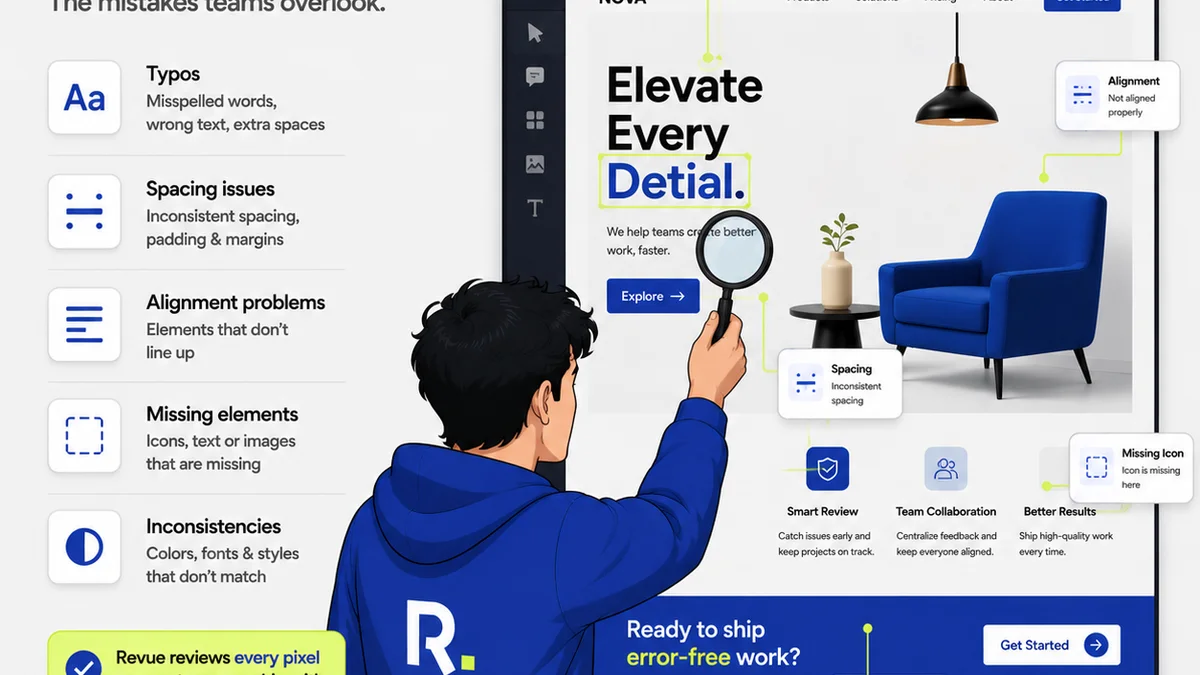
A beautiful piece of collateral that contains typos, broken links, or off-brand messaging is a failure. Quality assurance (QA) needs to be baked into the process, not an afterthought.
This involves:
- Checklists: Develop standardized QA checklists tailored to different collateral types (e.g., print, web, video).
- Cross-Functional Review: Have someone *not* directly involved in the creation do the final review. Fresh eyes catch mistakes.
- Automated Checks (where possible): For digital collateral, tools can help catch broken links or accessibility issues.
Treat QA as a mandatory step, just like legal review. It’s the final gate before your collateral goes public.
Where Revue Fits In
Managing marketing collateral effectively is a workflow challenge. Revue is built to solve these exact operational headaches. It provides a centralized platform where all stakeholders can review, comment, and approve creative work.
Imagine:
- Uploading your latest brochure draft and inviting legal, marketing, and sales to comment directly on the canvas.
- Seeing every revision, every comment, and every approval in a clear, chronological history.
- Reducing back-and-forth emails by having all communication tied to the specific asset.
- Performing final quality checks with confidence, knowing you're working from the approved, latest version.
Revue streamlines the entire collateral lifecycle, from initial brief to final sign-off, ensuring your team produces high-quality, on-brand materials efficiently.
Final Thought
Are you managing your marketing collateral as a creative output, or as an operational process? The distinction matters. Because the agencies and teams that master the latter are the ones consistently delivering impactful, on-brand work, without the usual creative chaos.
Frequently asked questions
What is the biggest mistake teams make with marketing collateral?
The biggest mistake is treating marketing collateral as purely a creative output, neglecting the underlying operational workflow. This leads to chaotic feedback, version control issues, and missed deadlines, even when the design itself is good.
How can I ensure brand consistency across all marketing collateral?
Brand consistency is achieved through a centralized source of truth for all assets, clear brand guidelines that are easily accessible, and a streamlined feedback and approval process that prevents off-brand deviations. Version control is also critical to ensure only approved assets are used.
What role does version control play in managing collateral?
Version control is essential for tracking changes, identifying the definitive approved version of any asset, and preventing the use of outdated materials. It provides an audit trail and maintains project history, which is vital for accountability and compliance.
How can feedback be managed more effectively for marketing collateral?
Effective feedback management involves centralizing all comments in one platform, defining clear roles for reviewers, ensuring feedback is actionable and specific, and maintaining a visible history of all revisions. This avoids conflicting input and streamlines the approval process.