Everyone talks about marketing collateral ROI. They point to download numbers, website traffic spikes, or social shares. None of that is wrong. But it’s incomplete.
The real ROI of marketing collateral isn’t just about how many people *see* it. It’s about how efficiently you create it, how effectively it drives client results, and how it impacts your agency’s bottom line.
1. The Hidden Costs of Collateral Creation
Think about the last major piece of collateral your agency produced. A white paper. A case study. A comprehensive deck. What was the true cost?
It’s easy to focus on the obvious: designer hours, writer fees, maybe some stock photography. But that’s just the tip of the iceberg.
The True Cost Breakdown
- Internal Hours: Project management, multiple rounds of internal reviews, stakeholder meetings, revisions based on subjective feedback.
- Client Feedback Loops: Waiting for client responses, deciphering vague comments, chasing down approvals, onboarding new stakeholders late in the process.
- Tooling and Software: Subscriptions for design software, project management tools, cloud storage, version control (or lack thereof).
- Redundancy and Rework: Creating slightly different versions for different channels, reformatting for new platforms, fixing errors found *after* final approval.
- Opportunity Cost: The time your team *could* have spent on billable client work, new business pitches, or professional development instead of wrestling with a single PDF.
These hidden costs add up. They drain resources and slow down your entire operation. Every hour spent on inefficient collateral production is an hour *not* spent generating revenue.
2. Defining 'Success' Beyond Downloads
Vanity metrics are seductive. A high download count for a PDF feels like a win. But does it translate to actual business outcomes for your client? Or for your agency?
True success for marketing collateral is tied to its purpose. Was it designed to generate leads? Educate prospects? Close deals? Support existing clients?
Measuring Real Impact
- Lead Generation: Track form submissions directly tied to the collateral. What’s the conversion rate? What’s the Cost Per Lead (CPL)?
- Sales Enablement: Does the collateral shorten the sales cycle? Does it increase deal size? Can sales teams point to specific collateral pieces that closed business?
- Client Satisfaction: If the collateral is for an existing client, does it improve their customer retention or reduce support tickets?
- Internal Efficiency: How quickly can you update or repurpose existing collateral? This is a massive, often overlooked, ROI driver.
If your collateral isn't moving the needle on these tangible business goals, its perceived value is inflated. The problem often lies not in the content, but in the process surrounding it.
3. The Bottlenecks Killing Collateral ROI
Inefficiency is the enemy of ROI. And in creative agencies, collateral creation is rife with bottlenecks.
Think about the typical workflow. A brief is written. A designer starts. A writer starts. Then the endless cycle of feedback begins.
Common Collateral Killers
- Scattered Feedback: Comments arrive via email, Slack, Google Docs, even verbal notes. It’s impossible to track who said what and when.
- Unclear Revision History: Which version is the latest? What changes were made in the last round? This leads to confusion and duplicated effort.
- Delayed Approvals: Key stakeholders are busy. They miss deadlines. The project stalls, incurring additional costs and delaying launch.
- Lack of Centralized Source of Truth: Finding the final approved version, or understanding the approved messaging, becomes a treasure hunt.
- Manual Quality Assurance: Checking for brand consistency, correct formatting, and accuracy across multiple versions is tedious and error-prone.
These aren't minor inconveniences. They are systemic issues that directly erode the potential return on your collateral investment.
4. Streamlining for Smarter Collateral
The solution isn't to stop creating collateral. It's to create it smarter. This means attacking those bottlenecks head-on.
It requires a shift from a purely creative focus to an operational one. How can we make the *process* as efficient as the final output is beautiful?
Operational Improvements
- Standardized Briefs: Ensure all necessary information is captured upfront.
- Defined Review Processes: Set clear expectations for who reviews what, when, and how.
- Centralized Communication: All feedback and discussion happens in one place, tied directly to the asset.
- Clear Approval Workflows: Automate reminders and escalation paths for timely sign-offs.
- Version Control: Maintain a clear, auditable history of all changes and approvals.
This operational rigor is the foundation for maximizing the ROI of every marketing asset you produce.
Where Revue Fits In
You’re creating incredible work. But managing the feedback, revisions, and approvals for that work can be a drain on your resources. This is where a centralized platform like Revue becomes essential for maximizing your marketing collateral ROI.
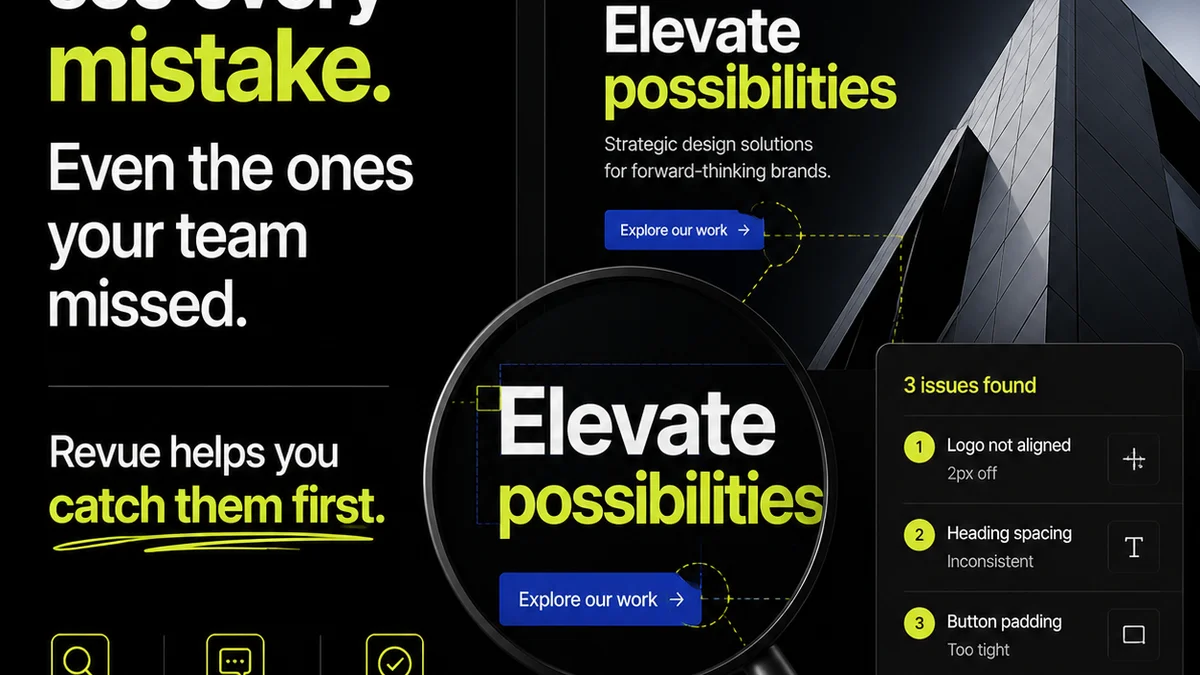
Revue provides a single source of truth for all your creative projects. Instead of scattered emails and Slack threads, all client feedback lives directly on the asset. You can see exactly who said what, when, and what was actioned.
This clarity drastically cuts down on miscommunication and rework. Approval workflows become streamlined, with clear notifications and status tracking. Revision history is automatically maintained, so you always know the latest approved version.
By centralizing feedback, managing revisions, and enabling clear approvals, Revue helps your team spend less time managing the process and more time creating impactful collateral that drives real business results. It turns a potential cost center into a predictable, efficient part of your revenue-generating engine.
Final Thought
What if the most valuable asset your agency creates isn't the final design, but the *process* that gets it there, approved and on-time?
Focusing solely on the beauty of the final deliverable misses the operational excellence that truly unlocks profitability and client satisfaction. Are you building a better process, or just a prettier PDF?
Frequently asked questions
What are the most common 'hidden costs' associated with marketing collateral?
Hidden costs include internal hours spent on reviews and revisions, extended client feedback loops, software subscriptions, the cost of rework due to errors or scope creep, and the opportunity cost of time spent on inefficient processes instead of billable work.
How can agencies measure the true success of marketing collateral beyond simple download counts?
True success is measured by its impact on business goals. This includes lead generation (conversion rates, CPL), sales enablement (shorter sales cycles, increased deal size), client satisfaction (retention, reduced support), and internal efficiency (speed of updates/repurposing).
What are the biggest bottlenecks that hinder marketing collateral ROI in creative agencies?
Major bottlenecks include scattered feedback across multiple channels, unclear revision history, delayed client approvals, the lack of a centralized source of truth for assets and messaging, and manual, error-prone quality assurance processes.
How does a platform like Revue help improve marketing collateral ROI?
Revue centralizes feedback and communication directly on the asset, provides clear revision history, streamlines approval workflows with automated reminders, and acts as a single source of truth. This reduces miscommunication, minimizes rework, and frees up team time to focus on creating impactful collateral.