Everyone talks about marketing creative KPIs. They point to engagement rates, likes, shares, and website traffic. None of that is wrong. But it’s incomplete.
The hard truth? Most agencies and in-house teams track the wrong marketing creative KPIs. They focus on surface-level metrics that look good but don't tell the full story of creative impact. This leads to wasted effort, misallocated resources, and a failure to prove the real value of creative work.
1. The Real Goal: Connecting Creative to Business Outcomes
Vanity metrics are easy to measure. Click-through rates, impressions, social media followers – they provide a quick dopamine hit. But do they actually move the needle on what matters: revenue, customer acquisition, or brand loyalty?
Your creative work isn't just about looking pretty or getting clicks. It's about solving business problems. It's about driving action. That means your KPIs need to reflect that.
Consider this:
- A campaign with fewer impressions but higher conversion rates is more successful than one with millions of impressions and zero conversions.
- A design that streamlines user experience and reduces support tickets is more valuable than one that garners a lot of social media praise but confuses users.
- Content that educates prospects and moves them down the funnel is more effective than content that goes viral for a day and is then forgotten.
The focus must shift from activity to impact. From engagement to conversion. From visibility to value.
2. Shifting Your Focus: From Vanity to Value KPIs
To get there, you need to redefine what success looks like for your creative marketing efforts. This means identifying and tracking KPIs that directly correlate with tangible business results.
Here's how to start:
2.1. Conversion Rates (The Ultimate Measure)
This is king. Whether it's a lead generation form, a product purchase, a demo request, or a sign-up for a webinar, track the percentage of people who take the desired action after interacting with your creative.
Key questions to ask:
- What is the primary goal of this creative asset?
- What action do we want the audience to take?
- How can we directly attribute conversions to this creative?
This requires robust tracking. UTM parameters, conversion pixels, and clear attribution models are essential. Don't guess; measure.
2.2. Customer Acquisition Cost (CAC)
How much does it cost to acquire a new customer through your marketing efforts? Creative plays a huge role here. High-performing creative can lower your CAC by increasing conversion rates and reducing wasted ad spend.
Formula: Total Marketing Spend / Number of New Customers Acquired
Your creative team's ability to produce compelling, high-converting assets directly impacts this number.
2.3. Customer Lifetime Value (CLTV)
While harder to tie directly to a single creative asset, the overall brand perception and customer experience driven by creative significantly influences CLTV. Consistent, high-quality creative builds brand loyalty, encouraging repeat business and higher spending over time.
Think about:
- Does the creative reinforce brand values?
- Does it foster an emotional connection?
- Does it contribute to a seamless customer journey?
2.4. Return on Investment (ROI)
The ultimate financial metric. How much revenue is generated for every dollar spent on creative marketing?
Formula: (Revenue Generated - Marketing Spend) / Marketing Spend
This KPI forces a direct link between creative investment and business profit. It's the hardest to track but the most crucial for demonstrating value.
2.5. Lead Quality Score
Not all leads are created equal. Creative that attracts the *right* audience will generate higher quality leads – those more likely to convert into paying customers. Track how often leads generated by specific campaigns or creative assets progress through the sales funnel and close.
2.6. Brand Recall and Recognition
While leaning towards qualitative, this is still vital. Does your audience remember your brand and its message? Are they able to recognize your creative assets? This can be measured through brand lift studies or surveys, but also indirectly through the effectiveness of your campaigns in driving traffic and conversions.
2.7. Engagement Rate (The *Right* Kind)
Yes, engagement still matters, but only when it’s meaningful. Did users spend time with your content? Did they comment thoughtfully? Did they share it with a relevant audience? Focus on depth of engagement, not just breadth.
Examples of meaningful engagement:
- Time spent on page for articles or videos.
- Comments that indicate understanding or interest.
- Shares to relevant professional networks.
- Saves for later reference.
3. Building Your Marketing Creative KPIs Checklist
Creating a comprehensive checklist requires buy-in from marketing, sales, and creative teams. It's an operational challenge as much as a measurement one.
Here’s a framework:
3.1. Define Campaign Objectives First
Before any creative is briefed, the business objective must be crystal clear. Is it brand awareness, lead generation, direct sales, customer retention, or something else? This dictates the KPIs you'll prioritize.
3.2. Map Creative Assets to Objectives
Each piece of creative – an ad, a landing page, an email, a social post – should have a defined purpose tied to a broader objective. A social ad might aim for brand awareness, driving traffic to a landing page designed for lead generation.
3.3. Establish Attribution Models
How will you credit conversions? First-touch, last-touch, linear, time-decay? The model you choose impacts how you assign value to different touchpoints, including your creative.
A clear attribution model ensures that the creative driving the final conversion gets its due, but also acknowledges the role of awareness-building assets.
3.4. Implement Tracking Mechanisms
This is where the rubber meets the road. Ensure all digital assets have proper tracking:
- UTM Parameters: For precise source, medium, and campaign tracking in analytics.
- Conversion Pixels: For platforms like Meta, Google Ads, LinkedIn.
- Event Tracking: In tools like Google Analytics for specific on-page actions (button clicks, form submissions).
- CRM Integration: To track lead progression and closed deals back to their source.
Without solid tracking, your KPIs are just educated guesses.
3.5. Set Benchmarks and Targets
What does good look like? Based on historical data, industry standards (use with caution!), or pilot programs, set realistic targets for your chosen KPIs. These targets should be specific, measurable, achievable, relevant, and time-bound (SMART).
3.6. Regular Reporting and Analysis
KPIs are useless if they aren't reviewed. Schedule regular check-ins (weekly, bi-weekly, monthly) to analyze performance. Go beyond just reporting numbers; dig into *why* certain creative is performing well or poorly.
- What elements of the creative resonated?
- What messaging was most effective?
- What audience segments responded best?
This analysis fuels iterative improvement.
3.7. Feedback Loop to Creative Teams
Crucially, this data must inform future creative work. Share insights with your creative team so they can learn, adapt, and produce even more effective assets. This closes the loop and ensures continuous improvement.
4. Where Revue Fits In
Managing creative projects and ensuring they meet strategic objectives is a complex operational challenge. This is where a tool like Revue becomes invaluable for creative teams.
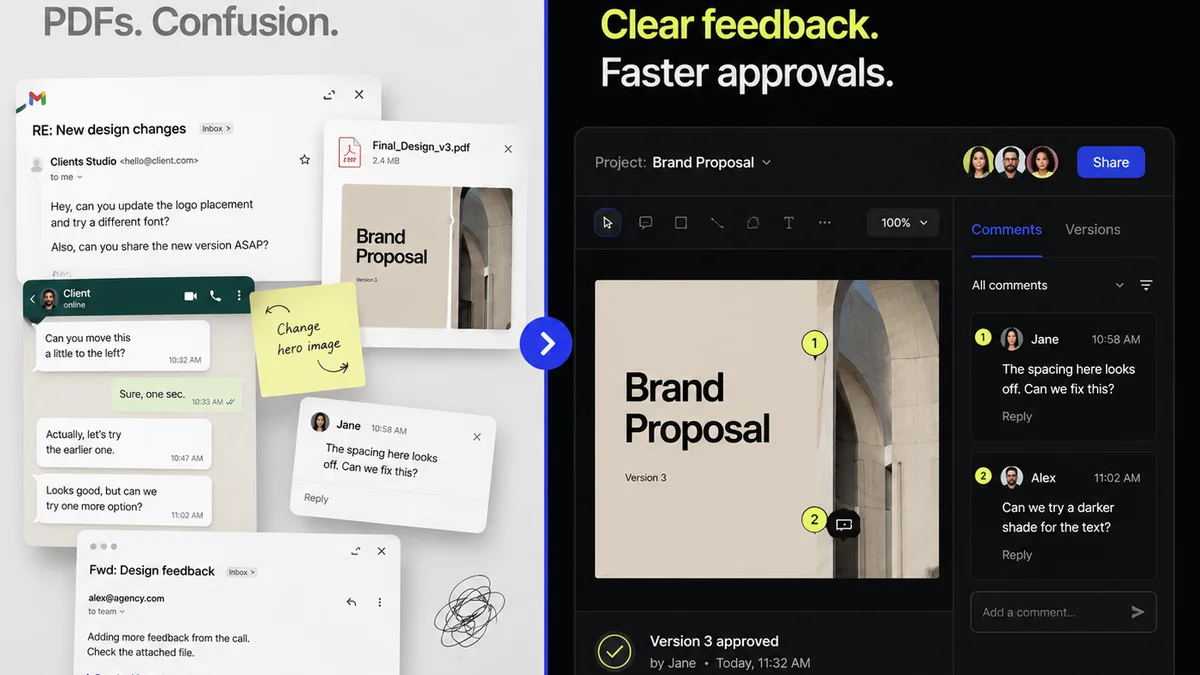
Revue helps centralize client feedback, making it easier to understand the strategic intent behind requests and ensure creative aligns with business goals. By providing a single source of truth for revisions and approvals, it reduces ambiguity and ensures that the final output is not just aesthetically pleasing, but also strategically sound and measurable.
Visibility into the revision process helps identify bottlenecks and ensures that creative iterations are focused on improving performance metrics, not just making subjective changes. This streamlines workflows, allowing teams to focus on producing high-impact creative rather than getting bogged down in endless, misdirected revisions.
5. Common Pitfalls to Avoid
Even with the best intentions, teams often stumble.
- Chasing Trends: Jumping on the latest social media fad without considering if it aligns with brand strategy or business goals.
- Ignoring Data: Relying on gut feelings or client preferences over performance data.
- Poor Tracking Setup: Implementing analytics incorrectly, leading to inaccurate data.
- Lack of Alignment: Marketing, sales, and creative teams working in silos, with different definitions of success.
- Over-Complication: Trying to track too many KPIs, leading to analysis paralysis.
Keep it focused. Track what matters.
6. The
Frequently asked questions
What are vanity metrics in marketing?
Vanity metrics are statistics that look good on paper but don't necessarily contribute to business goals. Examples include social media likes, follower counts, and website page views without context. They don't directly correlate with revenue or customer acquisition.
How do I choose the right marketing creative KPIs?
Start by defining your primary business objective for the creative. Then, select KPIs that directly measure progress towards that objective. Focus on metrics like conversion rates, customer acquisition cost (CAC), and return on investment (ROI) that demonstrate tangible business impact.
How can creative impact Customer Acquisition Cost (CAC)?
High-performing creative assets can lower CAC by increasing conversion rates on marketing campaigns, making ad spend more efficient. When creative resonates with the target audience, fewer resources are needed to acquire each new customer.
What is the difference between engagement rate and meaningful engagement?
Engagement rate often refers to any interaction (likes, shares, comments). Meaningful engagement focuses on the quality and depth of interaction, such as time spent on content, thoughtful comments, or shares to relevant audiences, indicating genuine interest or value derived from the creative.
How does Revue help with tracking creative performance?
Revue centralizes client feedback and streamlines revision/approval workflows. This ensures creative stays aligned with strategic objectives and business goals, indirectly supporting the tracking of performance-based KPIs by reducing ambiguity and focusing creative efforts on impact.