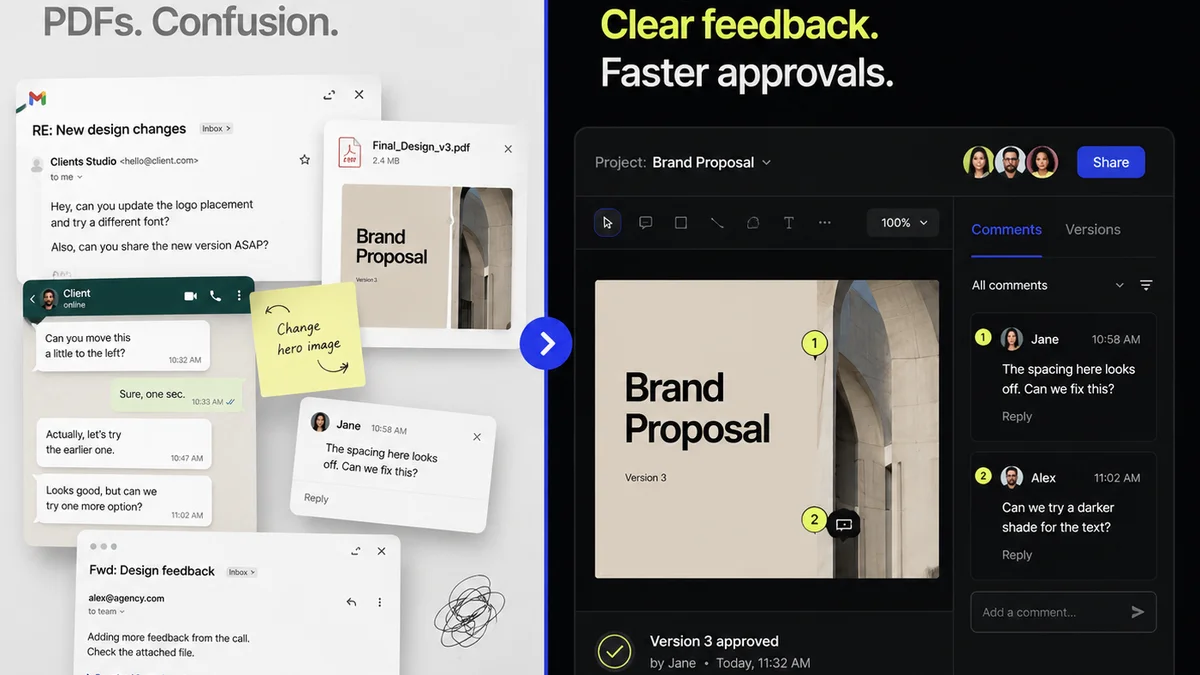
You think marketing review process software is all about faster approvals. It’s not. Not really.
Sure, speed is a nice byproduct. But the real win? It’s about clarity. It’s about accountability. It’s about reducing the friction that kills creativity and drains your team’s energy.
1. The Myth of the 'Single Source of Truth'
Everyone talks about a single source of truth. It sounds great. A place where all feedback lives, all versions are stored, and everyone’s on the same page.
The hard truth? Most tools that claim this are just glorified file lockers with comment threads. They don't solve the core problem: disorganized, subjective feedback that gets lost in translation.
You end up with:
- Endless email chains trying to clarify vague comments.
- Misinterpreted feedback leading to wasted revisions.
- Stakeholders thinking they approved something when they didn’t.
- A constant game of 'who said what?'
This isn't a 'single source of truth.' It's a single source of confusion.
2. Beyond Comments: Structured Feedback is King
What looks like feedback to one person is noise to another. A marketing review process software needs to do more than just capture a text comment.
It needs to structure that feedback. Make it actionable. And tie it directly to the creative asset being reviewed.
Context is Everything
When a client says, “Make it pop,” what does that even mean? Without context, it means nothing. Good software should allow feedback to be tied to specific areas of an image, video, or document.
Think:
- Clicking directly on a button to say, “Change this color.”
- Drawing a box around a headline to suggest a different wording.
- Timestamping a video to pinpoint an audio issue.
This specificity eliminates ambiguity. It tells your team exactly what needs to be done, no guesswork required.
Version Control That Actually Works
Every revision creates a new version. If your software just stacks them up without clear lineage, you’re back to square one. Which version is the latest? What changed between V2 and V3?
A robust system tracks every iteration. It shows you:
- When a new version was uploaded.
- Who uploaded it.
- What feedback was addressed (or ignored) in that upload.
- The ability to easily revert to a previous version if needed.
This isn't just about keeping files organized. It's about maintaining a clear, defensible history of the project’s evolution.
3. Managing Stakeholders: The Art of Controlled Chaos
You’ve got clients, internal marketing teams, legal departments, and maybe even external partners all weighing in. Each with their own priorities and communication styles.
Trying to manage this through email or generic chat tools is a recipe for disaster. It’s like trying to herd cats in a hurricane.
Role-Based Permissions and Workflows
Not everyone needs to see everything. Or approve everything. Your review software should allow you to define specific roles and permissions.
This means:
- Assigning specific reviewers to specific assets.
- Setting up approval stages (e.g., Legal first, then Marketing Director).
- Automating notifications when feedback is due or when an asset is ready for the next stage.
This structured approach ensures the right people see the right things at the right time. It prevents bottlenecks and avoids the dreaded 'silent approver' scenario where someone missed the notification.
Centralized Communication
All communication about a specific asset should live with that asset. No more hunting through Slack, email, or text messages. Every decision, every piece of feedback, every clarification should be in one place.
This visibility is crucial for:
- Onboarding new team members to a project.
- Resolving disputes quickly.
- Providing a clear audit trail for project history.
When feedback is centralized, it’s not just easier to find; it's easier to understand and act upon.
4. Quality Assurance: The Unsung Hero
The review process isn't just about getting client sign-off. It’s also about ensuring the final output meets quality standards before it goes live.
This is where many tools fall short. They focus on external feedback but neglect internal quality checks.
Checklists and Standards
Does the final banner ad meet the specified dimensions? Is the video resolution correct? Does the copy adhere to brand guidelines? These are critical QA questions.
Your review platform should support the creation and management of internal checklists. This allows your team to:
- Ensure brand consistency across all assets.
- Verify technical specifications are met.
- Catch errors before they reach the client or the public.
This proactive QA saves time, prevents costly mistakes, and elevates the perceived quality of your agency's work.
Integration with Existing Tools
Your agency likely uses a suite of tools for design, development, and project management. Marketing review process software shouldn't be another silo.
Look for integrations that allow seamless data flow. Can you push approved assets directly to your DAM? Can review status updates sync with your project management software?
This interconnectivity streamlines workflows and reduces manual data entry, freeing up your team to focus on creative work, not administrative tasks.
5. Where Revue Fits In
Marketing review process software is about more than just capturing comments. It’s about building a more efficient, accountable, and transparent workflow for creative agencies.
Revue provides a centralized hub for client feedback and internal approvals. It’s designed to cut through the noise and bring clarity to the revision process.
- Centralized Feedback: All comments, annotations, and discussions live directly on the creative asset, eliminating scattered communication.
- Revision Visibility: Track every version, every change, and every approval step, creating a clear audit trail.
- Quality Checks: Implement custom checklists and review stages to ensure brand consistency and technical accuracy before final delivery.
Revue helps you move beyond the frustration of endless email chains and subjective critiques, giving your team the structure they need to deliver exceptional work, faster.
Final Thought
Are you using your marketing review process software as a glorified inbox, or as a strategic tool to enhance collaboration and quality?
The difference is the difference between keeping pace and falling behind.
Frequently asked questions
What is the biggest misconception about marketing review process software?
The biggest misconception is that it's solely about speeding up approvals. While speed is a benefit, the true value lies in bringing clarity, structure, and accountability to the feedback and revision process, reducing misunderstandings and wasted effort.
Why is structured feedback more important than just comments?
Structured feedback, tied to specific elements of an asset (like a particular button or a timestamp in a video), eliminates ambiguity. It provides clear, actionable direction to your team, unlike vague comments that require extensive clarification.
How can marketing review software improve client communication?
By centralizing all feedback and communication on the asset itself, the software ensures all stakeholders are looking at the same information. Role-based permissions and automated notifications also help manage who sees what and when, preventing miscommunication and delays.
What role does quality assurance play in review software?
Quality assurance is critical. Review software should support internal checklists and standards to verify that creative assets meet technical specifications and brand guidelines before final delivery, catching errors proactively.