Everyone talks about mobile apps in biotech driving patient adherence or collecting real-world evidence. That’s true. But it’s only part of the story.
The real return on investment (ROI) for mobile app design in biotech goes much deeper. It’s about streamlining complex internal workflows, ensuring data accuracy from the source, and accelerating product development cycles. This is where the true, often overlooked, value lies.
1. Beyond Patient-Facing: Internal Workflow Optimization
Many biotech firms focus their app strategy on external users – patients, doctors, researchers. And that’s a critical channel. But what about the internal teams? Regulatory affairs, clinical operations, manufacturing, quality assurance – these departments are often bogged down by manual processes, disconnected systems, and slow information flow.
A well-designed internal mobile app can be a game-changer. Think about:
- On-site data capture: Field service technicians, lab personnel, or quality inspectors logging critical data directly from their mobile devices, eliminating transcription errors and delays.
- Real-time compliance checks: Enabling field teams to perform compliance audits or equipment checks on the go, with instant reporting and alerts.
- Inventory and supply chain visibility: Providing warehouse staff or logistics managers with mobile access to real-time inventory levels, shipping statuses, and quality control points.
- Training and onboarding: Delivering interactive training modules and checklists to new hires or remote staff directly to their phones or tablets, ensuring consistent knowledge dissemination.
This isn't just about convenience. It's about reducing errors that can cost millions in recalls or regulatory fines. It’s about freeing up skilled personnel from tedious administrative tasks to focus on higher-value work.
The Cost of Inefficiency
Manual data entry, paper-based forms, and siloed information systems create friction. This friction translates directly into:
- Increased labor costs for data handling and correction.
- Higher error rates leading to rework, rejected batches, or compliance issues.
- Delayed decision-making due to lack of timely, accurate data.
- Missed opportunities for process improvement because problems aren't surfaced quickly.
Optimizing these internal workflows with a mobile-first approach isn't a luxury; it's a strategic imperative for operational excellence.
2. Ensuring Data Integrity from Source to Submission
In biotech, data is everything. The integrity of that data determines regulatory approval, product efficacy claims, and market trust. Mobile apps, when designed with data integrity as a core principle, can significantly enhance this.
Consider the journey of data:
- Source Capture: If data is entered directly into a mobile app at the point of collection – whether it's a clinical site, a manufacturing line, or a lab bench – the risk of transcription errors is dramatically reduced.
- Validation Rules: Mobile app design can incorporate built-in validation rules. This ensures that data entered is within expected ranges, formats, and logic, flagging anomalies immediately.
- Audit Trails: A robust mobile application provides a clear, immutable audit trail of who entered what data, when, and any subsequent modifications. This is non-negotiable for regulatory compliance.
- Offline Capabilities: In areas with unreliable connectivity, offline data capture ensures that no data is lost. Synchronization occurs automatically when a connection is re-established, maintaining data flow without gaps.
The ROI here is profound: reduced risk of data manipulation or accidental corruption, faster data processing for analysis, and a stronger, more defensible submission package to regulatory bodies like the FDA.
Designing for Trust
The user interface (UI) and user experience (UX) of the mobile app play a crucial role in data integrity. If an app is confusing, clunky, or prone to crashes, users are more likely to make mistakes, skip steps, or abandon data entry altogether.
Key design considerations include:
- Clear Input Fields: Using appropriate input types (numeric keyboards for numbers, date pickers for dates) and clear labels.
- Intuitive Navigation: Making it easy for users to move between sections and complete tasks efficiently.
- Error Prevention and Feedback: Providing real-time validation and clear, actionable error messages.
- Progress Indicators: Showing users how far they are through a task to manage expectations and reduce abandonment.
A well-designed app guides the user, minimizing the cognitive load and thus reducing the likelihood of errors. This directly contributes to the trustworthiness of the data generated.
3. Accelerating Time-to-Market Through Agile Development
In the fast-paced biotech industry, speed matters. Getting a drug to market faster, or launching a new diagnostic tool, can mean significant competitive advantage and revenue. Mobile app development, when approached strategically, can contribute to this acceleration.
How does app design impact speed?
- Iterative Development: By adopting agile methodologies and focusing on Minimum Viable Products (MVPs), development teams can release functional versions of the app quickly, gather feedback, and iterate. This is far more efficient than traditional waterfall approaches.
- Cross-Platform Strategies: Choosing development frameworks that allow for a single codebase to deploy on both iOS and Android can significantly cut down development time and cost.
- Modular Design: Building the app with reusable components and a flexible architecture makes it easier to add new features or adapt to changing requirements without a complete overhaul.
- Integrated Testing: Embedding quality assurance and testing throughout the development lifecycle, rather than as an afterthought, catches issues early when they are cheapest and fastest to fix.
The ROI is a reduced development cycle. This means new tools and capabilities are available to internal teams or external stakeholders sooner, contributing to faster clinical trial analysis, quicker manufacturing ramp-ups, or earlier market entry for a product.
The Cost of Delays
Delays in app development can have cascading effects:
- Missed market windows for new therapies or diagnostics.
- Extended research and development phases, increasing overall project costs.
- Competitors gaining a first-mover advantage.
- Frustration and reduced productivity for internal teams waiting for critical tools.
Agile mobile app development, supported by a clear vision and effective project management, directly combats these costly delays.
4. Enhancing Regulatory Compliance and Audit Readiness
Compliance isn't just a checkbox; it's the bedrock of biotech operations. Mobile applications can be powerful tools for ensuring and demonstrating compliance, thereby reducing the risk and cost associated with audits and regulatory scrutiny.
Consider these compliance-focused design elements:
- Digital Signatures and Approvals: Implementing secure digital signature workflows within the app for critical documents or process steps, replacing cumbersome paper-based systems.
- Version Control: Ensuring that users are always accessing the most current, approved versions of SOPs, protocols, or forms, with clear version history accessible.
- Automated Reporting: Generating compliance reports automatically based on logged data and completed tasks, providing immediate visibility for management and auditors.
- Role-Based Access Control: Designing the app with granular permissions to ensure users only see and interact with the data and functions relevant to their role, minimizing accidental data exposure or unauthorized changes.
The ROI is multifaceted: reduced risk of non-compliance, lower costs associated with manual compliance tracking, and a smoother, more efficient audit process. This translates to less disruption and greater confidence during inspections.
Designing for Auditability
From the outset, think about the audit trail. Every action within the app should be logged. This includes:
- User logins and logouts.
- Data entry and modifications.
- Document approvals and rejections.
- System configuration changes.
A transparent, comprehensive audit log built into the app design is invaluable. It provides the necessary evidence of adherence to protocols and regulations, significantly easing the burden during audits.
Where Revue Fits In
Building and managing sophisticated mobile applications for biotech isn't just about coding. It's about managing the creative and development process, ensuring alignment, and maintaining quality – especially when dealing with complex client feedback or internal stakeholder reviews.
This is where a platform like Revue becomes essential. For agencies developing these specialized apps or internal teams managing the process, Revue offers:
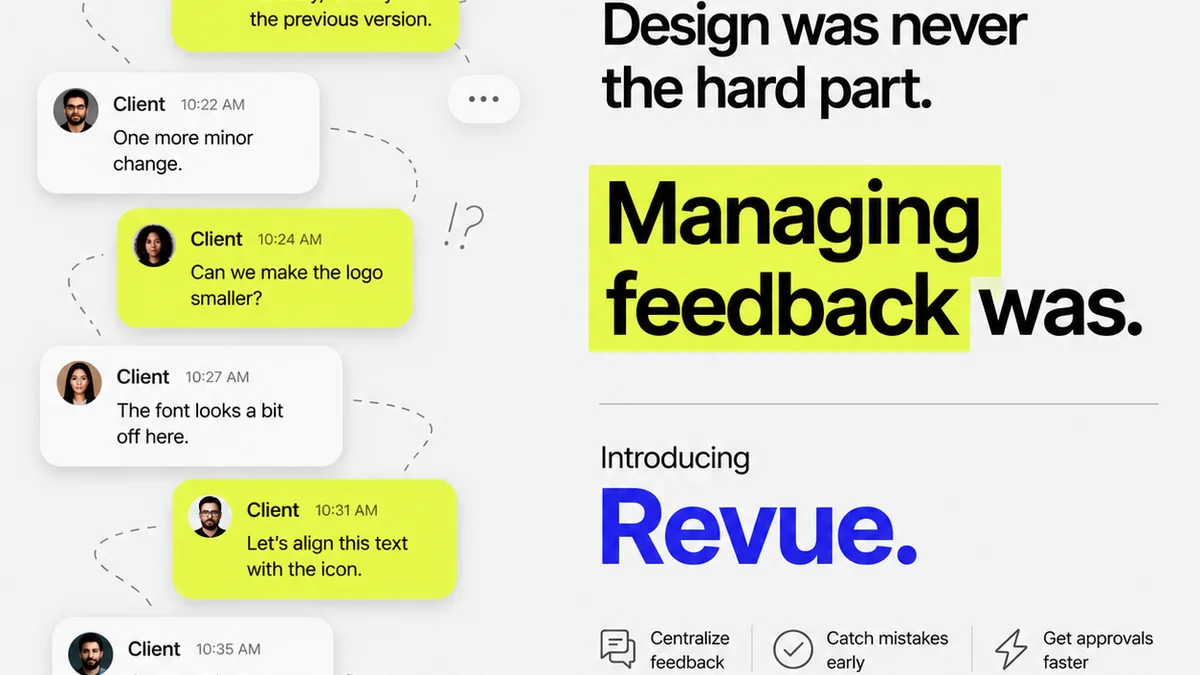
- Centralized Feedback: Consolidate all feedback from stakeholders – clinical teams, regulatory experts, marketing, QA – into a single, organized platform. No more sifting through endless email chains or scattered documents.
- Revision and Approval Visibility: Track the entire revision history of app features, UI elements, or user flows. Clearly see who approved what, when, and any associated comments. This transparency is critical for accountability and auditability.
- Quality Assurance Workflows: Integrate QA feedback directly into the design and development process. Ensure that usability testing, compliance checks, and performance reviews are documented and addressed systematically.
By streamlining the feedback and approval cycles, Revue helps accelerate development, reduce miscommunication, and ensure the final app meets the stringent requirements of the biotech industry. It brings order to the creative chaos, ensuring that the focus remains on delivering a high-quality, compliant, and valuable mobile solution.
Final Thought
The true ROI of mobile app design in biotech isn't just about patient outcomes or data collection for research. It's a powerful lever for operational efficiency, data integrity, and accelerated market entry.
Are you leveraging mobile technology to its fullest potential, not just for patients, but for your own internal engine?
Frequently asked questions
What is the primary ROI driver for mobile apps in biotech?
While patient engagement is important, the primary ROI drivers for mobile apps in biotech often lie in optimizing internal workflows, ensuring data integrity from source, and accelerating product development cycles, leading to significant cost savings and risk reduction.
How can mobile app design improve data integrity in biotech?
Mobile app design can improve data integrity by enabling direct data capture at the source, incorporating real-time validation rules, providing robust audit trails, and offering offline capabilities, all of which minimize transcription errors and ensure data accuracy for regulatory submissions.
Can mobile app development speed up time-to-market for biotech products?
Yes, through agile development methodologies, cross-platform strategies, modular design, and integrated testing, mobile app development can significantly accelerate the creation of essential tools and platforms, contributing to faster product launches and market entry.
How does mobile app design contribute to regulatory compliance in biotech?
Mobile apps can enhance regulatory compliance by incorporating features like digital signatures, version control for documents, automated reporting, and role-based access control, making processes more efficient, auditable, and less prone to error.