The term 'Minimum Viable Product' (MVP) often conjures images of Silicon Valley startups, agile developers, and venture capital. It’s seen as a business strategy, not something relevant to the mission-driven world of nonprofits.
None of that is wrong. But it’s incomplete.
The hard truth is that the principles behind MVP design are not just applicable to nonprofits; they are essential for their sustainability and impact. Nonprofits operate with unique constraints – tight budgets, reliance on donor funding, and the constant pressure to demonstrate tangible results. In this environment, a strategic, phased approach to creative and programmatic development isn't a luxury; it's a necessity.
1. Redefining MVP for the Social Sector
For a nonprofit, an MVP isn't about launching a bare-bones app to test market demand. It’s about launching a core offering, campaign, or program with just enough features or components to satisfy early adopters (donors, volunteers, beneficiaries) and provide feedback for future development.
Think of it this way:
- For a new fundraising campaign: An MVP might be a focused email appeal with a clear call to action and a simple donation page, rather than a multi-channel, multi-event extravaganza.
- For a new volunteer program: An MVP could be a pilot group of 10 volunteers tackling one specific task, instead of a fully fleshed-out program for hundreds.
- For a new awareness initiative: An MVP might be a single, compelling video and social media push, not a comprehensive, multi-platform campaign.
The goal remains the same: learn quickly, iterate efficiently, and maximize impact with minimal waste.
2. The Resource Crunch: Why MVP is Non-Negotiable
Nonprofits are perpetually under-resourced. Every dollar, every hour, must count. Launching a full-scale initiative without validating core assumptions is a high-stakes gamble.
Consider the typical challenges:
- Limited Budgets: Agencies and internal teams often face the impossible task of creating 'everything' with 'very little.'
- Volunteer Burnout: Relying on passionate but often inexperienced volunteers requires clear, manageable tasks. Overwhelming them leads to attrition.
- Donor Fatigue: Repeatedly asking for support without clearly demonstrating impact or progress can erode trust and generosity.
- Mission Drift: Trying to be all things to all people dilutes focus and makes it harder to measure success.
An MVP approach forces prioritization. It helps teams focus on the 'must-haves' that will deliver the most value and learning, deferring the 'nice-to-haves' until impact is proven and resources allow.
2.1. Validating Programmatic Impact
Before scaling a new service or program, an MVP allows you to test its core hypothesis in a controlled environment. Does the service actually meet the need? Are the intended outcomes being achieved? What are the unforeseen barriers?
For example, a food bank might pilot a mobile pantry service in one neighborhood before investing in a fleet of trucks and a city-wide rollout. This pilot phase provides crucial data on logistics, community engagement, and actual need, preventing costly mistakes.
2.2. Optimizing Fundraising Appeals
The effectiveness of fundraising appeals can vary wildly. An MVP allows you to test messaging, channels, and asks with smaller, targeted segments of your donor base.
Instead of launching a massive, expensive direct mail campaign, start with a focused digital appeal. Test different subject lines, images, and calls to action. Analyze the response rates. Use these learnings to refine your approach before a broader rollout, ensuring your limited printing and postage budget is spent on what actually works.
3. Building Momentum Through Iteration
Growth for a nonprofit isn't just about scale; it's about deepening impact and building sustainable support. MVP design fosters a culture of continuous improvement.
Each iteration, informed by real-world feedback, brings the offering closer to its ideal form. This iterative process is crucial for:
- Engaging Stakeholders: Involving beneficiaries, volunteers, and donors in the development process builds ownership and loyalty.
- Adapting to Change: The needs of the community, the funding landscape, and the operational environment are constantly shifting. An iterative approach allows nonprofits to pivot quickly.
- Demonstrating Progress: Showing tangible, albeit small, wins and improvements over time is more motivating for staff, volunteers, and donors than waiting for a perfect, large-scale launch that may never materialize.
3.1. The Feedback Loop is Key
The 'V' in MVP stands for 'Viable' – it must work and deliver value. But the real power comes from the 'M' – 'Minimum' – which allows for rapid feedback.
Gathering feedback systematically is non-negotiable. This means:
- Structured Surveys: Post-interaction surveys for beneficiaries or volunteers.
- Focus Groups: Small, targeted discussions to explore nuances.
- Data Analysis: Tracking key metrics like participation rates, donation conversions, or service utilization.
- Informal Check-ins: Regular conversations with key stakeholders.
This feedback isn't just data; it's the fuel for the next, improved version.
4. Where Revue Fits In
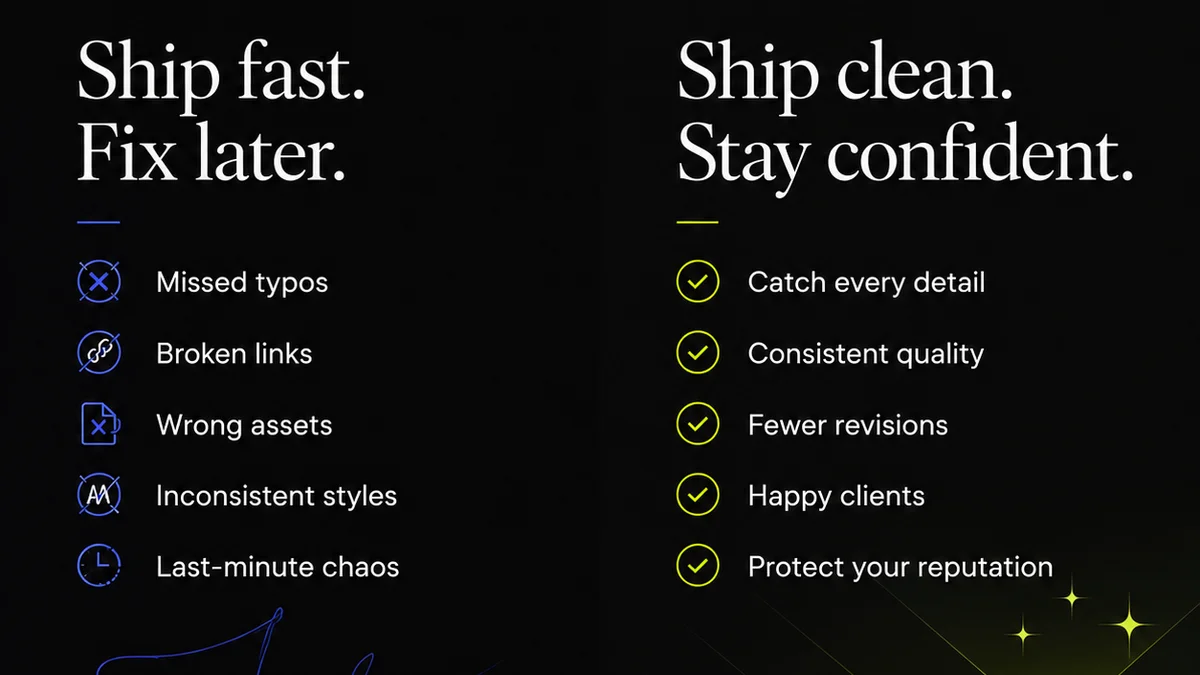
Managing multiple feedback streams, tracking revisions, and ensuring quality across various creative outputs can be chaotic, especially for resource-strapped teams.
This is where a centralized platform like Revue becomes invaluable. It provides a single source of truth for creative assets and client feedback.
- Centralized Feedback: All comments, annotations, and approvals live in one place, reducing the risk of miscommunication or lost feedback.
- Revision Visibility: Easily track the history of changes, understand what was revised based on feedback, and see the evolution of a project. This is critical for maintaining accountability and learning from past decisions.
- Quality Checks: Ensure that final deliverables meet all requirements and brand standards before they are deployed. This is especially important for external-facing materials like fundraising appeals or impact reports.
By streamlining these processes, Revue frees up valuable time and mental bandwidth, allowing teams to focus on strategy and impact, rather than getting bogged down in administrative overhead.
5. Beyond 'Minimum': The Strategic Advantage
Thinking in MVPs doesn't mean settling for subpar quality. It means being strategic about where you invest your limited resources.
It’s about understanding that 'perfect' is often the enemy of 'done' and, more importantly, 'effective.' An MVP allows you to get to 'effective' faster, learn, and then iterate towards 'optimal.' This is a strategic advantage that can differentiate a nonprofit in a crowded landscape.
5.1. Building Trust and Transparency
A phased approach, where progress is shown incrementally, builds trust with donors and stakeholders. They see their contributions leading to tangible, evolving results.
This transparency is powerful. It combats the perception that nonprofit work is opaque or inefficient. Instead, it demonstrates a commitment to responsible stewardship and continuous improvement.
5.2. Fostering Innovation
The fear of failure can stifle innovation in any organization. For nonprofits, the stakes often feel higher due to limited resources.
An MVP mindset lowers the barrier to experimentation. It encourages trying new approaches, knowing that the initial investment is controlled and that learning is the primary outcome. This can lead to more creative solutions and ultimately, greater impact.
6. Final Thought
Is your nonprofit launching initiatives with the assumption that 'more is always better'? Or are you strategically deploying 'just enough' to learn, adapt, and grow? The MVP mindset is not just for startups; it's a powerful engine for mission-driven growth and impact in any sector.
Frequently asked questions
What is an MVP in the context of a nonprofit?
For a nonprofit, an MVP (Minimum Viable Product) is a core offering, campaign, or program launched with just enough features or components to satisfy early users (donors, beneficiaries, volunteers) and gather crucial feedback for future development. It prioritizes learning and efficiency over a fully-scaled launch.
How can MVP design help nonprofits with limited budgets?
MVP design helps nonprofits by forcing prioritization of essential features or components, reducing upfront investment. This allows for testing and validation with minimal resources, preventing costly mistakes and ensuring that limited funds are spent on what demonstrably works.
Is MVP design only for digital products?
No, MVP design principles can be applied to any initiative, including fundraising campaigns, volunteer programs, awareness initiatives, or service delivery. The core idea is to launch a simplified version to test assumptions and gather feedback before committing significant resources.
How does MVP design contribute to nonprofit growth?
MVP design drives growth by enabling nonprofits to learn quickly from real-world feedback, iterate on their offerings, and build momentum through continuous improvement. This iterative process leads to more effective programs and appeals, fostering deeper engagement with stakeholders and sustainable impact.