Most people think packaging design is just about making a box look pretty. They focus on colors, fonts, and maybe a cool illustration.
None of that is wrong. But it’s incomplete.
The Hard Truth About Packaging Design
Effective packaging design isn't just a visual exercise; it's a critical business tool. It’s the silent salesperson on the shelf, the first physical interaction a customer has with your brand, and a key driver of purchasing decisions. Getting it wrong means lost sales, wasted marketing spend, and a weaker brand presence.
This guide cuts through the noise to focus on what truly matters: the strategic, operational, and practical elements that make packaging design work in the real world.
1. Strategy First: Beyond the Pretty Picture
Understanding Your Audience and Market
Before a single pixel is placed or a Pantone color is chosen, you need to know who you're talking to. Who is your ideal customer? What are their needs, desires, and pain points?
What’s the competitive landscape look like? What are competitors doing with their packaging? Where are the opportunities to stand out?
Defining Your Brand's Unique Selling Proposition (USP)
Your packaging must communicate what makes your product or brand different and better.
Is it sustainability? Premium quality? Affordability? Convenience? This USP needs to be crystal clear and visually represented.
Setting Clear Objectives
What should the packaging achieve?
- Increase shelf appeal?
- Communicate product benefits?
- Reinforce brand identity?
- Drive impulse purchases?
- Educate the consumer?
- Meet regulatory requirements?
Without clear goals, design becomes arbitrary. It’s like driving without a destination.
2. The Anatomy of Effective Packaging
Structural Design: Form Follows Function
The shape, size, and material of your packaging are as important as the graphics.
Consider:
- Protection: Does it safeguard the product during transit and handling?
- Usability: Is it easy for consumers to open, use, and store?
- Shelf Presence: How does it stand up, stack, or hang on a retail shelf?
- Sustainability: What materials are used? Are they recyclable or compostable?
- Cost: Does the structure align with production budgets?
Graphic Design: Communicating Visually
This is where the aesthetics come in, but they must serve the strategy.
- Brand Consistency: Does it align with the overall brand identity (logos, colors, typography)?
- Information Hierarchy: Is the most important information (product name, key benefit) immediately visible?
- Visual Appeal: Does it grab attention and look appealing to the target audience?
- Readability: Are text elements clear and easy to read from a reasonable distance?
- Differentiation: Does it stand out from competitors on a crowded shelf?
Information Design: Clarity is King
Consumers need information to make informed decisions.
This includes:
- Product name and description
- Key benefits or features
- Ingredients or materials
- Usage instructions
- Nutritional information (if applicable)
- Brand story or values
- Legal disclaimers and warnings
Think about accessibility. People with visual impairments need clear, high-contrast text. The Web Content Accessibility Guidelines (WCAG) offer principles that can inform good information design even for physical products.
3. Material Matters: The Unseen Influencer
Sustainability and Eco-Consciousness
Consumers are increasingly aware of the environmental impact of packaging.
Using recycled, recyclable, compostable, or biodegradable materials isn't just good for the planet; it's a powerful brand differentiator.
Durability and Protection
The material must adequately protect the product. A cracked bottle or a torn bag is a failed package.
This impacts customer satisfaction and return rates.
Cost and Availability
The chosen materials must be cost-effective for your production volume and readily available from suppliers.
A beautiful design on an unobtainable or prohibitively expensive material is a non-starter.
Sensory Experience
The texture and feel of packaging can influence perception. A premium product might benefit from a matte finish and a tactile coating, while a budget item might use a simpler, glossier finish.
4. The Production Pipeline: From Concept to Shelf
Prototyping and Mock-ups
Before committing to expensive tooling and printing, create realistic prototypes.
This allows for real-world testing of:
- Fit and form
- Structural integrity
- Visual appeal in context
- Usability
Color Management
Achieving consistent color across different materials and printing processes is a major challenge.
Understand color spaces (RGB vs. CMYK) and the importance of calibrated monitors and reliable color proofs. Working with experienced print partners is crucial.
Die-Lines and Printing Specifications
The technical drawings (die-lines) that dictate the cut and fold of the packaging must be precise.
Clear, detailed printing specifications ensure the manufacturer understands exactly what you need regarding inks, finishes, and placement.
Supply Chain Integration
Packaging must integrate seamlessly with your manufacturing and distribution processes.
Will it fit on existing filling lines? Does it meet the size and weight requirements for shipping and warehousing?
5. Legal and Regulatory Hurdles
Compliance is Non-Negotiable
Depending on the product and market, packaging must comply with numerous regulations.
This can include:
- Food and drug labeling requirements
- Child-resistant closures
- Recycling symbols and instructions
- Country-specific import/export labeling
- Warning labels and safety information
Failure to comply can result in fines, product recalls, or market access denial.
Intellectual Property
Ensure your design doesn't infringe on existing trademarks or patents.
Protect your own unique designs where applicable.
Where Revue Fits In
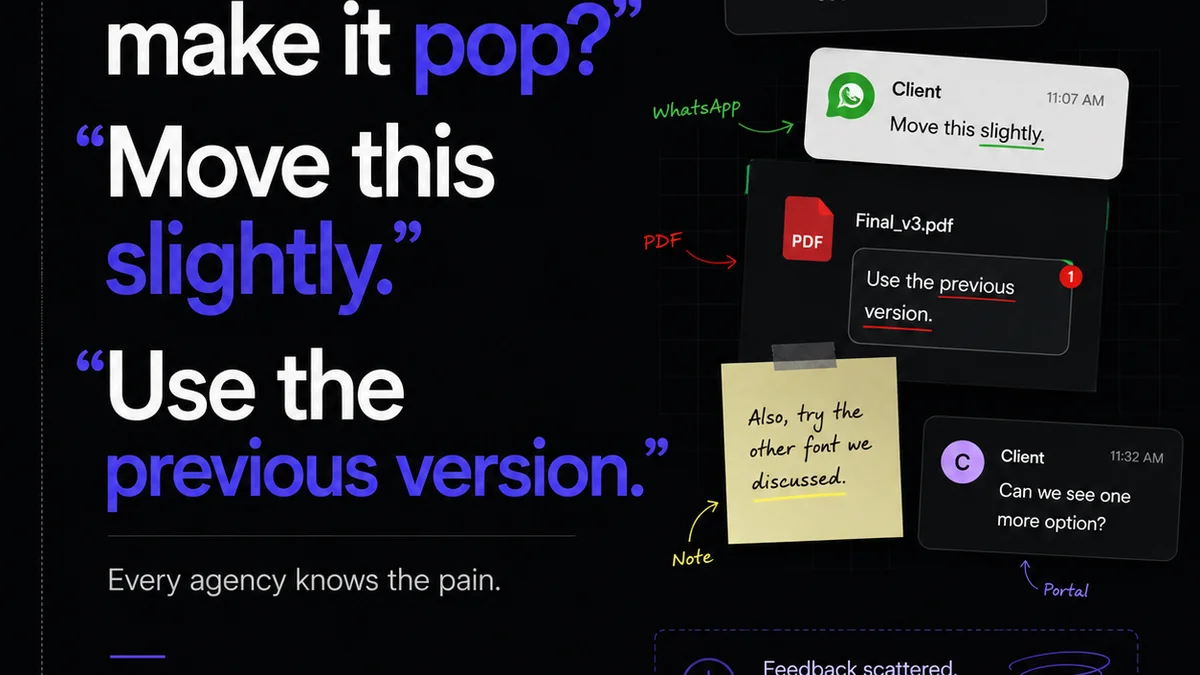
Managing the packaging design process, especially for complex projects with multiple stakeholders, can be chaotic.
Feedback gets lost in email chains, revisions are hard to track, and ensuring final approvals are documented is a constant struggle.
Revue acts as the central hub for all your creative feedback and approvals.
- Centralized Feedback: All comments, annotations, and discussions on design files happen in one place, linked directly to the asset. No more hunting through scattered emails or Slack messages.
- Revision Visibility: Easily track the history of changes, see which feedback was incorporated, and understand the evolution of the design.
- Streamlined Approvals: Set up clear approval workflows to ensure all necessary parties sign off before production, reducing errors and delays.
- Quality Control: Maintain a clear record of the final approved version, serving as a benchmark for quality checks before printing and distribution.
By bringing clarity and control to the feedback and approval loop, Revue helps ensure your packaging design makes it from concept to shelf accurately and efficiently.
Final Thought
Packaging is more than just a container; it's a brand ambassador, a marketing message, and a critical touchpoint in the customer journey.
Are you treating your packaging design as the strategic imperative it is, or just another visual asset?
Frequently asked questions
What is the most important aspect of packaging design?
While visual appeal is crucial, the most important aspect is that the packaging design effectively serves its strategic purpose. This means it must resonate with the target audience, clearly communicate the brand's value proposition, protect the product, and meet all functional and legal requirements. Strategy must always precede aesthetics.
How can I ensure my packaging design is sustainable?
Focus on material selection: opt for recycled, recyclable, compostable, or biodegradable materials. Minimize material usage by optimizing structural design. Consider reusable packaging solutions. Clearly communicate disposal or recycling instructions to the consumer on the packaging itself.
What are the common pitfalls in packaging design production?
Common pitfalls include inconsistent color reproduction due to poor color management, inaccurate die-lines leading to structural errors, choosing materials that are too expensive or difficult to source, and failing to account for the capabilities of the printing and manufacturing equipment. Thorough prototyping and clear communication with production partners are key to avoiding these.
How does packaging design impact sales?
Packaging design directly impacts sales by influencing initial perception, attracting attention on the shelf, communicating key benefits that drive purchase decisions, and reinforcing brand loyalty. Effective packaging can differentiate a product from competitors and encourage impulse buys.