You think print design costs are straightforward. A designer charges an hourly rate, you multiply by estimated hours, and voilà. You have a number.
None of that is wrong. But it’s incomplete.
The hard truth is that print design costs are a complex ecosystem. They’re influenced by far more than just the designer’s time. Factors ranging from the project’s scope and complexity to the chosen vendor and the production process itself can dramatically impact the final bill. Understanding these drivers is key to accurate budgeting and avoiding unwelcome surprises.
1. The Hidden Layers of Print Design Pricing
Beyond the Hourly Rate
While an hourly rate is a common starting point, it’s rarely the whole story. Agencies and freelancers often use project-based pricing, value-based pricing, or even retainers. Each has implications for cost predictability.
Project-based pricing offers a fixed cost upfront, which can be appealing. However, it requires a very clear, detailed brief to avoid scope creep and change orders that inflate the price.
Value-based pricing ties the cost to the perceived value or ROI the design will deliver, which can be higher but is harder to quantify for print materials compared to digital campaigns.
What’s Included? Scope Creep’s Shadow
The biggest variable is almost always the project scope. What exactly does the client need?
- Initial concept development?
- Multiple design directions?
- Specific number of revisions?
- Stock photo licensing?
- Custom illustration or photography?
- Extensive copywriting or editing?
- Print-ready file preparation?
- Multiple file formats for different vendors?
Each of these adds time, expertise, and therefore, cost. Vague scopes are a direct path to budget overruns. Clearly defining deliverables upfront is non-negotiable.
Designer Experience and Specialization
A junior designer will charge less than a seasoned art director with a portfolio full of award-winning print campaigns. Specialization matters too. A designer who *only* does print collateral, understands paper stocks, and has deep relationships with printers might command a premium, but can also save you money through efficiency and expertise.
2. The Anatomy of Print Production Costs
Beyond the Screen: Materiality Matters
Print isn’t just pixels. It’s paper, ink, and physical form. These elements introduce a whole new cost structure.
- Paper Stock: Uncoated, coated, textured, recycled, specialty stocks – each has a different price point. The weight (e.g., 80lb text vs. 100lb cover) also affects cost.
- Ink & Color: Standard CMYK printing is the most economical. Spot colors (like Pantone) or special inks (metallic, fluorescent) increase costs. The number of ink colors used also plays a role.
- Finishing Techniques: This is where costs can escalate quickly. Think
Die-cutting, embossing, debossing, foil stamping, UV coating, laminating, scoring, folding, binding (saddle-stitch, perfect bind), and custom packaging.
Each adds complexity and labor.
Printing Method and Vendor Choice
Different printing methods suit different needs and budgets:
- Digital Printing: Cost-effective for short runs and variable data printing (personalization). Quality is excellent but may not match offset for very large quantities or specific color demands.
- Offset Printing: The traditional choice for high-volume, high-quality print jobs. Requires a setup cost (plates), making it more expensive for small runs but cost-effective per unit at scale.
- Large Format Printing: For banners, signage, etc. Uses specialized equipment and materials.
The printer you choose matters. A high-end boutique printer will have different pricing than a large commercial print shop or an online quick-print service. Consider their equipment, turnaround times, and quality control.
Quantities and Run Sizes
This is a classic economies-of-scale situation. The per-unit cost for printing 5,000 brochures is significantly lower than for 100. The initial setup costs for offset printing are amortized over a larger quantity.
Digital printing narrows this gap, making smaller runs more feasible. Always get quotes for different quantities to find the sweet spot for your needs.
3. Factors that Inflate Print Design Costs
Complexity and Detail
Intricate die-cut shapes, multi-panel folds, intricate die-cuts, spot UV coatings on specific elements, or designs requiring precise color matching (Pantone) all add significant time and specialized handling, driving up costs.
Tight Turnarounds
Rush jobs are expensive. Printers and designers often charge premiums for expedited services. This covers overtime, prioritizing your job over others, and potentially using faster (and more costly) shipping methods.
Revisions and Approvals
Unclear feedback or numerous rounds of revisions are budget killers. Each revision takes designer time for adjustments, proofing, and re-proofing. Delays in client feedback also extend project timelines, potentially incurring additional charges.
Stock Imagery and Licensing
While convenient, high-quality stock photos or illustrations come with licensing fees. These can range from nominal for basic online use to substantial for premium editorial or commercial licenses, especially if used in large print runs.
Custom Elements
Original photography, custom illustrations, or unique infographics require dedicated creative time and talent, adding a significant cost layer beyond standard layout design.
4. Budgeting Strategies for Print Design
Define Your Objectives First
Before you even talk to a designer, know *why* you need the print piece. Is it a leave-behind for sales? A direct mail campaign? Event collateral? Your objective dictates the design's complexity, required materials, and even the print vendor.
Detailed Brief is Your Best Friend
A comprehensive creative brief is the single most effective tool for cost control. It should include:
- Clear project goals and target audience.
- Specific deliverables (e.g., 1 x 8-page brochure, 2 x social media graphics).
- Desired aesthetic and brand guidelines.
- Mandatory content (copy, images, logos).
- Technical requirements (paper type, finishes, size, folds).
- Budget range (if comfortable sharing).
- Timeline and key milestones.
Get Multiple Quotes
Don't settle for the first quote. Obtain detailed proposals from 2-3 reputable designers or agencies. Ensure quotes are apples-to-apples by providing them with the same detailed brief.
Understand the Estimate
Scrutinize every line item. Ask questions about:
- Design hours vs. production hours.
- Specific vendor costs (printing, paper, finishing).
- Licensing fees.
- Contingency allowances.
A transparent estimate is a sign of a professional vendor.
Prioritize and Compromise
If the ideal design exceeds your budget, identify areas for compromise. Can you simplify a finish? Choose a different paper stock? Reduce the number of concepts or revisions?
Factor in Print Production
Always budget separately for design and print production. They are distinct costs. Don't assume the design quote includes printing unless explicitly stated.
Where Revue Fits In
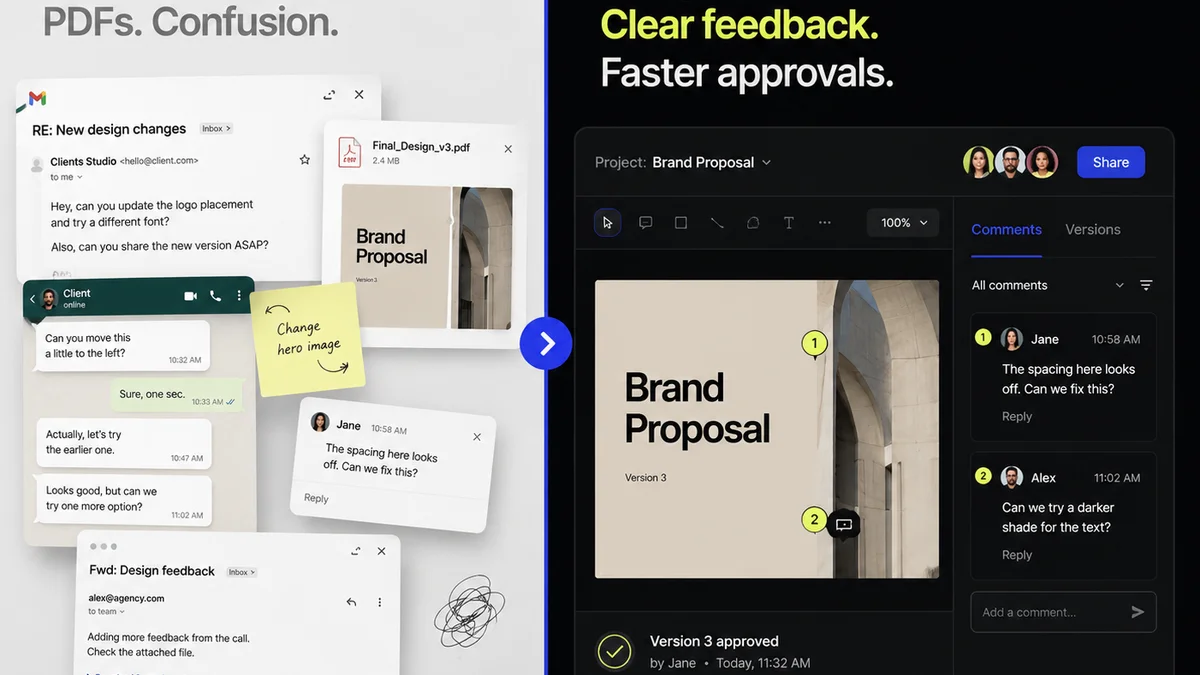
Managing print design projects, especially with multiple stakeholders, introduces communication and approval complexities. Misunderstandings about feedback or revision scope can lead to costly delays and rework.
Revue provides a centralized platform for collecting and organizing client feedback directly on creative assets. This ensures all comments are visible, tracked, and actionable, reducing ambiguity.
Visibility into revision history and approval status helps keep projects on track, minimizing the potential for scope creep and ensuring everyone is aligned on the final design before it goes to print. This streamlined workflow can indirectly help control costs by improving efficiency and reducing errors.
Final Thought
The cost of print design is a blend of creative artistry and tangible production realities. Are you budgeting for both, or just the pixels on the screen?
Frequently asked questions
What are the main components of print design costs?
Print design costs are typically broken down into two main areas: the design work itself (concepting, layout, revisions) and the print production costs (paper, ink, printing method, finishing techniques like die-cutting or embossing).
How much does a typical print design project cost?
Costs vary widely based on complexity, designer experience, location, and specific requirements. A simple flyer might cost a few hundred dollars, while a complex brochure or annual report could run into thousands. It's essential to get detailed quotes based on a clear brief.
What is the difference between digital and offset printing costs?
Digital printing is generally more cost-effective for short runs (under 1,000-2,000 pieces) and offers faster turnaround. Offset printing has higher setup costs (plates) but becomes more economical per unit for very large quantities, often providing superior color consistency for demanding jobs.
How can I reduce print design and production costs?
To reduce costs, provide a highly detailed brief, limit the number of revisions, choose standard paper stocks and finishes, opt for CMYK over spot colors if possible, and get quotes from multiple vendors. Understand economies of scale for printing quantities.