Everyone knows print collateral needs proofing. You check for typos, brand colors, and maybe a missing phone number. That’s the baseline. But for insurance, where accuracy and trust are paramount, simply proofreading isn't enough. It’s like checking the tires on a car but ignoring the brakes. The real challenge lies in catching the subtle, often overlooked errors that can lead to compliance nightmares, client confusion, and costly reprints. This is where a robust print QA checklist becomes non-negotiable.
The hard truth? Your existing proofing process is likely missing critical blind spots. These aren't just aesthetic flaws; they're potential business risks. A comprehensive print quality assurance (QA) process for insurance marketing materials goes far beyond simple spell-checking. It’s about safeguarding accuracy, compliance, and brand integrity at every step.
1. Content Accuracy & Compliance
This is non-negotiable, especially in the insurance industry. A misplaced comma or an outdated policy detail can have significant legal and financial repercussions. Your print QA process must be rigorous here.
Policy Details
Every policy number, coverage limit, deductible, premium amount, and term must be cross-referenced with the official source documentation. Don't rely on memory or previous versions.
Legal Disclaimers & Fine Print
Are all required disclaimers present? Are they legible (meeting minimum font size requirements)? Are they accurate according to current regulations? This is often where errors hide in plain sight.
Contact Information Verification
- Phone numbers: Verify each digit. Check for correct extensions and toll-free status.
- Email addresses: Ensure they are spelled correctly and lead to a valid inbox.
- Website URLs: Test every link. Ensure it resolves to the correct, up-to-date landing page. Check for typos and correct domain usage.
- Physical addresses: Confirm street names, numbers, and zip codes.
Regulatory Adherence
Insurance marketing is heavily regulated. Ensure all materials comply with state and federal guidelines. This includes specific wording requirements, prohibited claims, and disclosure mandates. What’s acceptable today might be non-compliant tomorrow.
2. Brand Consistency & Visual Integrity
Beyond compliance, your print collateral is a brand ambassador. Inconsistencies erode trust and professional image.
Logo Usage
Is the correct logo version used? Are clear space rules followed? Is the logo distorted or improperly colored? Does it appear on every required page?
Color Palette
Are brand colors accurate? Check against the official brand guide. Pay attention to CMYK builds for print, as they differ from RGB for digital. Even slight variations can look unprofessional.
Typography
Is the correct font family used? Are font weights (bold, regular, light) consistent? Are text sizes appropriate for readability, especially for body copy and disclaimers? Check line spacing and kerning where critical.
Imagery & Graphics
Are images high-resolution and appropriate for the content? Are they correctly licensed for use? Are graphics, charts, and icons consistent with brand style? Ensure no pixelation or incorrect color modes.
3. Print Production & Technical Specs
This is where the design meets the press. Errors here lead to wasted money and delays.
File Setup
Is the file set up to the printer's specifications? This includes correct document size, bleed, trim marks, and color profiles (e.g., CMYK for offset, specific profiles for digital). Incorrect setup is a common cause of print errors.
Color Separation & Output
Are spot colors correctly defined if used? Are CMYK values accurate and consistent with brand guidelines or print requirements? Check for overprinting issues or incorrect trapping where needed.
Resolution & File Format
Are all placed images and graphics at least 300 DPI at their final output size? Is the final file saved in the correct format (e.g., high-resolution PDF/X-1a)?
Folding, Binding, and Finishing
If the piece involves folding, ensure the artwork is set up correctly for each panel. For saddle-stitching or perfect binding, check that page order and creep are accounted for. Verify any special finishes like UV coating or embossing are correctly specified and positioned.
4. Data & Personalization Accuracy
For any personalized print collateral, data accuracy is paramount. This is a high-risk area for insurance marketing, affecting policyholders directly.
Variable Data Fields
Every variable field (name, address, policy number, premium, dates) must be checked against the source data. Spot-check multiple records to ensure consistency and correct mapping.
Merge Accuracy
Are the correct data fields merging into the correct placeholders in the design? A misplaced comma or an incorrect field can render the entire piece useless or worse, misleading.
Data Formatting
Ensure dates, currency, and numerical formats are correct for the target audience and compliant with any regulations. For example, a date format like MM/DD/YYYY might be standard in the US but incorrect elsewhere.
Where Revue Fits In
Managing the complexities of print QA, especially with multiple stakeholders and revisions, can be chaotic. This is where a centralized platform like Revue becomes essential for creative agencies and in-house teams.
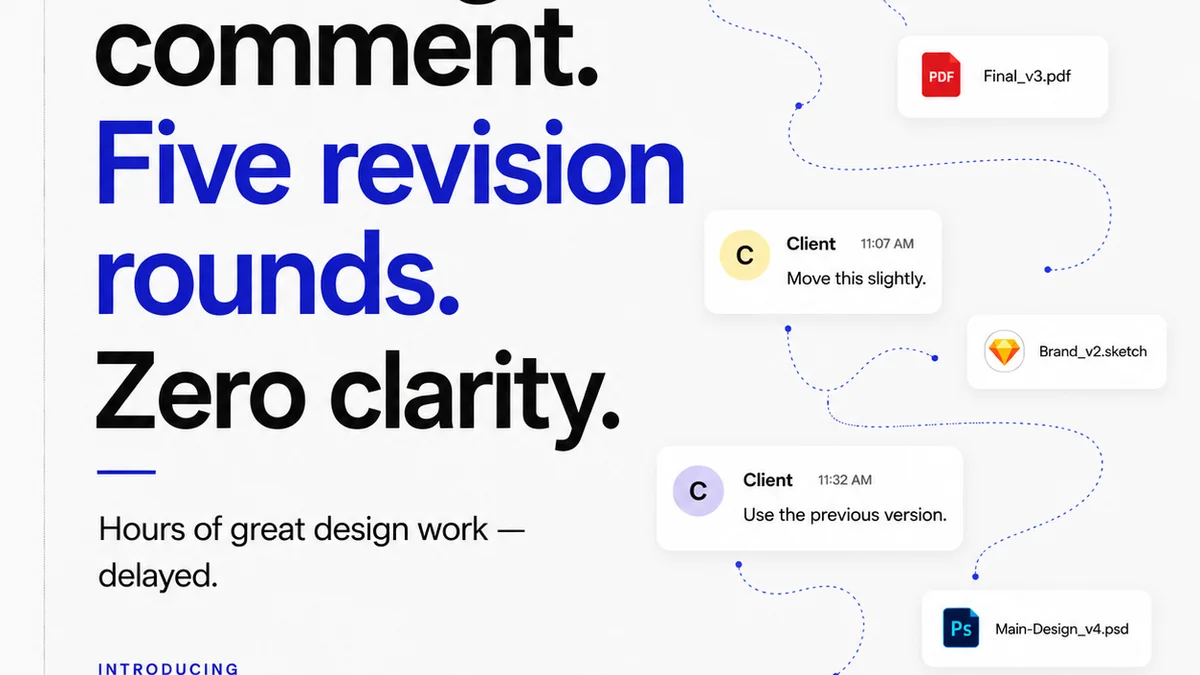
Revue streamlines the entire feedback and approval process. Instead of sifting through endless email chains or Slack messages, all client feedback on design proofs lives in one place, directly linked to the specific version of the asset. This visibility ensures that no critical comments are missed and that revision cycles are tracked meticulously.
For print QA, this means:
- Centralized Feedback: All comments, whether they're about compliance details, brand color accuracy, or a typo in a policy number, are logged against the specific design proof.
- Version Control: Easily compare revisions to ensure changes were implemented correctly and no new errors were introduced. This is crucial for tracking the evolution of a complex document like an insurance policy brochure.
- Clear Approval Workflows: Define who needs to review and approve at each stage, from initial design to final print-ready files. This accountability is key to preventing last-minute errors.
- Audit Trail: Maintain a complete history of feedback, revisions, and approvals. This creates an invaluable record for internal review and, if necessary, for compliance purposes.
By centralizing these steps, Revue helps ensure that the granular details required for accurate print production, especially in a regulated field like insurance, are managed effectively, reducing the risk of costly errors.
Final Thought
Print isn't dead; it's just more complex than ever. Especially in high-stakes industries like insurance, the cost of a single print error can far outweigh the investment in a thorough, systematic quality assurance process. Are you treating your print collateral with the diligence it deserves, or are you just hoping for the best?
Frequently asked questions
What are the biggest risks of poor print QA in insurance marketing?
The biggest risks include non-compliance with regulations leading to fines, client confusion due to inaccurate policy details, damage to brand reputation from unprofessional materials, and significant costs associated with reprinting materials.
How often should I update my print QA checklist?
You should review and update your print QA checklist at least annually, or whenever there are significant changes in regulations, brand guidelines, or printing technology. It's also wise to update it after any major print error occurs to prevent recurrence.
What's the difference between proofreading and print QA?
Proofreading primarily focuses on text-based errors like typos, grammar, and punctuation. Print QA is a broader process that includes proofreading but also covers visual integrity, brand consistency, technical print specifications, compliance, and data accuracy for personalized elements.
Can a digital tool like Revue really help with print QA?
Yes, a tool like Revue helps by centralizing feedback, tracking revisions, and managing approvals. This ensures that all stakeholders review the correct versions and that comments related to print accuracy and compliance are captured and actioned, reducing errors caused by miscommunication or lost feedback.