E-commerce is all about speed and digital fluency. You optimize for clicks, conversions, and seamless online experiences. It’s easy to assume that once the digital asset is approved, the job is done. That’s the common assumption: digital approval equals final approval.
None of that is wrong. But it’s incomplete.
The hard truth is that for many e-commerce businesses, the physical product and its packaging are the ultimate touchpoints. And if those don’t measure up, all your digital efforts can crumble. Print quality assurance (QA) isn’t a relic of a pre-digital age; it’s a critical component of a modern e-commerce strategy.
1. The Tangible Brand Experience
Your website, your app, your social media – they all build your brand. But the moment a customer receives their order, the physical experience takes over. This is where your brand promise is truly tested.
A poorly printed box, a faded logo on a product tag, a smudged instruction manual – these aren’t just minor errors. They’re direct assaults on perceived quality and professionalism.
The Ripple Effect of Poor Print Quality
- Decreased customer trust.
- Lowered perceived value of the product.
- Increased likelihood of negative reviews.
- Higher return rates due to dissatisfaction.
In e-commerce, where you don’t have a physical storefront to build trust, every single interaction, especially the first physical one, is magnified. Print QA is your last line of defense before the customer forms an opinion based on a sub-par physical product.
2. Beyond the Screen: Color, Material, and Finish
Digital design tools are powerful, but they operate in a world of RGB and pixels. Print operates in CMYK (or spot colors) and deals with physical substrates, inks, and finishes. The translation isn’t always seamless.
Color shifts are notorious. What looks vibrant on your calibrated monitor can appear dull or completely different on paper or packaging. This isn't just an aesthetic issue; it can misrepresent product colors, brand colors, or critical safety information.
Key Print QA Considerations
- Color Accuracy: Ensuring CMYK or Pantone matches expectations.
- Ink Adhesion and Durability: Will the print smudge or fade easily?
- Paper/Material Quality: Does the stock feel cheap or premium?
- Finishing Effects: Are varnishes, laminates, or embossing applied correctly and consistently?
- Bleed and Trim: Are design elements cut off cleanly or is there unwanted white space?
This is where design-for-print knowledge becomes essential. Your digital approval might cover the layout and copy, but it rarely covers the nuances of physical production. That requires a separate, dedicated QA step.
3. Packaging as a Marketing Tool
For many e-commerce brands, packaging isn't just a container; it's a vital part of the marketing and unboxing experience. Think about brands that have built a reputation on their distinctive packaging – the unboxing videos, the shareable moments.
If your packaging is meant to impress, then its print quality must be impeccable. A cheap-looking print job on a premium box sends a confusing message. It undermines the perceived value of the product inside.
Elevating the Unboxing Experience
- Brand Consistency: Logo, colors, and typography must be sharp and accurate.
- Information Clarity: Product details, instructions, and legal text must be legible.
- Durability: The packaging must arrive in good condition, protecting the product.
- Aesthetic Appeal: The overall look and feel should align with brand positioning.
A robust print QA process ensures that this crucial marketing asset performs as intended. It turns a simple box into a powerful brand statement.
4. Reducing Costs and Waste
It might seem counterintuitive, but investing in thorough print QA actually saves money and reduces waste in the long run.
Imagine a large batch of packaging arriving with a critical printing error. You might have thousands of boxes that are unusable. The cost of reprinting, shipping, and the delay in fulfilling orders can be astronomical.
The Cost of Skipping QA
- Spoiled Inventory: Entire print runs rejected due to errors.
- Rework and Reprinting: Urgent, often more expensive, reorders.
- Delayed Shipments: Impacting customer satisfaction and sales velocity.
- Customer Returns: Driven by dissatisfaction with product or packaging appearance.
- Brand Damage: Long-term impact that’s hard to quantify but very real.
Proactive print QA identifies issues before mass production. It’s about catching errors early, when they are cheapest and easiest to fix. This prevents the snowball effect of costly mistakes.
5. Ensuring Regulatory Compliance
Depending on your industry, print elements on packaging, labels, or product inserts might need to meet specific regulatory standards. Think about nutritional information on food products, warning labels on chemicals, or safety certifications on electronics.
Errors in these critical print areas can lead to serious legal and financial repercussions. Illegible text, missing information, or incorrect symbols can result in fines, product recalls, or even lawsuits.
Compliance-Critical Print Elements
- Ingredient lists and nutritional facts.
- Allergen warnings.
- Usage instructions and safety precautions.
- Country of origin labels.
- Certification marks (e.g., CE, UL, FDA).
Your print QA process must include a rigorous check of all legally mandated information. This isn't just about aesthetics; it's about legal and ethical responsibility.
Where Revue Fits In
Managing the journey from digital design to final printed product involves many moving parts. Client feedback, designer revisions, and final approvals can become chaotic, especially when print-specific details are involved.
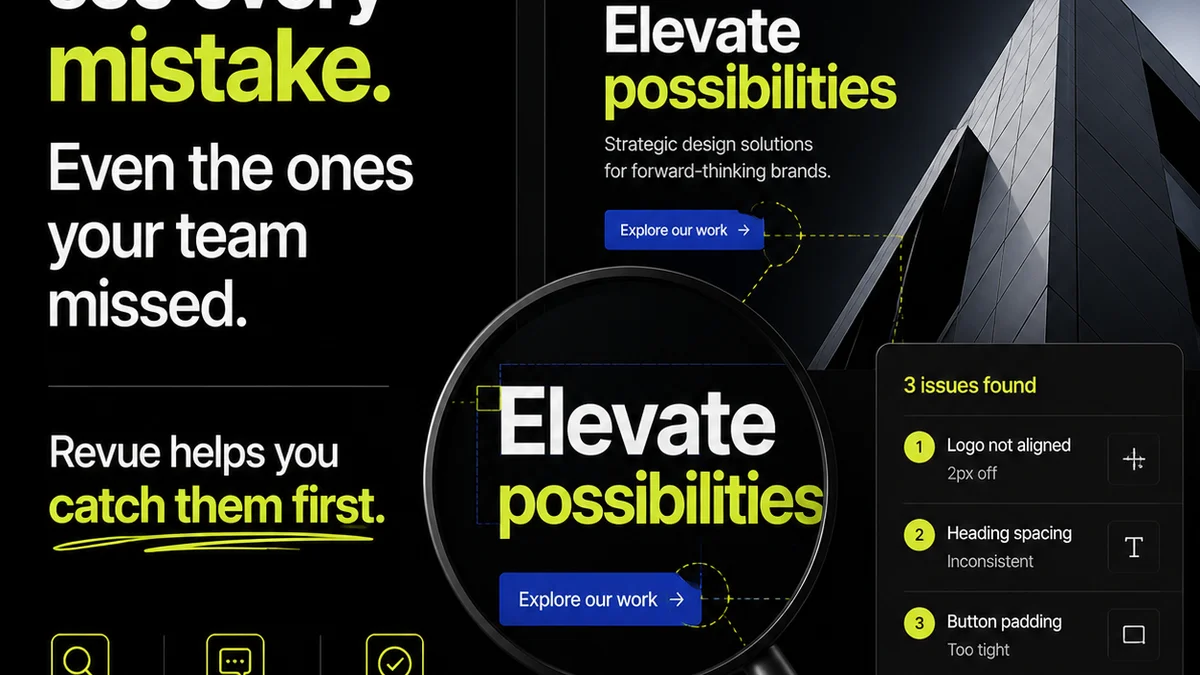
This is where a centralized platform like Revue becomes invaluable. Instead of relying on scattered email threads and endless spreadsheets, you can manage all creative assets and feedback in one place.
Streamlining Creative Workflows
- Centralized Feedback: All comments, annotations, and approvals are logged against specific versions of assets, including print-ready files.
- Revision History: Track every change, ensuring that print specifications discussed and agreed upon are carried through.
- Clear Approval Chains: Define who needs to sign off on final print-ready files, reducing ambiguity and bottlenecks.
- Quality Check Integration: Use the platform to document and track final QA checks against print proofs or early samples.
By bringing clarity and structure to your creative process, Revue helps ensure that the digital approval accurately reflects the intended physical output, minimizing errors before they hit the press.
Final Thought
In the relentless pursuit of digital optimization, it’s easy to forget the power of the tangible. For e-commerce businesses, the printed word and image on a product or its packaging are often the most enduring impression you make.
Is your current workflow treating print QA as an afterthought, or as the critical brand safeguard it truly is?
Frequently asked questions
What is print quality assurance (QA)?
Print QA is the process of inspecting printed materials to ensure they meet specific quality standards before mass production or distribution. This includes checking for color accuracy, print clarity, material integrity, and adherence to design specifications.
How does print QA impact e-commerce customer experience?
Poor print quality on packaging or products can lead to a negative first impression, reduce perceived value, and damage customer trust. Excellent print QA ensures that the tangible product experience matches the brand's promise, enhancing satisfaction and loyalty.
Why is color accuracy important in e-commerce print?
Color accuracy is vital because it ensures product colors, branding, and important information are represented as intended. Significant color shifts can mislead customers, misrepresent the product, or obscure critical details, leading to dissatisfaction and potential returns.
Can print QA help reduce e-commerce costs?
Yes, by catching errors early in the production process, print QA prevents costly mistakes like reprinting entire batches, dealing with rejected inventory, and managing customer returns due to quality issues. It's a proactive measure that saves money in the long run.
How does digital approval relate to print QA?
Digital approval confirms the design and content on screen. Print QA, however, verifies how that approved design translates to physical materials, considering factors like ink, paper, color reproduction, and finishing. They are distinct but connected steps in ensuring final product quality.