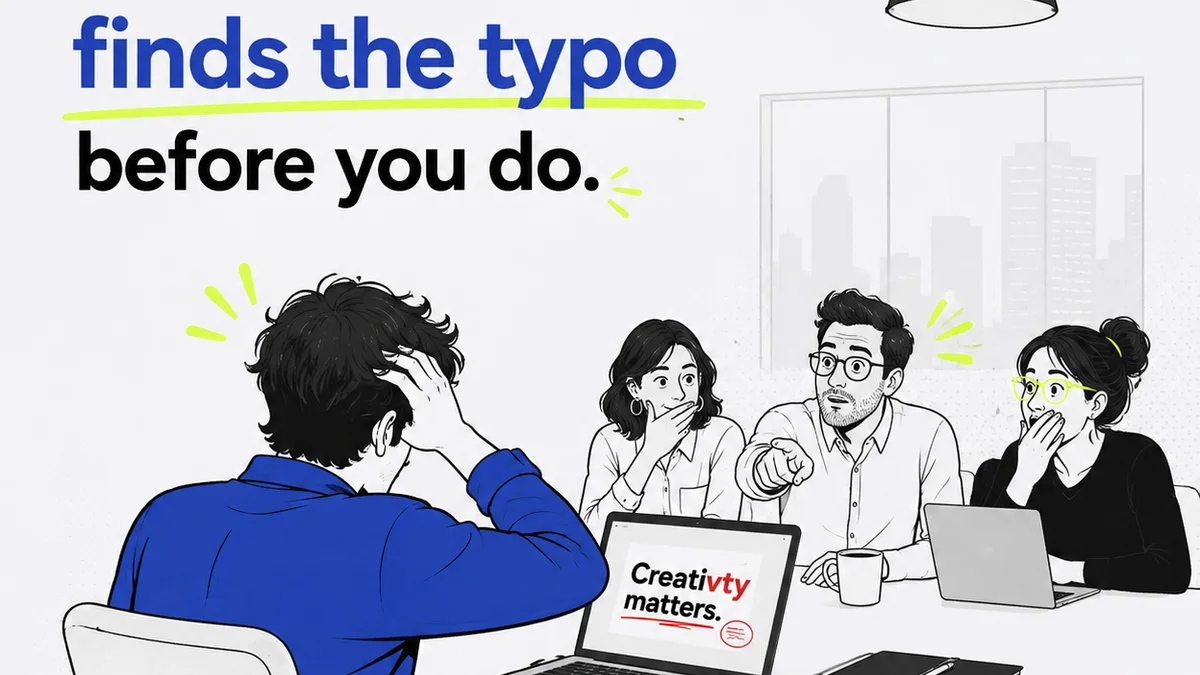
Everyone thinks print quality assurance (QA) is about catching typos and ensuring CMYK values are correct before hitting the press. That’s the obvious stuff. The part everyone sees.
But that’s like saying a chef’s job is just about chopping vegetables. It’s a necessary step, sure, but it misses the entire operational ballet that makes the final dish sing. For creative teams, print QA is far more than a final eyeball check on a PDF. It’s a critical, often messy, workflow bottleneck that can make or break client relationships and project profitability.
1. The Myth of the 'Final' PDF
The assumption is that once a PDF is approved, the print job is a done deal. Approved means perfect. Approved means no more changes, no more confusion.
This is rarely the reality. Clients have a funny way of spotting something they “don’t like” *after* sign-off. Or a printer might flag an issue that requires a compromise. Or maybe the color shifts unexpectedly under different lighting conditions than the monitor displayed.
The real truth? The PDF is just one snapshot in a longer, more complex chain of communication and execution. Your print QA process needs to account for the inevitable friction points that arise *after* that digital file leaves your hands.
The Feedback Loop Black Hole
Think about the typical print project:
- Concept and design phase.
- Client review rounds on digital mockups.
- Design freeze, then production file prep.
- PDF generation.
- Client approval of the PDF.
- File handover to the printer.
- Printer performs their own checks (often limited).
- Proofing stage (digital or physical).
- Final print run.
Where do things go wrong? Almost everywhere, if you’re not careful. The most common failure point is the assumption that the client’s PDF approval is the end of their input. It’s often just the *beginning* of their anxiety about the physical output.
Color is Not What You See
Monitors are calibrated. Printers are calibrated. But the space between them is vast and unpredictable. What looks stellar on a calibrated Eizo monitor might appear dull or oversaturated on a printer’s proof, let alone the final stock under retail lighting.
This isn’t just a technical issue; it’s a client expectation management issue. Your QA must include managing the client’s understanding of color reproduction, not just its digital accuracy.
2. Operationalizing Print QA: Beyond the Checklist
A robust print QA process isn’t just a list of technical checks. It’s a system designed to manage variables, communicate clearly, and mitigate risk. It’s about process, not just pixels.
Standardizing File Preparation
Before any PDF is sent for approval, your team needs a consistent method for preparing files. This means:
- Correct color profiles (e.g., SWOP, GRACoL).
- Bleed and trim marks set accurately.
- Font embedding and outlining handled correctly.
- Resolution checks (300 DPI for most print).
- Vector vs. raster elements managed appropriately.
- Spot colors vs. process colors clearly defined.
This isn't just for the designer; it's a handoff point. Ensure your designers know the specs and your production team verifies them rigorously before any client sees the file.
The Client Brief vs. The Final Output
Did the client ask for a matte finish but the printer quoted gloss? Did they mention a specific paper weight that wasn't documented? These details get lost.
Your QA process must bridge the gap between the initial brief and the final production spec. This means cross-referencing the original scope document with the print spec sheet and the client’s approvals at every stage.
Managing the Proofing Process
Proofs are your last real chance to catch issues before mass production. But what kind of proof? And who is responsible for checking it?
- Digital proofs (PDFs): Good for layout and content, bad for accurate color and tactile feel.
- Contract proofs (e.g., Epson Stylus Pro): Better for color, but still a simulation.
- Press pulls (from the actual press): The most accurate, but expensive and time-consuming.
Your QA protocol should define:
- What type of proof is required based on project value and complexity.
- Who on your team is designated to review the proof against the approved PDF and brief.
- How client feedback on proofs is captured and relayed.
Mistakes here are costly. A missed color shift or a misplaced element on a press pull can mean thousands of dollars wasted.
3. The Human Element: Roles and Responsibilities
Who owns print QA? Too often, it’s a shared responsibility that becomes no one’s responsibility. Or it falls solely on the designer, who is already swamped with creative work.
Designers vs. Production Specialists
Designers are focused on aesthetics and client satisfaction. Production specialists are focused on technical feasibility and cost-efficiency. Both perspectives are vital for QA.
Ideally, you have someone on your team whose primary role is production oversight, or at least a senior designer who acts as a gatekeeper for print-ready files. This person isn't just checking for obvious errors; they're thinking about the entire production lifecycle.
Client Communication is Key
Educating the client is part of QA. If they don’t understand the limitations of CMYK printing or the difference between paper stocks, they’re more likely to be unhappy with the final product—even if it’s technically perfect.
Your process should include clear communication:
- Setting expectations about color reproduction early on.
- Explaining the different proofing options and their pros/cons.
- Defining the scope of client approvals at each stage.
This proactive communication prevents nasty surprises and costly revisions down the line.
4. Where Revue Fits In
Managing print projects, especially when feedback loops are complex and multiple stakeholders are involved, demands clear visibility and control. This is where a tool like Revue can streamline your operations.
Revue isn’t just for digital assets. Its core functionality—centralizing feedback, managing revisions, and tracking approvals—is directly applicable to print workflows.
Centralized Feedback and Version Control
Instead of chasing emails or deciphering Slack messages about a print job, all feedback related to a specific project can live in one place. When a PDF is uploaded for review, comments are attached directly to the relevant areas. This creates a clear audit trail.
Revision and Approval Tracking
Did the client approve version 3 of the brochure PDF, but then ask for a change that was only supposed to be on version 2? Revue’s structured approval system ensures that each sign-off is tied to a specific version. This eliminates ambiguity about what was *actually* approved.
When it comes to print, knowing precisely which version of a file was signed off on is non-negotiable. It’s your protection against scope creep and disputes.
Quality Checks and Handoffs
The platform can serve as the final checkpoint before files are sent to the printer. A designated team member can log in, review the latest approved file, and confirm that all technical specifications required for print are present and correct. This systematic approach ensures that your final print QA is thorough and documented.
5. Final Thought
Print isn't dead; it's just evolving. And the way we manage its quality assurance needs to evolve with it. Moving beyond the simple PDF check requires a strategic approach to workflow, communication, and accountability.
Are you treating print QA as an afterthought, or as a critical component of your creative delivery process? The answer might be costing you more than you think.
Frequently asked questions
What is the most common mistake in print QA?
The most common mistake is treating the client's PDF approval as the final word. This overlooks the complexities of color reproduction, material variations, and the potential for post-approval client anxiety or changes. A robust QA process acknowledges that the PDF is just one step in a longer chain.
How can creative teams manage client expectations for color accuracy in print?
Manage expectations by educating clients early about the differences between monitor display (RGB) and print (CMYK), the limitations of color reproduction, and the role of paper stock and finish. Clearly define what kind of proofing will be used (digital, contract, or press pull) and what level of color fidelity each offers.
Who should be responsible for print QA in a creative agency?
Ideally, print QA should involve both designers and production specialists. While designers ensure aesthetic and content accuracy, production specialists focus on technical feasibility, file preparation, and adherence to printer specifications. Having a dedicated production lead or a senior designer responsible for final file checks is crucial.
How does a tool like Revue help with print QA?
Revue helps by centralizing all feedback and approvals related to print files, providing a clear version history and audit trail. This prevents confusion about which version was signed off on and ensures that all communication is logged, making the final quality check and file handoff more secure and efficient.