You’ve probably seen a product launch approval checklist. It’s a standard document, full of checkboxes for marketing assets, legal reviews, and final sign-offs. None of that is wrong. But it’s incomplete.
The hard truth is that a truly successful product launch isn't just about ticking boxes. It's about a deeply integrated process that catches potential failures *before* they happen.
1. The Pre-Launch Foundation: Beyond the Brief
Most checklists start with the brief. That’s fine. But what comes *before* the brief? What’s the real operational readiness?
Understanding the 'Why' and 'Who'
A launch isn’t just an event; it’s the culmination of strategy. This means:
- Deep market research validation.
- Clear definition of the target audience's pain points.
- Unassailable product-market fit confirmation.
- Defined success metrics that are measurable and meaningful.
If these aren't crystal clear, your launch is built on sand.
Internal Alignment is Non-Negotiable
Before any external asset is created, your internal teams need to be rowing in the same direction. This involves:
- Cross-functional workshops to ensure everyone understands the product value proposition.
- Clear roles and responsibilities for launch execution and post-launch support.
- Sales enablement materials that are not just informative, but actionable.
- Customer support readiness, including FAQs and training.
A disconnect here means your external message will likely falter.
2. Asset Creation and Review: The Detail Trap
This is where most checklists shine. But even here, common pitfalls exist.
The 'Looks Good' Fallacy
A visual review is critical, but it’s only one layer. Beyond aesthetics, you need to verify:
- Accuracy: Are all product claims, features, and benefits factually correct?
- Consistency: Does the messaging align across all touchpoints?
- Clarity: Is the language simple, direct, and easy for the target audience to understand?
- Compliance: Does it meet all regulatory and legal requirements?
This requires more than just a marketing or design sign-off. Legal, product, and even finance might need a say.
The Iteration Overload
Endless revision cycles kill momentum and creativity. A strong approval process means:
- Defining clear revision limits upfront.
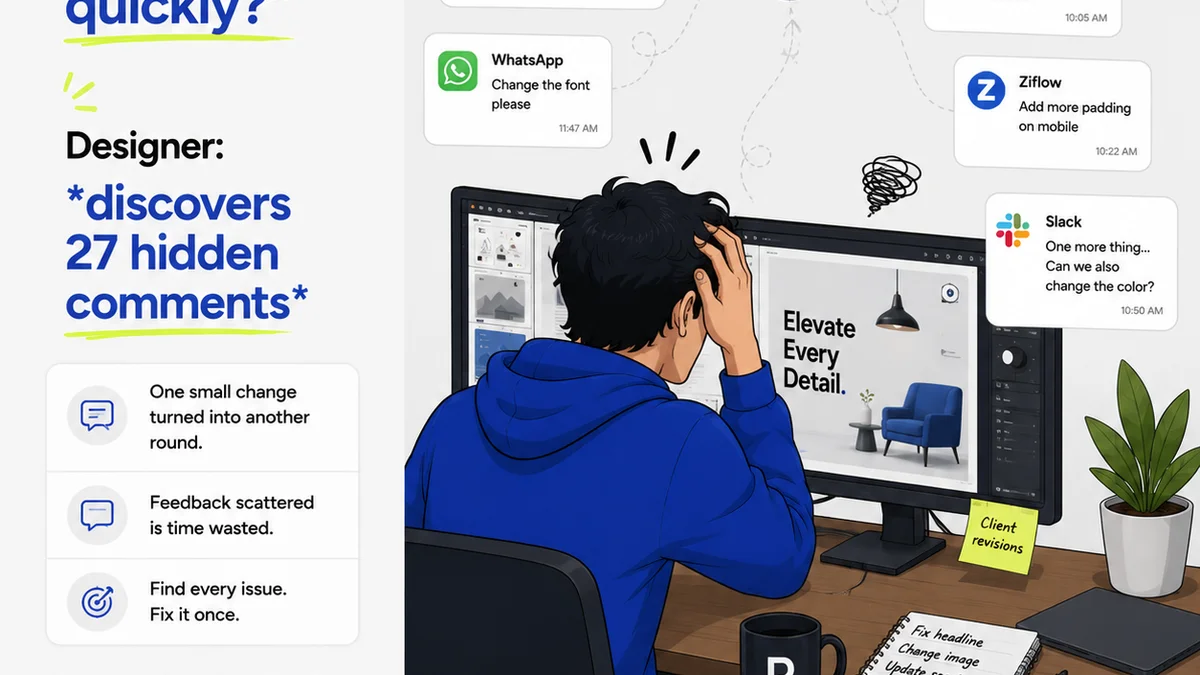
- Establishing a single source of truth for feedback.
- Using tools that provide contextual feedback, not just broad comments.
- Having a designated decision-maker for final calls.
Too many cooks spoil the broth, especially when they’re all adding ingredients without a clear recipe.
3. Technical Readiness: The Hidden Critical Path
Often an afterthought, technical readiness is where launches spectacularly fail.
Website and Landing Page Checks
This isn't just about whether the page loads. It's about:
- Performance: Page speed, mobile responsiveness.
- Functionality: Forms, CTAs, links, checkout process (if applicable).
- SEO: On-page optimization, meta tags, schema markup.
- Analytics: Tracking codes implemented correctly, goals set up.
A slow, broken, or untrackable page is a launch killer.
Integration Testing
If your product launch involves integrations with other systems (CRM, email marketing, payment gateways), these must be tested rigorously.
- End-to-end user flows across integrated systems.
- Data synchronization accuracy.
- Error handling and fallback mechanisms.
A seamless user experience relies on these connections.
4. Go-to-Market Execution: The Launch Day Blitz
The actual launch day requires precision timing and coordination.
Phased Rollout vs. Big Bang
Decide your strategy early. A phased rollout allows for controlled testing and iteration. A big bang demands near-perfect readiness across all channels.
Channel Readiness
Each launch channel needs its own checklist:
- Email: List segmentation, campaign scheduling, A/B tests.
- Social Media: Content calendar, scheduled posts, community management plan.
- Paid Ads: Campaign setup, targeting, budget allocation, creative assets.
- PR: Press release distribution, media outreach, embargo management.
Missing one channel can cripple the overall impact.
Contingency Planning
What if the server crashes? What if a key integration fails? What if there’s a PR crisis?
- Identify potential failure points.
- Develop backup plans for critical systems.
- Establish a crisis communication protocol.
Hope for the best, but plan for the worst.
5. Post-Launch Monitoring: The Marathon, Not a Sprint
The launch isn’t over when the product goes live. This is where many teams drop the ball.
Performance Tracking Against Goals
Revisit your initial success metrics. Are you hitting them?
- Sales figures and revenue.
- User acquisition and activation rates.
- Customer feedback and sentiment analysis.
- Website traffic and conversion rates.
Regular, data-driven analysis is key.
Feedback Loop Implementation
Gathering feedback is only half the battle. You need a system to:
- Consolidate feedback from all channels (support, social, reviews, sales).
- Prioritize issues and feature requests.
- Communicate updates and resolutions back to users.
This builds loyalty and informs future iterations.
Iterative Improvement
Use the data and feedback to:
- Identify areas for product improvement.
- Optimize marketing campaigns.
- Refine the user onboarding process.
A successful launch is the *start* of a product's journey.
Where Revue Fits In
Managing all these moving parts—from initial brief to post-launch analysis—is a massive undertaking. A robust approval process is crucial, but it needs the right tools.
Revue helps centralize client feedback, making it easier to track approvals and revisions across all your launch assets. No more digging through emails or scattered documents. You get clear visibility into the revision history, ensuring that every sign-off is documented and every stakeholder is accounted for.
This streamlined process reduces ambiguity, speeds up review cycles, and ensures that what finally launches has gone through a thorough, well-documented quality check. It’s about bringing order to the chaos of creative approvals.
Final Thought
A product launch approval checklist is a tool, not a magic wand. Its effectiveness depends entirely on the rigor of the process it represents. Are you just checking boxes, or are you truly building confidence and mitigating risk?
Frequently asked questions
What's the most common mistake in product launch approval checklists?
The most common mistake is treating the checklist as the entire process. A checklist is a record of completion, not a guarantee of strategic alignment, technical readiness, or market validation. Many checklists focus only on marketing asset sign-offs, neglecting crucial pre-launch strategy and post-launch monitoring.
How can I ensure internal teams are aligned before launch?
Conduct cross-functional workshops early in the process to define the product's value proposition and target audience. Establish clear roles and responsibilities for launch execution and post-launch support. Ensure sales and customer support teams are fully trained and equipped with necessary materials.
What technical aspects are critical for launch approval?
Technical readiness includes website/landing page performance (speed, responsiveness), full functionality testing (forms, CTAs, checkout), SEO optimization, correct analytics tracking implementation, and rigorous integration testing with any third-party systems. A technically sound product experience is paramount.
How important is post-launch monitoring in the approval process?
Post-launch monitoring is critical. The 'approval' shouldn't stop at launch day. It extends to tracking performance against defined metrics, actively collecting and analyzing user feedback, and implementing iterative improvements. This ensures the launch's success is sustained and informs future product development.