Everyone talks about project management as a way to keep projects on track. To prevent scope creep. To hit deadlines. None of that is wrong.
But it’s incomplete.
The hard truth? For creative agencies, robust project management isn't just about delivery; it’s the primary lever for driving scalable business growth. It’s not a support function; it’s a strategic imperative.
1. From Chaos to Capacity: Scaling Your Operations
The default state for many growing agencies is chaos. Projects pile up. Teams scramble. Clients get impatient. This isn't a sign of high demand; it's a sign of operational breakdown.
Effective project management systems build capacity. They create predictable workflows that can handle more volume without a proportional increase in stress or errors.
The Bottleneck Myth
Many agency leaders believe their capacity is limited by talent – the number of designers, writers, or strategists they can hire. That's often a secondary constraint.
The primary constraint is usually the *process* for managing the work. Without clear processes, even the best talent gets bogged down in context switching, chasing feedback, and dealing with preventable issues.
Building Predictable Throughput
- Standardized project kickoff procedures.
- Defined roles and responsibilities for every project phase.
- Clear communication protocols for internal teams and clients.
- Templated project plans for common service offerings.
- Automated task assignments and reminders.
These aren't just busywork. They are the building blocks of an agency that can reliably take on more work, delight more clients, and ultimately, grow its revenue.
2. The Profitability Engine: Visibility and Control
Profitability isn't an accident. It's the direct result of knowing where your time and resources are going, and having the control to steer them effectively.
Project management provides that critical visibility.
Unmasking Hidden Costs
Where does your agency bleed money?
- Unbilled hours.
- Excessive revisions due to unclear feedback.
- Scope creep that isn't captured or charged.
- Inefficient resource allocation leading to idle time or burnout.
- Time spent searching for information or project assets.
These are profit drains. Good project management systems shine a light on them.
Data-Driven Decision Making
When you can track project hours, resource allocation, and client feedback cycles accurately, you move from guesswork to data-driven decisions.
This allows you to:
- Price future projects more accurately.
- Identify your most (and least) profitable service offerings.
- Optimize team assignments for maximum efficiency.
- Negotiate better terms with clients based on historical data.
This isn't about micromanagement; it's about having the insights to make your agency more profitable and sustainable.
3. Client Retention: The Feedback Loop Advantage
Happy clients come back. Unhappy clients leave. It’s that simple.
And what’s the biggest driver of client happiness in a creative agency? A smooth, transparent, and efficient feedback and approval process.
The Frustration Cycle
Think about the common points of friction:
- Clients don't know who to send feedback to.
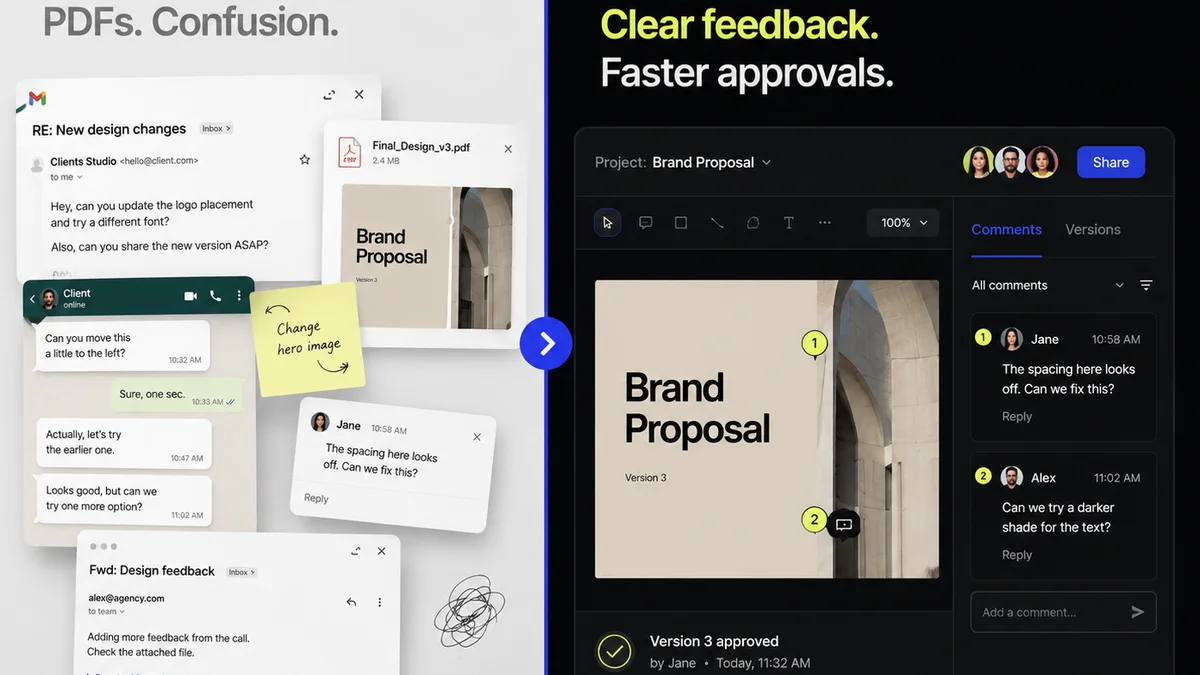
- Feedback is scattered across emails, Slack messages, and random documents.
- Revisions are made without full context, leading to more back-and-forth.
- Approvals get lost, causing delays and client frustration.
- Clients feel out of the loop and unheard.
This isn't just annoying for the client; it’s a direct threat to your relationship and future business.
Streamlining for Satisfaction
Project management tools, especially those built for creative workflows, transform this experience.
They centralize feedback, provide clear version control, and create an undeniable audit trail for approvals.
When clients experience a process that is:
- Clear and easy to navigate.
- Transparent with all stakeholders.
- Efficient, reducing turnaround times.
- Professional and organized.
They feel confident and valued. This directly translates to higher retention rates and more positive word-of-mouth referrals.
4. Risk Mitigation: Protecting Your Reputation and Revenue
Every project carries risk. Unmanaged, these risks can derail your business.
Project management is your agency's risk mitigation strategy.
Common Pitfalls
- Missed deadlines leading to contractual penalties or damaged client trust.
- Budget overruns that erode profitability.
- Poor quality output due to rushed work or lack of checks.
- Intellectual property disputes arising from unclear asset management.
- Team burnout leading to high turnover and loss of institutional knowledge.
These aren't minor hiccups; they can be existential threats.
Proactive Defense
A structured project management approach builds in defenses:
- Clear scope definition and change control processes.
- Regular budget reviews and forecasting.
- Quality assurance gates at critical project milestones.
- Centralized asset management and version history.
- Resource planning that prioritizes team well-being.
By anticipating potential problems and building processes to prevent or manage them, you protect your agency's reputation, financial health, and long-term viability.
Where Revue Fits In
You might be thinking, "This sounds great, but how do we actually implement it?" That's where specialized tools come in.
Revue is built for the unique challenges of creative agencies. It’s not just another task list; it’s a workflow accelerator designed to tackle the specific pain points that hinder growth.
Centralize client feedback in one place, eliminating scattered communication and ensuring everyone sees the same context. Manage revisions and approvals with clear version control and audit trails, turning potential disputes into transparent processes. Implement automated quality checks to ensure standards are met before work goes out the door.
By streamlining these critical, often chaotic, parts of the creative process, Revue helps you unlock capacity, improve profitability, delight clients, and mitigate risk – all foundational elements for driving sustainable business growth.
Final Thought
Is your project management system a source of operational friction, or is it your most powerful engine for growth? The answer reveals more about your agency's future than you might think.
Frequently asked questions
How does project management directly lead to business growth?
Project management drives growth by increasing operational capacity, improving profitability through better visibility and control, enhancing client retention via streamlined feedback processes, and mitigating risks that could harm reputation or revenue. It moves agencies from reactive chaos to proactive, scalable operations.
What are the biggest operational bottlenecks that project management solves?
It solves bottlenecks related to scattered client feedback, unclear revision and approval processes, inefficient resource allocation, scope creep, and lack of visibility into project status and profitability. By standardizing workflows and centralizing information, it creates predictable throughput.
How can project management improve an agency's profitability?
By providing accurate tracking of time and resources, project management unmasks hidden costs like unbilled hours or excessive revisions. This data allows for more accurate project pricing, better resource allocation, and identification of the most profitable services, leading to better financial control and increased margins.
What is the link between project management and client retention?
A smooth, transparent, and efficient client feedback and approval process is crucial for retention. Project management tools centralize communication, provide clear version control, and create an audit trail, leading to higher client satisfaction, trust, and repeat business.