Everyone talks about prototype testing. They say it’s crucial for validating designs before launch. That user feedback is king.
None of that is wrong. But it’s incomplete. It often misses the deeper operational truth: prototype testing is a powerful diagnostic tool for your entire creative process, not just a final sign-off.
The real win isn't just catching a few usability issues. It's about refining your strategy, understanding user psychology, and building a more resilient product. Looking ahead to 2026, the trends are clear: we're moving beyond surface-level feedback to deeper, more integrated insights.
1. Behavioral Analytics Overtakes Opinion Polls
For years, the standard has been surveys and interviews post-testing. Ask users what they think. Ask them what they like or dislike. This gives you opinions.
Opinions are useful. But they can be misleading. Users might say they prefer a feature they’ll never actually use. Or they might struggle with something they can’t articulate.
The shift is towards observing actual behavior. How long do users spend on a task? Where do they click first? Where do they hesitate? Are they completing the intended flow?
The Rise of Observational Data
Tools that track user interactions within prototypes are becoming essential. This includes:
- Heatmaps showing where users click most.
- Session recordings (anonymized, of course) of users navigating the prototype.
- Task completion rates measured objectively.
- Time-on-task analysis.
This data tells a story independent of what a user *says* they’re doing or thinking. It’s the difference between asking someone if they can swim and watching them swim.
Connecting Behavior to Business Goals
The real power comes from linking observed behavior to your product's key performance indicators (KPIs). If your goal is to increase sign-ups, and users repeatedly drop off at the registration form in the prototype, that's a critical insight. It’s far more actionable than a general comment about the form looking 'a bit busy'.
2. AI-Powered Insights and Predictive Testing
Artificial intelligence is no longer a futuristic buzzword; it's becoming a practical tool in prototype testing. Expect AI to augment human analysis, not replace it.
AI can sift through vast amounts of qualitative and quantitative data much faster than any human team.
Automated Analysis of Feedback
Imagine feeding all your user interview transcripts and survey responses into an AI. It can identify recurring themes, sentiment shifts, and even flag potentially critical issues that might be buried in the noise.
This helps distill feedback into actionable themes, saving countless hours of manual synthesis.
Predictive Usability Scoring
Some AI tools are starting to offer predictive usability scores. By analyzing design patterns and comparing them against historical data of successful and unsuccessful interfaces, AI can flag potential problems before you even run a test.
This isn't about eliminating testing, but about prioritizing your efforts. Focus your precious user testing time on prototypes or specific flows that the AI flags as high-risk.
Synthetic User Testing
Another emerging area is synthetic user testing. AI agents are trained on real user behavior data to simulate user interactions. This can be useful for rapid, low-cost testing of basic flows or for generating baseline metrics.
However, synthetic users can't replicate genuine human creativity, emotion, or unexpected edge cases. It’s a supplement, not a replacement, for real people.
3. Increased Focus on Accessibility and Inclusivity
Accessibility is moving from a compliance checkbox to a core design principle. And inclusive design is gaining serious traction.
Testing prototypes with diverse user groups is no longer optional; it’s a strategic imperative for market reach and ethical design.
Beyond Basic WCAG Compliance
While adhering to Web Content Accessibility Guidelines (WCAG) is fundamental, the trend is to test with users who have actual disabilities. This goes beyond automated checks or even understanding the guidelines.
You need to see how someone with low vision uses a screen reader with your prototype. How does someone with motor impairments navigate with a keyboard or assistive switch? Does your color contrast work in real-world lighting conditions, not just on a calibrated monitor?
Testing for Cognitive Load and Neurodiversity
There's a growing awareness of cognitive accessibility. This involves testing how users with conditions like ADHD, dyslexia, or anxiety experience your interface. Is it overwhelming? Is the information presented clearly and logically? Are there excessive distractions?
This requires careful recruitment of participants and thoughtful test design to ensure a safe and productive testing environment.
Inclusive Language and Representation
Testing also extends to the content within the prototype. Is the language used inclusive? Does the imagery represent a diverse range of people and experiences authentically?
These elements can significantly impact how users feel about your brand and product, and testing them early is key.
4. Continuous Testing and Iteration
The idea of a single, big user testing phase before launch is becoming archaic. The future is continuous, embedded testing.
Agencies and in-house teams are integrating testing into every stage of the design and development lifecycle.
Testing Early, Testing Often
This means testing wireframes, low-fidelity prototypes, high-fidelity mockups, and even coded components. The earlier you catch an issue, the cheaper and easier it is to fix.
Think of it as a constant dialogue with your users, not a one-off conversation.
Testing as Part of the Design System
As design systems mature, they become a fertile ground for continuous testing. Components can be tested in isolation and then tested again as part of larger flows. This ensures consistency and usability across the entire product ecosystem.
Integrating Feedback Loops
The real challenge is making this continuous loop actionable. How do you collect feedback efficiently? How do you prioritize it? How do you ensure it gets back into the design and development sprints?
Where Revue Fits In
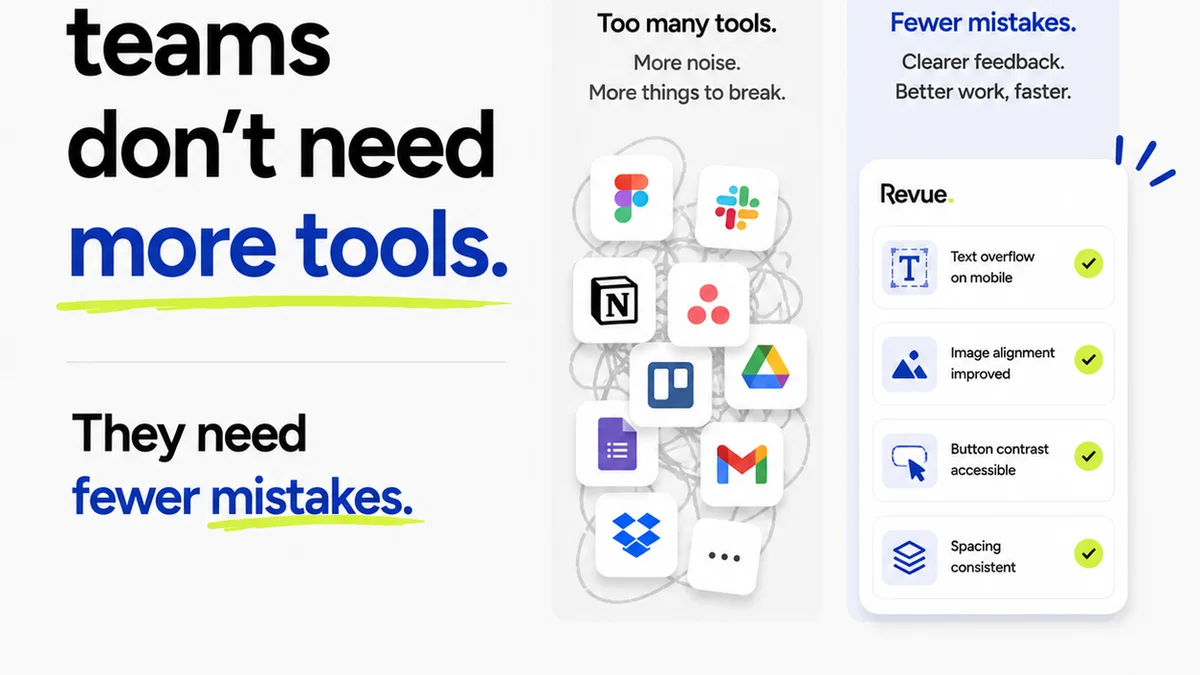
This is where a centralized platform for managing creative feedback and approvals becomes indispensable. Instead of scattered spreadsheets and endless email chains, you need a single source of truth.
Revue helps teams consolidate all feedback, whether it's from formal prototype testing sessions, informal stakeholder reviews, or live user data. You can attach comments directly to design elements, track revisions, and maintain a clear audit trail of decisions.
This visibility ensures that insights from your prototype testing—behavioral data, accessibility concerns, or user opinions—aren't lost. They become part of the ongoing conversation, directly influencing iteration and quality checks before any release.
5. Gamification and More Engaging Test Formats
Making prototype testing feel like a chore is a surefire way to get disengaged participants and superficial feedback. The trend is towards making testing more engaging.
Gamification is one approach, but it’s about more than just points and badges.
Contextual Testing Scenarios
Instead of generic tasks, design testing scenarios that mimic real-world usage. This immerses the user and elicits more natural behavior and feedback.
For example, testing an e-commerce checkout flow could be framed as 'planning a surprise birthday party' with a specific budget and delivery date constraint.
Interactive Prototypes as the Standard
Static wireframes are no longer sufficient for robust testing. Prototypes need to be interactive enough to simulate the actual user experience. This means functional navigation, micro-interactions, and realistic data states.
Tools like Figma, Adobe XD, and others are making high-fidelity, interactive prototyping more accessible than ever. The expectation is that prototypes will feel and behave much like the final product.
Remote Moderated and Unmoderated Testing Evolution
Both remote moderated and unmoderated testing will continue to evolve. Moderated sessions will focus on deeper qualitative insights and exploring complex user journeys. Unmoderated testing will leverage AI and more sophisticated task design for scalable quantitative data collection.
The key is choosing the right method for the right question.
Final Thought
Prototype testing is evolving from a discrete, often dreaded, phase into an integrated, continuous practice. The tools are getting smarter, the data is becoming richer, and the focus is shifting from what users *say* to what they *do*.
As we move towards 2026, are you prepared to leverage these trends? Are you ready to treat prototype testing not just as a way to find bugs, but as a strategic engine for building truly user-centered, successful products?
Frequently asked questions
What is the biggest shift in prototype testing for 2026?
The biggest shift is moving from relying solely on user opinions to prioritizing observed user behavior and analytics. This provides more objective insights into how users actually interact with a design.
How will AI impact prototype testing?
AI will increasingly be used for automated analysis of feedback data (transcripts, surveys), predictive usability scoring to flag potential issues, and potentially synthetic user testing for rapid, scalable initial validation.
Why is accessibility testing becoming more critical?
Beyond compliance, there's a growing understanding that inclusive design broadens market reach and is an ethical imperative. Testing with users who have diverse abilities (visual, motor, cognitive) is essential for creating truly usable products.
What does 'continuous testing' mean for prototypes?
Continuous testing means integrating prototype testing throughout the entire design and development process, from early wireframes to late-stage coded components, rather than having a single testing phase before launch.