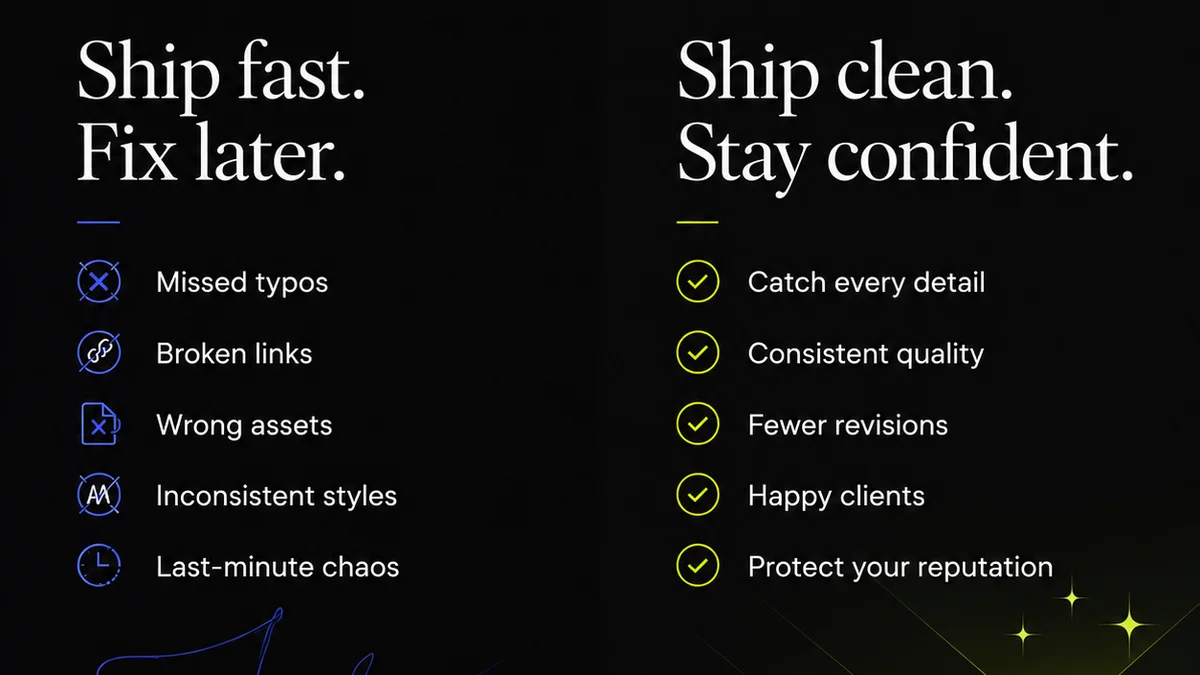
Everyone agrees that good publication QA is important. It’s the final gate before anything goes live, right? The last chance to catch typos, broken links, or design glitches.
None of that is wrong. But it’s incomplete.
The hard truth is that treating QA as a separate, post-creation phase is a fundamental workflow error. It’s a symptom of a larger problem: your creative process isn’t built for quality from the ground up.
Publication QA isn’t just about spotting errors. It’s about building systems that prevent them. It’s about understanding the operational friction points that lead to mistakes in the first place.
1. The Illusion of the Final Check
Many teams operate under the assumption that a dedicated QA pass is sufficient. They believe that a fresh pair of eyes at the end can catch everything. This is a dangerous simplification.
This approach creates a bottleneck. It places immense pressure on the QA team or individual. It also means that any issues found late in the process are expensive and time-consuming to fix.
Consider the ripple effect:
- Design changes might require copy rewrites.
- Copy edits could necessitate layout adjustments.
- Technical issues might demand scope changes.
This reactive approach breeds inefficiency and frustration. It’s like trying to bail out a leaky boat with a sieve instead of patching the hole.
The Real Cost of Late Discoveries
When significant issues are found during final QA, the project timeline often suffers. This can lead to:
- Missed launch dates.
- Increased project costs due to rushed fixes or overtime.
- Compromised quality as corners are cut to meet deadlines.
- Damaged client relationships if deadlines are blown.
The goal isn’t just to *find* errors; it’s to *prevent* them.
2. Integrating Quality into Every Stage
Effective publication QA isn't a phase; it's a continuous thread woven through the entire creative lifecycle. It starts the moment a project begins.
This means building quality checks into the brief, the concepting, the design, and the copywriting stages.
Quality Starts with Clarity
A poorly defined brief is a breeding ground for errors. Ambiguity leads to assumptions, and assumptions lead to rework.
Ensure your briefs are:
- Specific about objectives and target audience.
- Clear on deliverables and formats.
- Detailed regarding technical specifications and constraints.
- Comprehensive in outlining brand guidelines and tone of voice.
A clear brief is the first line of defense against QA issues.
Design and Copy Collaboration
Designers and copywriters often work in silos. This separation is a major source of problems.
Encourage early and frequent collaboration:
- Joint Briefing: Have designers and writers participate in client briefings together.
- Iterative Reviews: Review design mockups alongside copy drafts. Does the copy fit the layout? Does the layout support the message?
- Shared Understanding: Foster a mutual respect for each discipline's challenges and constraints.
When design and copy evolve in tandem, they reinforce each other, catching potential conflicts early.
Proactive Technical Checks
Don't wait until development or final deployment to check technical aspects. Integrate technical considerations from the start.
- Component Libraries: Utilize and maintain robust component libraries to ensure consistency and reduce errors.
- Accessibility First: Build accessibility into the design and development process, not as an afterthought. Consider resources like the Web Content Accessibility Guidelines (WCAG).
- Performance Budgets: Set performance targets for load times and responsiveness early on.
These proactive steps minimize technical debt and last-minute fixes.
3. The Power of Standardized Processes
Ad hoc QA is an invitation to chaos. Consistency comes from standardization.
This means defining clear, repeatable processes for quality assurance.
Develop Comprehensive Checklists
Checklists are your best friend, but they need to be more than just a list of
Frequently asked questions
What is the difference between QA and QC?
Quality Assurance (QA) focuses on the *process* to prevent defects from occurring. Quality Control (QC) focuses on *identifying* defects in the final product. Effective publication QA integrates both, emphasizing prevention.
How can I make my QA process faster?
Speed comes from efficiency, not cutting corners. Streamline your process by integrating checks early, using standardized templates, automating repetitive tasks where possible, and ensuring clear communication channels.
Who should be responsible for publication QA?
Ideally, QA is a shared responsibility. While a dedicated QA specialist can be invaluable, designers, copywriters, project managers, and even clients (in specific review stages) all play a role in ensuring quality throughout the process.
What are common pitfalls in publication QA?
Common pitfalls include treating QA as a final step only, lack of clear guidelines, insufficient time allocated, poor communication between teams, and not using standardized checklists or tools.