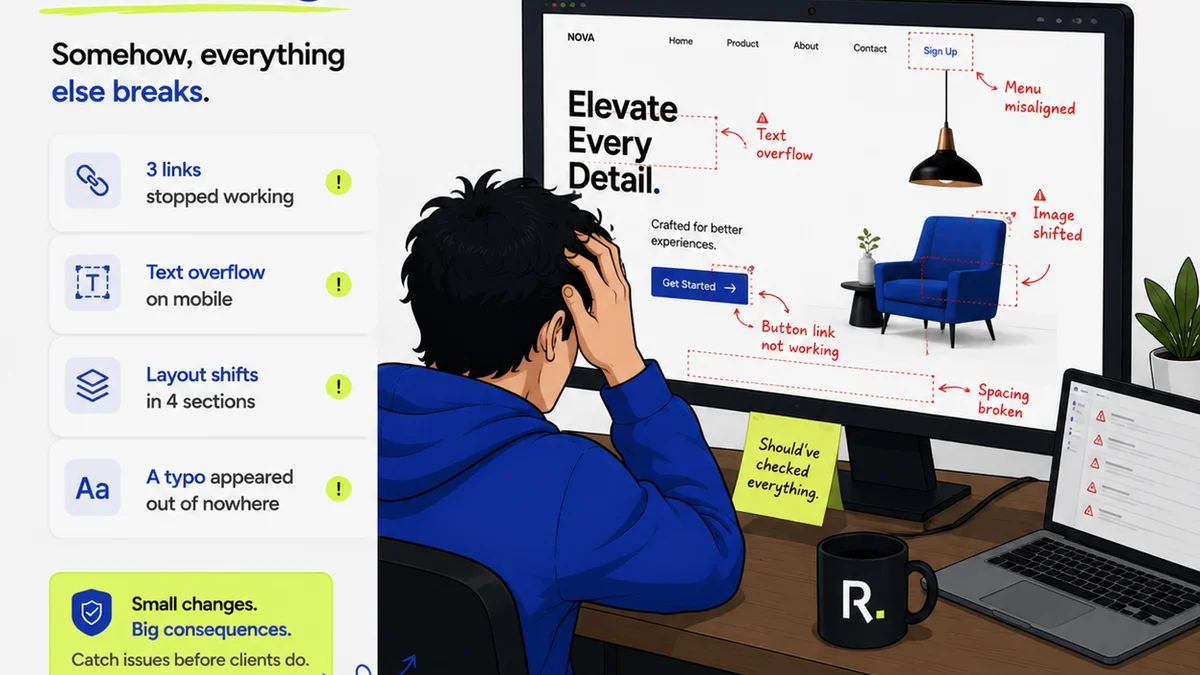
Everyone thinks a rebranding mistake is about a bad logo or a confusing tagline. That’s the surface-level stuff. The real costs, the ones that drain budgets and tank momentum, are buried much deeper in your workflow.
The hard truth? A botched rebrand isn't just a design problem; it's an operational failure. It’s about how you managed feedback, how you tracked revisions, and how you communicated the change internally and externally. These are the silent killers.
1. The "Big Bang" Launch Without Internal Alignment
You’ve got the new brand guidelines, the shiny new website, the updated social profiles. You push the button, and expect the world to instantly get it. But your sales team is still using old collateral. Your support docs haven't caught up. Your engineers are confused about naming conventions.
This isn't a communication issue; it's a process breakdown. A rebrand impacts every single department. If they aren't brought into the process early, given the right tools, and trained on the new identity, they become a bottleneck. They’ll either resist the change or, worse, they’ll actively undermine it through sheer ignorance of the new standards.
Symptoms of Internal Misalignment:
- Sales teams using outdated pitch decks.
- Customer support fielding questions about the old brand name.
- Marketing campaigns using inconsistent messaging.
- Employees referring to the rebrand as "the new thing" instead of owning it.
- IT struggling to update all internal systems and email signatures.
This chaos doesn't just look bad; it costs money. Every hour spent fixing mistakes, clarifying confusion, or redoing work that didn't adhere to the new brand is an hour you can't bill clients or spend on strategic growth.
2. Feedback Black Holes and Version Control Nightmares
A rebrand involves countless decisions. Logos, color palettes, typography, messaging, tone of voice, website copy, app interfaces, marketing materials, internal comms… the list is endless. Each element requires input, feedback, and approval from multiple stakeholders.
If this process is scattered across email chains, Slack messages, and random Google Docs, you’re inviting disaster. Key feedback gets lost. Different versions of the same asset circulate. The wrong stakeholder approves the wrong revision. You end up with a final product that’s a Frankenstein’s monster of conflicting ideas, or worse, you miss critical compliance or usability issues.
This lack of clarity leads to endless, unproductive revision cycles. You’re paying designers, copywriters, and project managers to chase down feedback and reconcile conflicting inputs. That’s money evaporating into thin air.
Common Feedback Failures:
- Approvals given on outdated versions.
- Key stakeholders not seeing crucial feedback.
- Disagreements over who has the final say.
- Designers working from incorrect or incomplete briefs.
- Scope creep disguised as
Frequently asked questions
What's the most common operational mistake in rebranding?
Failing to align internal teams and establish clear feedback and approval processes before launching. This leads to inconsistencies, wasted effort, and diluted brand impact.
How can a rebrand impact ROI?
A poorly managed rebrand can increase project costs due to endless revisions, lost productivity from confused staff, and missed market opportunities due to inconsistent messaging, all negatively impacting your return on investment.
Is a rebrand always necessary?
Not always. Sometimes a brand refresh or a strategic marketing campaign can achieve similar goals without the significant operational and financial undertaking of a full rebrand. Evaluate your business objectives carefully.
How can I ensure internal buy-in for a rebrand?
Involve key stakeholders from all departments early in the process. Clearly communicate the 'why' behind the rebrand and provide them with the necessary training and resources to adopt the new identity.