Everyone talks about rebranding ROI. They point to a shiny new logo, a slick website, a refreshed brand guide. They equate it with increased brand recognition and, eventually, more sales. None of that is wrong. But it’s incomplete.
The hard truth about rebranding ROI is that its most significant impact isn’t on perception, but on process. The true return on investment from a rebrand is measured in how much smoother, faster, and more profitable your agency or creative team operates *after* the change. It’s about internal alignment and external clarity, delivered through streamlined workflows.
1. The Hidden Costs of a Stale Brand
A brand isn’t just a visual identity. It’s the sum total of every interaction a client or prospect has with your agency. When that brand becomes outdated, misaligned with your current services, or simply difficult to communicate, it creates friction. This friction shows up in wasted time, missed opportunities, and internal confusion.
Consider these common symptoms:
- Sales pitches that don’t align with delivered work.
- Marketing materials that feel disconnected from your core offering.
- Internal teams (design, development, account management) operating with different understandings of the brand promise.
- Clients who express surprise at the scope or direction of projects, indicating a disconnect from initial expectations set by the brand.
- Difficulty attracting the *right* kind of talent or clients because the brand doesn't accurately reflect who you are or want to be.
These aren't minor inconveniences. They are operational inefficiencies that directly eat into your profit margins. Every hour spent clarifying confusion, redoing outdated materials, or explaining what you *actually* do is an hour not spent on billable client work or strategic growth.
The Visual vs. The Operational
Most discussions about rebranding focus on the visual elements – the logo, the color palette, the typography. These are important, yes. But they are the *output* of a brand, not its operational engine. The operational engine is how the brand informs strategy, guides decision-making, and streamlines communication, both internally and externally.
A rebrand that only touches the surface — the logo, the website — without addressing the underlying operational clarity, is a missed opportunity. It’s like putting a new coat of paint on a car with a faulty engine. It looks better, but it doesn’t run any better.
2. Defining Rebranding ROI Beyond Vanity Metrics
When we talk about ROI, we’re usually thinking about financial returns. For a rebrand, this typically includes metrics like:
- Increased lead generation.
- Higher conversion rates.
- Growth in average client value.
- Improved brand recall and sentiment.
These are valuable outcomes. But they are often the *result* of deeper, operational shifts that a successful rebrand facilitates.
The real ROI of a rebrand is more about:
- Reduced Sales Cycle Length: A clear, compelling brand story resonates faster, making it easier for prospects to understand your value proposition and say yes.
- Improved Client Onboarding: A rebrand that clarifies your services and process leads to smoother client onboarding, setting expectations correctly from day one.
- Increased Team Alignment: A unified brand vision ensures everyone in the agency is rowing in the same direction, reducing internal friction and improving project execution.
- Faster Creative Development: Clear brand guidelines and a well-understood brand strategy can accelerate the creative process, cutting down on unnecessary revisions and debates.
- Higher Client Retention: When clients feel understood and consistently receive work that aligns with the brand promise, satisfaction and loyalty increase.
- Optimized Marketing Spend: A targeted brand message attracts the right audience, meaning your marketing budget is spent more effectively, attracting clients who are a better fit.
Think about it: if your sales team can close deals 10% faster because the brand is crystal clear, that’s direct, measurable ROI. If your creative team spends 15% less time on rework due to internal alignment on brand direction, that’s also tangible ROI.
The Operational Audit: Your Rebrand's Foundation
Before any visual work begins, a strategic rebrand requires an honest operational audit. What are the current pain points? Where are the bottlenecks? How does the current brand (or lack thereof) contribute to these issues?
This audit informs the *strategic* direction of the rebrand, ensuring the new brand identity isn’t just aesthetically pleasing, but functionally supportive of your agency’s goals. It’s the difference between a cosmetic facelift and a true transformation.
3. The Rebrand as a Workflow Catalyst
A well-executed rebrand isn't just a coat of paint; it's a catalyst for improving your entire workflow. It forces you to define and articulate your unique value proposition, your ideal client, and your core processes. This clarity, in turn, refines how you operate.
Streamlining Client Feedback and Approvals
One of the most common areas where a rebrand can drive operational efficiency is in client communication and approvals. An outdated brand often means outdated communication processes.
Consider the typical project lifecycle:
- Initial client brief and discovery.
- Creative concepting and development.
- Presenting work for feedback.
- Managing revisions based on feedback.
- Securing final approvals.
- Production and delivery.
A rebrand should prompt an evaluation of each step. Does your brand promise clarity and efficiency? Then your feedback and approval process must embody that. If it’s chaotic, slow, or prone to misinterpretation, it undermines the brand message.
A clear brand identity, coupled with defined processes for feedback and approvals, reduces ambiguity. Clients understand what to expect, how to provide input, and when sign-offs are needed. This leads to fewer subjective revisions and faster project completion.
Enhancing Internal Collaboration
Internally, a rebrand should foster a shared understanding. When the entire team, from creatives to account managers, understands and buys into the brand’s purpose and positioning, collaboration improves dramatically.
This shared vision:
- Reduces internal debates about creative direction.
- Ensures consistency across all client touchpoints.
- Empowers team members to act as brand ambassadors.
- Simplifies the onboarding of new team members.
When everyone is aligned, projects move faster, and the quality of work is more consistent. This operational efficiency is a direct contributor to rebranding ROI.
Quality Control and Brand Consistency
A strong brand identity provides guardrails for quality. Clear brand guidelines, articulated during the rebrand, help ensure that all creative output meets a certain standard and aligns with the overall brand strategy.
This isn't about stifling creativity; it's about ensuring creativity serves the strategic goals of the client and your agency. A rebrand should clarify:
- What is the core message we need to communicate?
- Who is the target audience for this specific piece of work?
- What are the essential brand elements that must be present?
Answering these questions upfront, informed by the rebrand, leads to more focused creative work and fewer off-brand or off-strategy deliverables. This reduces the need for extensive quality control checks later in the process, saving valuable time and resources.
Where Revue Fits In
A successful rebrand is an investment in clarity and efficiency. But the operational benefits only materialize if you have the right systems in place to support them. This is where a tool like Revue becomes crucial.
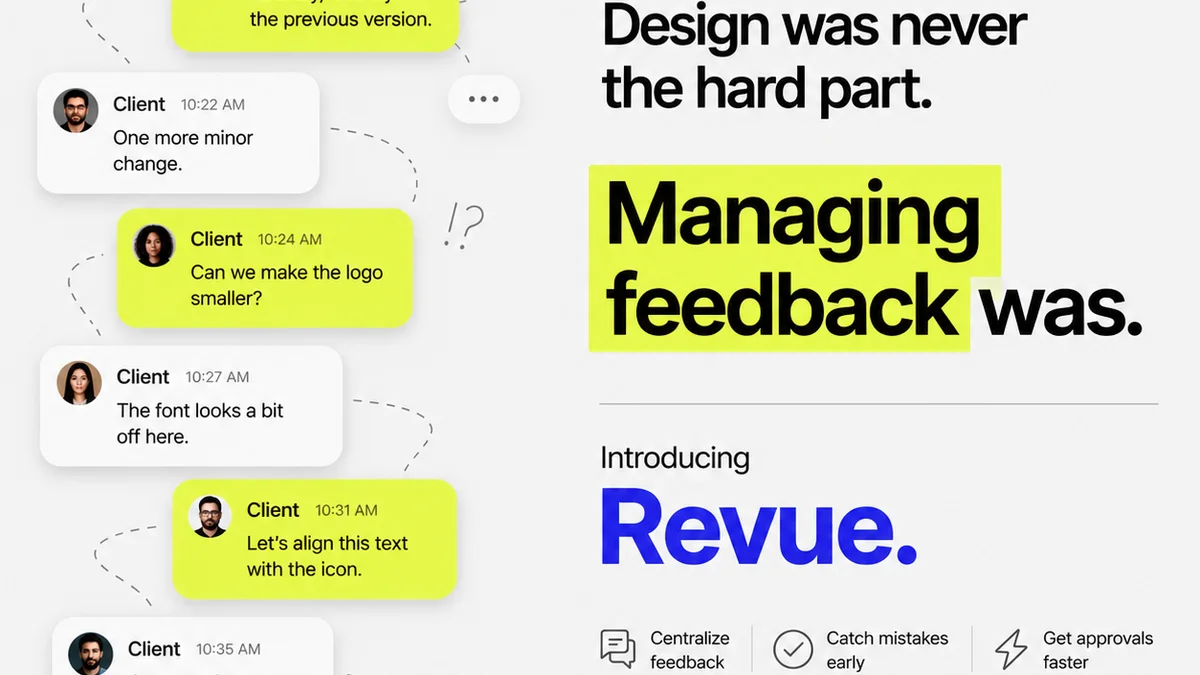
After defining your new brand strategy and ensuring internal alignment, you need to translate that clarity into tangible workflow improvements. Revue helps you centralize client feedback, ensuring that all comments and revisions are captured in one place, tied to specific project assets. This eliminates confusion, reduces back-and-forth, and provides a clear audit trail.
Furthermore, managing revision and approval cycles within a structured system like Revue ensures that the clarity established by your rebrand is maintained throughout the project lifecycle. You can easily track progress, identify bottlenecks, and ensure that client input directly serves the refined brand objectives. This visibility is key to realizing the operational ROI of your rebrand, turning a strategic initiative into measurable efficiency gains.
4. Measuring the Real ROI
So, how do you actually measure this operational ROI? It requires looking beyond the surface-level metrics and diving into your agency’s internal data.
Track Efficiency Gains
Start by tracking key project metrics before and after the rebrand (and after implementing any new workflows it inspired):
- Average Project Completion Time: Has it decreased?
- Number of Revisions per Project: Has the volume of subjective revisions gone down?
- Client Onboarding Time: Is it faster and smoother?
- Internal Handoff Times: Are project handoffs between teams quicker?
- Marketing Campaign Performance: Are leads more qualified? Is the cost per lead decreasing?
Quantify Time Savings
Estimate the time saved by your teams due to reduced confusion, fewer unnecessary meetings, and faster decision-making. Even a conservative estimate of hours saved across your team, multiplied by their hourly rate, can reveal significant financial returns.
Monitor Client Satisfaction
While not purely operational, client satisfaction is a direct outcome of improved processes. Track Net Promoter Score (NPS) or conduct client satisfaction surveys. An improved score indicates that your clearer brand and more efficient process are creating a better client experience.
Look at Team Morale
An often-overlooked aspect of ROI is team morale. When workflows are smoother, communication is clearer, and the agency’s purpose is well-defined, teams are happier and more productive. Reduced frustration and increased clarity contribute to a healthier work environment.
The Long Game
Rebranding ROI isn't always immediate. It’s a strategic investment. The initial visual refresh might grab attention, but the lasting value comes from the operational efficiencies and improved client experiences that a well-thought-out rebrand enables. It’s about building a stronger, more resilient, and more profitable agency from the inside out.
Final Thought
Is your rebrand an aesthetic upgrade, or a fundamental operational improvement? The answer dictates its true value.
Frequently asked questions
What is the primary benefit of a rebrand for an agency?
While a new visual identity can enhance brand perception, the primary operational benefit of a rebrand is improved internal alignment and client clarity, leading to streamlined workflows, reduced inefficiencies, and ultimately, a stronger bottom line.
How can I measure the ROI of a rebrand beyond sales increases?
Measure ROI by tracking operational efficiencies such as reduced project completion times, fewer subjective revisions, faster client onboarding, improved team collaboration, and enhanced client satisfaction scores. Quantify time and resource savings resulting from clearer processes.
Does a rebrand directly impact client feedback processes?
Yes, a rebrand should prompt a review and potential overhaul of client feedback processes. A brand that promises clarity and efficiency should be supported by equally clear and efficient methods for collecting and acting on feedback, reducing ambiguity and speeding up approvals.
How does internal team alignment relate to rebranding ROI?
Internal alignment is crucial. When the entire team understands and embraces the rebrand's strategic purpose, it leads to consistent execution, reduced internal debates, faster project development, and a more cohesive client experience, all contributing to operational efficiency and ROI.