Everyone assumes that remote creative Quality Assurance (QA) is just about catching typos and broken links. None of that is wrong. But it’s incomplete.
The hard truth? Effective remote creative QA is about building a system that guarantees brand consistency and client satisfaction, regardless of physical location. It’s about process, not just proofreading.
1. The Illusion of 'Good Enough'
When teams were in the same office, a quick Slack message or a walk to someone’s desk could solve minor issues. A designer could glance over a developer’s shoulder. A copywriter could grab a printout. This informal, in-person oversight acted as a natural QA layer.
Remote work rips away that safety net.
Suddenly, those quick checks become formal requests, easily lost in the shuffle. Assumptions about who’s responsible for what multiply. And what was once a minor oversight can snowball into a major client complaint.
The Remote Reality Check
Without a structured approach, remote creative QA often devolves into:
- Reactive fire-fighting when clients inevitably spot issues.
- Inconsistent quality across projects, or even within the same project.
- Team members second-guessing whether something has already been checked.
- Wasted time and budget on unnecessary revisions.
- Damaged client relationships due to perceived sloppiness.
This isn’t about blame. It’s about the inherent challenges of distributed collaboration.
2. Building Your Remote QA Framework
A remote QA checklist isn't just a document; it's the backbone of your quality control process. It needs to be comprehensive, clear, and accessible to everyone involved.
Think of it as your agency’s quality constitution.
Key Pillars of Remote QA
Your framework should address these core areas:
- Brand Compliance: Is the work on-brand in every aspect?
- Technical Accuracy: Does it function as intended across devices and platforms?
- Content Integrity: Is the messaging clear, error-free, and meeting objectives?
- Usability & Accessibility: Is it easy for the target audience to use and understand?
- Client Deliverables: Does it meet all contractual obligations and client-specific requirements?
The Anatomy of a QA Task
Each QA task within your checklist should be defined by:
- What to Check: Specific elements or criteria.
- Who Checks It: The designated role or person.
- When to Check It: The stage in the workflow.
- How to Check It: The tools or method.
- Sign-off: The confirmation that checks are complete.
3. The Remote Creative QA Checklist: A Deep Dive
Let’s break down the critical components of a robust remote QA checklist. This isn't a one-size-fits-all template, but a guide to building yours.
Phase 1: Pre-Production & Briefing
Quality starts before the first pixel is designed or word is written. Misaligned expectations are the root of many remote QA failures.
- Briefing Clarity: Was the client brief unambiguous? Were all stakeholders (internal and client) aligned on objectives, target audience, key messages, and desired outcomes?
- Scope Definition: Is the project scope clearly documented? Are deliverables, timelines, and budget parameters explicit?
- Asset Availability: Are all necessary brand guidelines, logos, imagery, fonts, and content assets readily available and correctly formatted?
- Technical Specs: Are platform requirements, browser compatibility, device targets, and accessibility standards defined upfront?
Phase 2: Creative Development & Internal Review
This is where most people think QA begins. But without the pre-production groundwork, this stage becomes a guessing game.
- Brand Adherence:
- Colors: Correct palettes used? Consistent application?
- Typography: Approved fonts, weights, and sizes applied correctly? Hierarchy clear?
- Logo Usage: Correct version, clear space, and placement?
- Tone of Voice: Consistent with brand personality?
- Content Accuracy:
- Grammar & Spelling: Proofread meticulously?
- Fact-Checking: All claims and data verified?
- Clarity & Conciseness: Messaging easy to understand? Free of jargon?
- Call to Actions (CTAs): Clear, compelling, and correctly linked?
- Design Integrity:
- Layout & Composition: Balanced, visually appealing, and follows established grids?
- Visual Hierarchy: Important elements emphasized?
- Imagery & Graphics: High-resolution, relevant, and properly licensed?
- Consistency: Visual elements (buttons, forms, icons) consistent across screens/pages?
- Functionality (Prototypes/Staging):
- Navigation: Intuitive and working as expected?
- Interactivity: Hover states, click actions, animations behaving correctly?
- Forms: Fields validated, submission working, confirmation messages clear?
- Links: All internal and external links correct and functional?
Phase 3: Technical QA & Cross-Platform Testing
This is critical for digital deliverables. What looks perfect on your screen might break elsewhere.
- Cross-Browser Testing:
- Chrome, Firefox, Safari, Edge (and specific versions if required).
- Check layout, functionality, and content rendering.
- Cross-Device Testing:
- Desktop (various resolutions), Tablet (portrait/landscape), Mobile (iOS/Android).
- Responsive design elements functioning correctly?
- Performance Testing:
- Page Load Speed: Optimized for fast loading? (
Frequently asked questions
What is the primary goal of a remote creative QA checklist?
The primary goal is to establish a standardized, repeatable process for ensuring the quality, consistency, and accuracy of creative work produced by a distributed team, minimizing errors and client dissatisfaction.
Who should be responsible for remote creative QA?
Responsibility can be shared. Typically, a dedicated QA specialist, a project manager, a senior creative, or even team members performing peer reviews can be assigned specific QA tasks based on their expertise and role in the workflow.
How can I ensure brand consistency with remote QA?
Include specific checks for brand elements like logos, color palettes, typography, and tone of voice. Ensure easy access to brand guidelines and provide clear examples of correct and incorrect usage within your checklist.
What tools can help with remote creative QA?
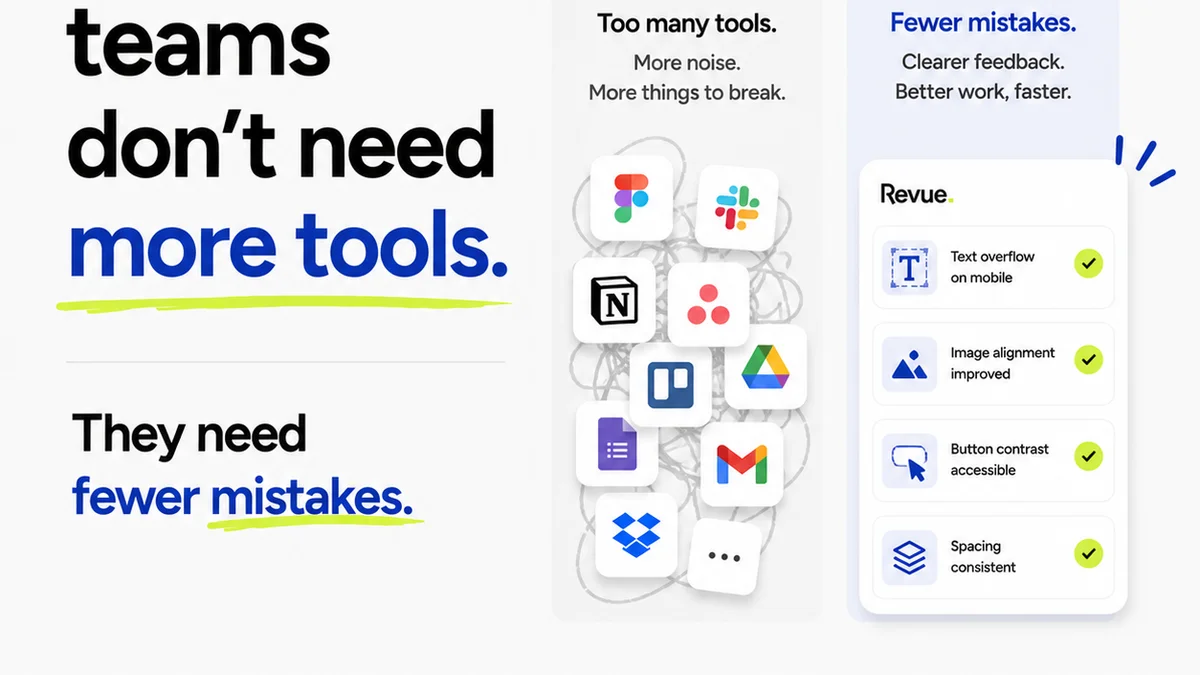
Tools like <a href="https://www.getrevue.com/">Revue</a> for centralized feedback and approval tracking, browser testing platforms (e.g., BrowserStack), project management software (e.g., Asana, Trello), and accessibility checkers can significantly streamline the process.
How often should a remote creative QA checklist be updated?
The checklist should be reviewed and updated regularly, at least quarterly, or whenever new project types, technologies, client requirements, or internal processes are introduced. Feedback from the team on its effectiveness is crucial for refinement.