Everyone thinks they know what makes a good creative approval. You get the feedback, you make the changes, the client says, 'Looks good!' and you move on. That’s the process, right?
None of that is wrong. But it’s incomplete.
The hard truth? Relying on 'looks good' is a shortcut that guarantees mediocrity and opens the door to endless, costly revisions. True approval means the work meets strategic goals, technical specs, and brand standards. It's about diligence, not just aesthetics.
1. The 'Looks Good' Fallacy
The phrase 'looks good' is the most dangerous in creative production. It’s vague, subjective, and a red flag for underlying issues. What does 'good' even mean?
Is it good because it matches the brief? Good because it aligns with the brand guidelines? Good because it passes accessibility checks? Good because it’s technically sound for the intended platform?
Usually, 'looks good' means the client can’t articulate specific issues, but they *feel* something is off. Or worse, they *think* they're approving, but haven't actually checked key details.
This is where a robust revision approval checklist becomes essential. It forces rigor into a process often dominated by subjective opinion and rushed sign-offs.
2. Building Your Core Revision Approval Checklist
A comprehensive checklist transforms approval from a passive 'yes' or 'no' into an active, objective evaluation. It’s your safety net against scope creep and client dissatisfaction. Think of it as a quality assurance gate for every creative asset.
Here are the non-negotiable areas to cover:
2.1. Strategic Alignment
Does the creative still serve the original objectives?
- Does it directly address the client brief and project goals?
- Does it speak to the target audience as defined?
- Does it convey the intended message or call to action clearly?
- Is the tone and voice consistent with the brand strategy?
2.2. Brand Consistency
Is the brand identity protected and accurately represented?
- Are logos used correctly (size, placement, clear space)?
- Are brand colors applied within defined palettes?
- Is typography consistent with brand guidelines?
- Are approved brand assets (imagery, icons) used correctly?
2.3. Technical Specifications
Does the asset meet the functional requirements for its intended use?
- File format and dimensions correct for the platform (web, print, social)?
- Resolution and color mode (RGB/CMYK) appropriate?
- File size optimized for web performance?
- Links functional and correctly tagged (if applicable)?
- Interactive elements working as intended (for digital)?
2.4. Content Accuracy
Is all information presented correct and approved?
- All copy finalized and proofread?
- Client-provided information (stats, names, dates) accurate?
- Legal disclaimers and required copy present and correct?
- Image rights and usage cleared?
2.5. Accessibility Standards
Is the design inclusive and usable by everyone?
- Color contrast ratios meet WCAG AA standards?
- Typography legible and resizable?
- Interactive elements have clear focus states?
- Alternative text provided for all meaningful images?
- Keyboard navigation is logical and accessible?
This isn't just about ticking boxes. It's about ensuring the work is not only beautiful but also effective and compliant.
3. Tailoring Your Checklist for Different Deliverables
A single checklist won't fit every project. You need to adapt it. A social media graphic has different requirements than a full website redesign.
3.1. Digital Assets (Websites, Apps, Social Media)
Focus on user experience (UX), performance, and platform specifics.
- Responsive design checks across multiple devices and screen sizes.
- Cross-browser compatibility.
- Load times and asset optimization.
- Interactive states (hover, focus, active).
- Clear calls-to-action and navigation flow.
- SEO elements (meta descriptions, alt text, schema markup).
3.2. Print Collateral (Brochures, Posters, Packaging)
Emphasize print-specific technicalities and physical qualities.
- Bleed and trim specifications.
- Color profiles (CMYK vs. RGB).
- Font embedding and outlining.
- Die-cut lines and finishing instructions.
- Print production readiness.
3.3. Video and Motion Graphics
Consider timing, audio, and platform delivery.
- Frame rates and aspect ratios.
- Audio levels and mix clarity.
- Encoding settings and file formats.
- Captions and subtitles accuracy.
- Call-to-action timing.
The goal is to have a baseline, then layer on the specifics for each project type.
4. Integrating the Checklist into Your Workflow
A checklist is useless if it sits in a drawer. It needs to be a living part of your process.
4.1. Pre-Production Alignment
Use the checklist early. Before design even starts, clarify which points are critical for the project. This sets expectations with the client from day one.
4.2. During Design and Revision
Internal teams should use it for self-checking before sending work to the client. Catching issues internally is far cheaper and faster than post-client review.
4.3. Client Review Stage
Present the checklist (or a client-facing summary) alongside the creative. Frame it as a tool for clarity and efficiency, not bureaucracy. This educates the client on what constitutes a 'complete' approval.
4.4. Final Approval Sign-off
The final sign-off should explicitly confirm that the work meets the checklist criteria. This creates a documented record of due diligence.
It shifts the conversation from subjective 'liking' to objective 'meeting requirements'.
5. Where Revue Fits In
Managing feedback and approvals across multiple projects and clients can quickly become chaotic. A checklist provides the structure, but the right tools ensure that structure is actually followed.
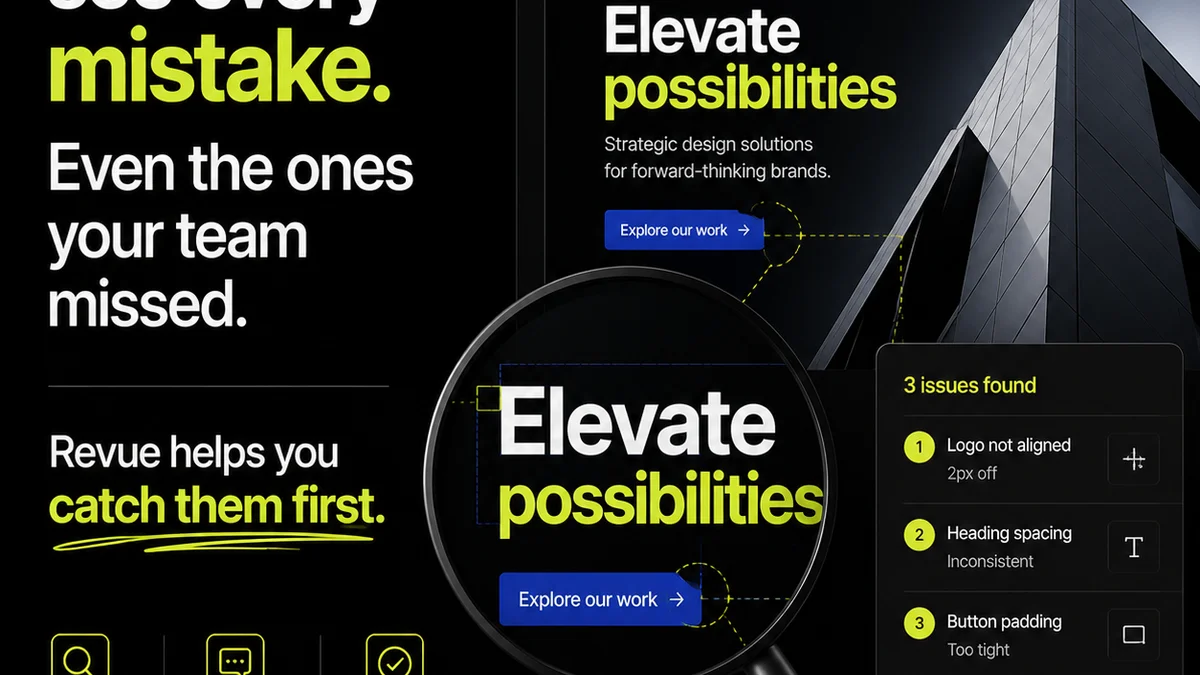
Revue helps centralize all client feedback, making it easy to see what needs action and what’s been approved. You can attach specific checklist items to feedback, ensuring that every comment is evaluated against project requirements.
With version control and clear revision history, you always know which version is under review and what changes were made. This visibility is crucial for tracking progress and ensuring that approvals are based on the latest, correct iterations.
Automated notifications and clear status indicators mean no feedback falls through the cracks. When it’s time for final approval, you have a clear audit trail, confirming that all checklist items have been addressed.
This streamlines the entire revision approval process, reducing ambiguity and ensuring that final sign-offs are meaningful.
6. Common Pitfalls to Avoid
Even with a checklist, things can go wrong. Be aware of these traps:
- The 'Just This Once' Exception: Allowing small deviations from the checklist 'just this once' erodes its authority.
- Checklist Overload: Making the checklist too long or complex makes it impractical. Prioritize critical items.
- Lack of Client Buy-in: If clients don't understand or agree with the checklist's purpose, they'll resist it. Educate them.
- Treating it as a Substitute for Judgment: A checklist is a guide, not a replacement for creative judgment or strategic thinking.
- Not Updating It: Checklists need to evolve as platforms, standards, and client needs change.
Your checklist should be a tool that empowers your team and clarifies expectations, not a bureaucratic hurdle.
Final Thought
What if 'looks good' wasn't the end of the conversation, but the beginning? What if every deliverable was automatically evaluated against a clear set of objective criteria before launch? That’s the power of a well-implemented revision approval checklist. It’s the difference between reactive firefighting and proactive quality control. Are you building that system, or just hoping for the best?
Frequently asked questions
What is a revision approval checklist?
A revision approval checklist is a structured list of criteria used to evaluate creative work before it's considered officially approved by a client or stakeholder. It ensures that the work meets strategic goals, technical specifications, brand guidelines, and content accuracy, moving beyond subjective 'looks good' feedback.
Why is a 'looks good' sign-off insufficient?
A 'looks good' sign-off is insufficient because it's vague and subjective. It doesn't guarantee that the work meets the project's strategic objectives, technical requirements, or brand standards. This can lead to future issues, scope creep, and client dissatisfaction when underlying problems surface later.
How do I tailor a checklist for different project types?
Tailor your checklist by focusing on the unique requirements of each deliverable. For digital assets, emphasize UX, performance, and responsiveness. For print, focus on bleed, color profiles, and finishing. For video, consider frame rates, audio, and encoding. Start with a core checklist and add specific points as needed.
How can tools like Revue help with revision approvals?
Tools like Revue centralize feedback, provide version control, and create a clear audit trail. This makes it easier to track revisions, ensure all feedback is addressed against checklist criteria, and get a definitive final approval, reducing ambiguity and potential errors.
What are the key sections of a revision approval checklist?
Key sections typically include Strategic Alignment (brief, goals, message), Brand Consistency (logo, colors, typography), Technical Specifications (file formats, dimensions, resolution), Content Accuracy (copy, data, legal), and Accessibility Standards (contrast, legibility, alt text).