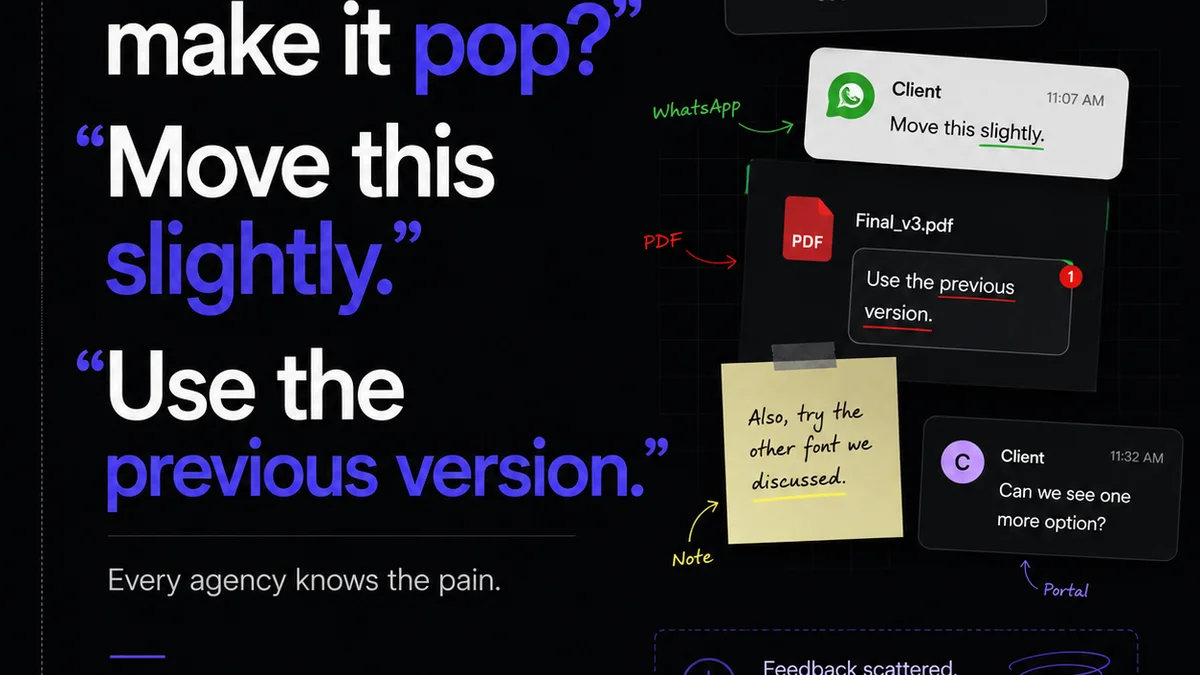
Everyone talks about project management tools. They promise streamlined workflows and faster approvals. But when your creative projects get stuck in revision hell, it feels like you’re just moving the chaos around, not solving it.
That’s the common wisdom, anyway. And it’s not entirely wrong.
The hard truth? Your tools are only as good as the processes and understanding behind them. Revision bottlenecks aren't just about waiting for feedback. They're symptoms of deeper issues in communication, scope, and internal alignment.
1. The Illusion of 'Done'
A project isn't truly done until it's approved. But often, teams declare 'done' prematurely. This happens when the scope is fuzzy from the start.
Clients might say they want a 'modern' website. What does that even mean? Without a shared definition, 'modern' becomes a moving target. Each round of revisions is an attempt to hit that ever-shifting mark.
Scope Creep's Revision Cousin
This isn't just about adding features. It's about adding *opinions*. What starts as a clear deliverable morphs into a playground for subjective feedback. Each subjective comment requires a revision, pushing the deadline further out.
Think about it:
- Unclear brief from the client.
- Ambiguous design direction.
- Lack of defined success metrics.
Frequently asked questions
What is a revision bottleneck in creative projects?
A revision bottleneck occurs when a project gets stuck during the feedback and revision stages, significantly delaying progress. This can be due to unclear feedback, scope creep, internal miscommunication, or inefficient review processes.
How can I prevent scope creep from causing revision issues?
Clearly define the project scope in the initial brief and contract. Establish a process for handling change requests, including impact assessments on timeline and budget. Ensure all stakeholders agree on the definition of 'done' before starting.
What's the best way to handle subjective client feedback?
Address subjective feedback by grounding it in objective criteria. Ask clarifying questions like, 'What specifically about this feels off?' or 'How does this align with the project goals?' Refer back to the original brief and agreed-upon strategy.
How can my team improve internal review processes?
Implement clear internal review stages with specific stakeholders responsible for feedback. Set internal deadlines for reviews and ensure all feedback is consolidated before presenting it to the client. Use a centralized platform for feedback to avoid miscommunication.