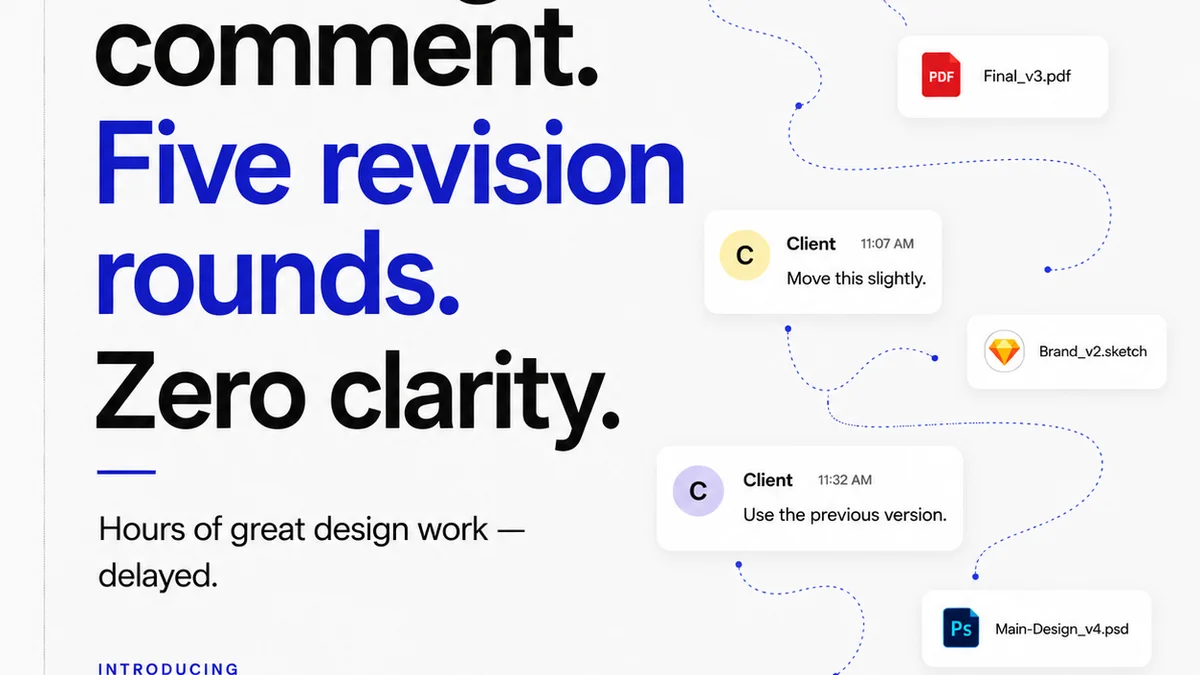
Everyone thinks better revision bottlenecks software is the magic bullet. Fix the tool, fix the problem. If only it were that simple.
None of that is wrong. But it’s incomplete.
The hard truth? Your software isn't the primary cause of revision bottlenecks. It's a symptom, not the disease.
The real problem is usually buried in your agency’s processes, communication habits, and team structure. The software just reflects those underlying issues.
1. The Illusion of Control: Why More Features Don't Mean Faster Revisions
You bought the fancy platform. It has version control, annotation tools, approval workflows, the works. Yet, the feedback still trickles in, often contradictory, and approvals languish.
Why?
Because the software provides an *illusion* of control. It digitizes a broken process, it doesn't inherently fix it.
Assumptions That Fail You
- Assumption: Centralized feedback means clear feedback. Reality: Feedback is centralized, but still vague, subjective, or comes from too many cooks.
- Assumption: Digital annotations replace hallway conversations. Reality: Nuance and context get lost. Quick chats are faster than typing a detailed note.
- Assumption: Approval toggles mean swift sign-off. Reality: Stakeholders are busy. They might approve without fully reviewing, or delay because they need more context.
Your software might offer a robust platform for managing feedback, but if the feedback itself isn't structured, actionable, or timely, you're just organizing chaos.
2. The Human Element: Communication Breakdowns and Subjectivity
Creative work is inherently subjective. What one person sees as a minor tweak, another sees as a fundamental flaw.
This subjectivity is amplified when communication breaks down. And it *always* breaks down when relying solely on digital tools without proper context or human interaction.
Common Communication Pitfalls
- Vague language: "Make it pop," "Needs more energy," "I don't like it." What does that actually mean for the designer?
- Conflicting opinions: Different stakeholders have different priorities. Without a clear hierarchy or a facilitator, these clash.
- Lack of context: Feedback is given without understanding the brief, the target audience, or the project goals.
- Delayed responses: Decision-makers are swamped. A quick email or Slack message might get lost. A formal request in a system can feel like more effort.
The software can't force clarity. It can't arbitrate taste. It can't magically make busy clients respond faster.
3. Process Problems: Unclear Workflows and Accountability Gaps
This is where most agencies stumble. They have a tool, but not a defined, repeatable process for how feedback and revisions *actually* happen.
Who gives feedback? When? Who consolidates it? Who approves? What are the revision rounds? What happens if feedback is late?
Symptoms of Poor Process
- Unclear roles: Who is the final approver? Who can request revisions?
- Ambiguous revision rounds: How many are included? What's the scope of each?
- Lack of escalation: What happens when feedback is missing or contradictory?
- Manual consolidation: Designers have to manually sift through emails, Slack messages, and meeting notes to piece together feedback.
- No clear deadline for feedback: Clients/stakeholders assume they can chime in anytime.
Your software likely has features for setting up workflows. But if the underlying process isn't defined, documented, and followed, those features are useless.
4. The Scope Creep Monster: Uncontrolled Revisions
This is the silent killer of agency profitability and team morale. A project starts with a defined scope, but revisions expand it endlessly.
Often, this happens because the feedback process is too loose.
How Scope Creep Hides in Revisions
- Feedback outside the original scope: New ideas or requests that weren't part of the initial brief.
- Subjective changes disguised as necessary edits: "Just a small change" that requires significant rework.
- Lack of clear revision limits: No defined number of rounds or clear criteria for what constitutes a
Frequently asked questions
What is a revision bottleneck?
A revision bottleneck is any point in the creative process where the flow of work slows down or stops due to delays or issues with feedback, revisions, and approvals. This often happens when clients or stakeholders provide late, unclear, or conflicting feedback, or when the internal team struggles to manage and implement requested changes efficiently.
Can software alone fix revision bottlenecks?
No, software alone cannot fix revision bottlenecks. While good tools can help manage the process, the root causes are often related to communication, unclear workflows, team structure, and client collaboration habits. The software needs to support a well-defined process, not replace it.
What are the signs of a revision bottleneck?
Common signs include projects taking longer than expected due to multiple rounds of revisions, frequent client dissatisfaction with delivered work, designers feeling overwhelmed by feedback, delays in getting final approvals, and a general sense of chaos around the review process.
How can agencies improve their revision process?
Agencies can improve by defining clear workflows, setting expectations with clients about feedback and revision rounds, establishing clear roles and responsibilities, ensuring feedback is actionable and consolidated, and using tools that facilitate structured communication and approvals.