Everyone talks about creative feedback. They say you need clear briefs, active listening, and a collaborative spirit. None of that is wrong. But it’s incomplete.
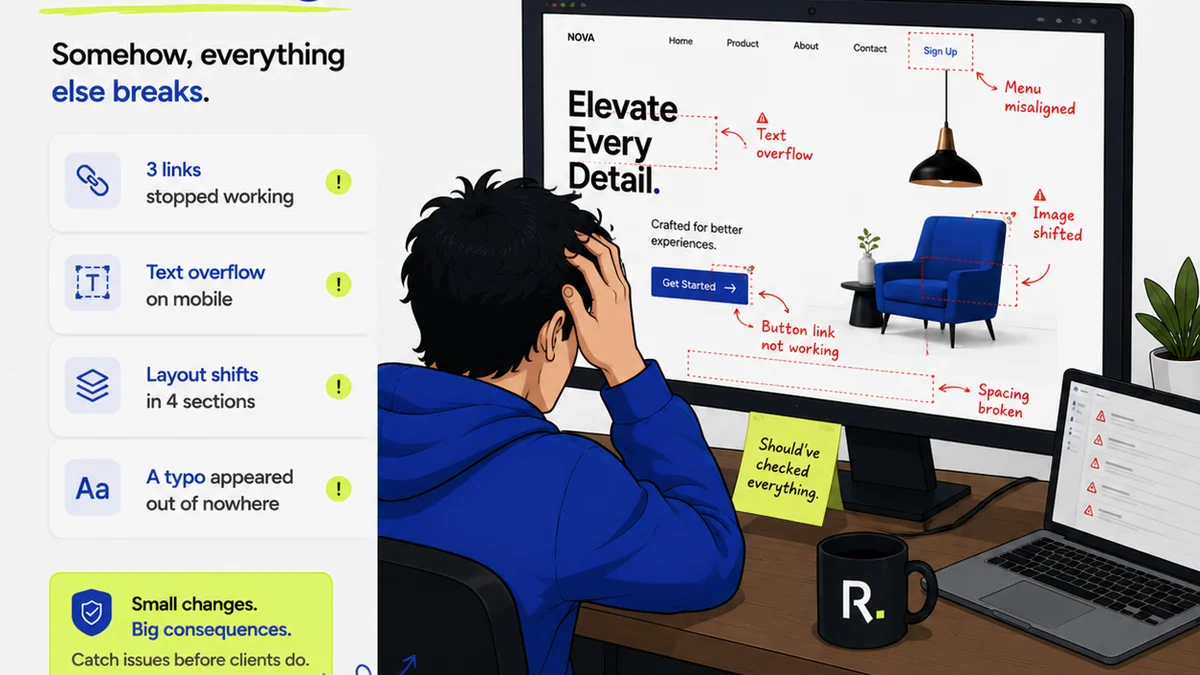
The real challenge isn’t just getting feedback; it’s managing the chaos that follows. It’s the endless revisions, the lost threads, the scope creep that sneaks in disguised as “just one more tweak.” This is where most creative projects falter. This is the hidden bottleneck in agency and in-house creative workflows.
Effective revision management is the secret weapon. It’s not about limiting creativity; it’s about channeling it. It’s about building a system that handles the inevitable back-and-forth without sacrificing quality, speed, or sanity.
1. The Feedback Illusion: Why More Isn’t Always Better
You’ve heard it before: “Get all the feedback upfront.” It sounds logical. But in practice, it’s often a pipe dream.
Clients might not know what they want until they see it. Stakeholders might hold back crucial input, only to surface it late in the game. The result? A tidal wave of feedback that’s often contradictory, overwhelming, and delivered too late to be incorporated efficiently.
This isn’t a failure of communication; it’s a fundamental aspect of the creative process. Ideas evolve. What looks good on paper often needs refinement when visualized.
The assumption that perfect, complete feedback arrives in one go sets teams up for failure. It ignores the reality of creative iteration.
The Cost of Unmanaged Revisions
- Missed deadlines due to prolonged review cycles.
- Budget overruns from endless scope creep.
- Team burnout from constant context switching and rework.
- Compromised creative quality due to rushed changes.
- Damaged client relationships from perceived delays and frustration.
2. Deconstructing the Revision Lifecycle
Understanding the stages of revision is key to managing them. It’s not just one big block of ‘revising’.
Think of it as a funnel. Each stage has different inputs, outputs, and required actions.
Stage 1: Initial Review & Feedback Capture
This is where the first round of feedback comes in. It’s often the broadest and most conceptual.
Key Challenge: Ensuring all feedback is captured accurately and attributed correctly. Email chains get long. Slack messages get buried. Verbal feedback is notoriously unreliable.
Stage 2: Revision Planning & Prioritization
Not all feedback is created equal. Some are critical, some are minor. Some align with the brief, others are new directions.
Key Challenge: Deciding what to act on. This requires understanding the project goals, the client’s priorities, and the impact of each requested change. Without a clear process, teams can get bogged down in low-impact tweaks.
Stage 3: Execution of Revisions
This is the actual work. Designers, copywriters, developers — they’re making the changes.
Key Challenge: Maintaining context. The person making the revision needs to understand *why* the change is needed and how it fits into the larger picture. Jumping into edits without this context leads to inefficient work and potential errors.
Stage 4: Re-review & Approval
The revised work goes back for another look. This can be a single stakeholder or a group.
Key Challenge: Preventing feedback fatigue. Stakeholders might not look as closely the second or third time, or they might introduce *new* feedback that should have been caught earlier. This is where version control becomes critical.
Stage 5: Final Sign-off
The moment of truth. The project is approved, or it goes back for another round.
Key Challenge: Ensuring there’s a clear definition of ‘done’. What constitutes final approval? Who gives it? Without clarity, projects can linger indefinitely.
3. The Root Causes of Revision Hell
Why does revision management go so wrong, so often?
It usually boils down to a few core issues:
- Lack of a Centralized Source of Truth: Feedback is scattered across emails, Slack, documents, and meetings. No one has a single, clear view of all comments and decisions.
- Ambiguous Feedback: Comments are vague, subjective, or lack context. “Make it pop” is the classic example.
- Unclear Roles & Responsibilities: Who is authorized to give feedback? Who makes the final call? Without this clarity, feedback can be contradictory and confusing.
- Poor Version Control: It’s unclear which version of the creative is the most current or which feedback applies to which iteration.
- Unrealistic Expectations: Clients or stakeholders may not understand the time and effort involved in making revisions, leading to demands for instant turnarounds.
- Lack of Defined Revision Limits: How many rounds of revisions are included? What happens when those limits are hit? This often isn't discussed upfront.
These aren't just minor annoyances. They are systemic problems that erode efficiency and quality.
4. Building a Bulletproof Revision Process
You can’t just wish revision chaos away. You need a structured approach. This involves people, process, and tools.
Define Clear Feedback Guidelines
Establish rules for giving feedback before the project starts.
- Specify who is authorized to provide feedback.
- Require feedback to be specific, actionable, and constructive.
- Mandate that feedback reference the project brief and objectives.
- Set expectations for turnaround times on feedback.
Implement Structured Review Rounds
Break down the review process into distinct phases.
- Round 1: Conceptual Feedback – Focus on overall direction, messaging, and core elements.
- Round 2: Refinement Feedback – Focus on execution, copy tweaks, minor visual adjustments.
- Round 3: Polish & Final Check – Focus on proofreading, final asset checks, and minor alignment issues.
Clearly communicate the purpose of each round to stakeholders. This manages expectations and helps them focus their input.
Establish Version Control Protocols
Always know which version is which.
- Use clear naming conventions for files (e.g., `ProjectName_Asset_v1.2_ClientReview.psd`).
- Maintain a log of changes made between versions.
- Ensure only the latest, approved version is used for subsequent reviews.
Centralize All Communication and Feedback
This is non-negotiable. Scattered feedback is lost feedback.
Use a platform designed for creative collaboration. This ensures everyone is looking at the same information, comments are attached directly to the creative, and decisions are logged.
Define Scope and Limits Upfront
This is crucial for preventing scope creep.
- Clearly outline the number of revision rounds included in the project scope.
- Specify what constitutes a ‘revision’ versus a ‘new request’ or ‘scope change’.
- Detail the process and cost implications for exceeding the agreed-upon revision limits.
This isn’t about being difficult; it’s about professional project management. It protects your team’s time and your agency’s profitability.
5. Where Revue Fits In
Managing revisions effectively requires a system that brings clarity and control to the creative process. That’s precisely what Revue is built for.
Revue acts as your central hub for all creative feedback and revision tracking. Instead of digging through endless email threads or Slack channels, all comments, annotations, and approvals live directly on the creative assets themselves.
- Centralized Feedback: Upload versions of your creative work and gather all stakeholder feedback in one place. No more missed comments or conflicting instructions.
- Clear Revision History: Track every iteration, see exactly what changed between versions, and understand the full revision history at a glance. This provides an invaluable audit trail.
- Streamlined Approvals: Assign specific stakeholders to review and approve, ensuring the right people sign off at the right time. Get clear, documented approvals that move projects forward.
- Enhanced Quality Control: With a clear view of all feedback and revisions, your team can perform more effective quality checks, ensuring all requirements are met before final delivery.
By centralizing the revision process, Revue helps creative teams reduce miscommunication, minimize rework, and deliver higher-quality creative work, faster.
Final Thought
The assumption is that managing revisions is a tedious administrative task, a necessary evil. The reality is that mastering revision management is a strategic imperative.
It’s the difference between a creative team that constantly feels behind, battling scope creep and burnout, and one that delivers exceptional work efficiently and predictably.
How much creative energy is currently being spent navigating feedback chaos instead of creating brilliant work?
Frequently asked questions
What is the biggest mistake teams make with revision management?
The biggest mistake is treating feedback as a single event rather than a multi-stage process. Teams often assume all necessary feedback will be provided upfront, ignoring the iterative nature of creative development. This leads to surprises, scope creep, and prolonged review cycles when feedback emerges piecemeal.
How can I prevent scope creep during revisions?
Prevent scope creep by clearly defining the number of revision rounds included in your project scope from the outset. Establish what constitutes a 'revision' versus a 'new request' or 'scope change,' and outline the process and associated costs for any work that falls outside these initial parameters. Documenting this in your project contract is essential.
What are the key elements of a good revision process?
A good revision process includes: clear feedback guidelines, structured review rounds with defined objectives, robust version control, centralized communication and feedback capture, and upfront agreement on scope and revision limits. Using dedicated tools can significantly support these elements.
How does centralized feedback help with revisions?
Centralized feedback ensures all comments, annotations, and decisions are in one place, directly linked to the creative asset. This eliminates confusion from scattered communication (emails, chats), provides a single source of truth, makes it easy to track changes, and streamlines the approval process, reducing back-and-forth.