Everyone wants the best revision management software. They scour lists, compare features, and aim for the tool that promises to end endless email chains and chaotic Slack threads. None of that is wrong. But it’s incomplete.
The hard truth? The “best” software isn’t just about a slick interface or a comprehensive feature set. It’s about how that software integrates into your actual creative workflow and solves the core problems of feedback, revision, and approval. Otherwise, you’re just adding another layer of complexity.
1. The Feedback Swamp: More Than Just Comments
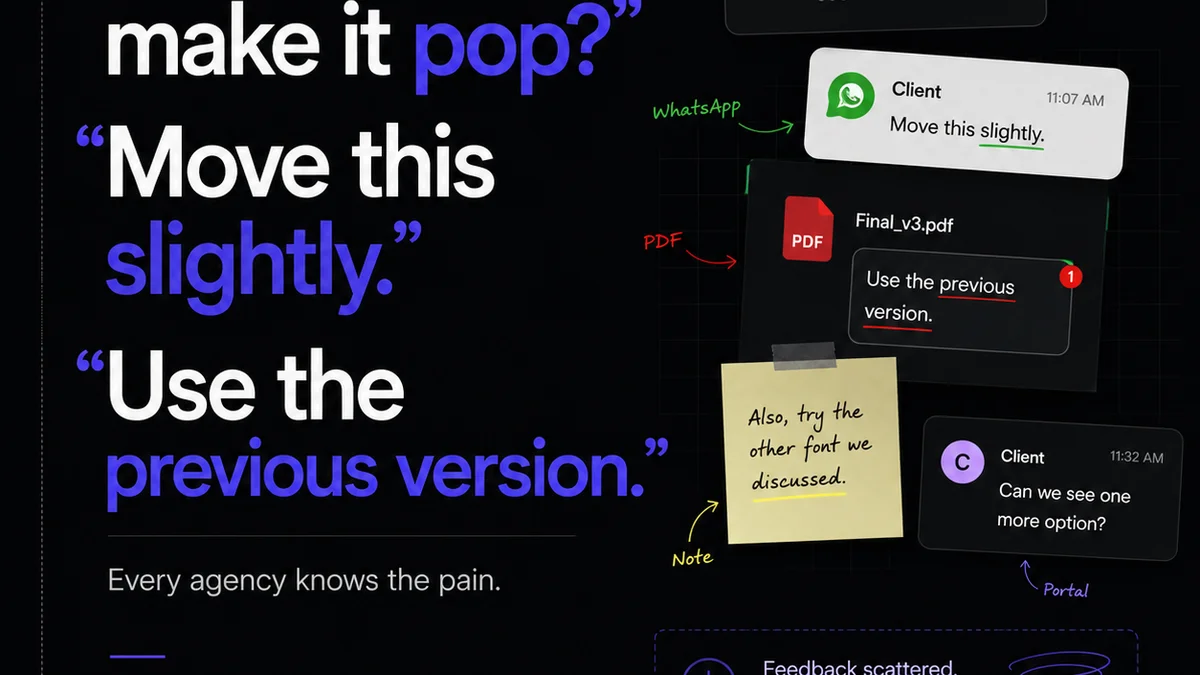
You think you need revision management software because clients leave feedback in a million places. Email, Slack, Google Docs, sticky notes… it’s a mess. You need a central hub.
But the real problem isn’t just *where* feedback lives. It’s *how* it’s given, *who* gives it, and *when*. Unstructured feedback is the real killer.
The Symptoms of Feedback Chaos
- Endless clarification emails: “What did Sarah mean by ‘make it pop’?”
- Conflicting feedback from different stakeholders.
- Missed feedback buried in long email threads.
- Designers guessing what the client *really* wants.
- Approvals granted based on incomplete understanding.
This isn’t a software problem. It’s a process problem. Your revision management tool needs to support a better process, not just collect messy data.
2. Revision Cycles: The Real Cost of Waiting
Every agency owner knows that long revision cycles kill profitability. Each back-and-forth eats up billable hours and pushes out project timelines. You need to speed this up.
But speeding up isn’t just about faster turnaround. It’s about reducing the *number* of cycles needed and ensuring each cycle is productive.
Why Cycles Drag On
- Lack of clear project scope and objectives upfront.
- Unclear decision-makers or approval bottlenecks.
- Feedback delivered too late in the process.
- Iteration on the wrong things because priorities aren’t clear.
- No easy way to track what’s been revised and what’s still outstanding.
Your software should provide clarity on status, ownership, and outstanding actions. It needs to make the *next step* obvious for everyone involved.
3. Approval Gates: The Illusion of Sign-Off
Getting a “final approval” email feels like a win. But how many times has that approval been based on a misunderstanding, or before all stakeholders have weighed in?
True approval isn’t a checkbox. It’s a confirmation that the work meets the brief and the client’s expectations, based on a shared understanding.
The Pitfalls of Weak Approvals
- Verbal or informal approvals that are easily disputed.
- Approvals granted without seeing the latest version.
- Lack of a clear audit trail for who approved what, and when.
- “Conditional approvals” that aren’t clearly defined.
- Approving based on aesthetics when functional requirements are unmet.
The best revision management systems provide a formal, documented approval process. They tie approvals directly to specific versions of the creative asset.
4. The Right Tools for the Job: What to Look For
When evaluating revision management software, don’t just look at the shiny features. Look for what supports your actual workflow. Prioritize these capabilities:
Core Functionality
- Centralized Feedback Hub: A single place for all comments, annotations, and discussions tied to specific creative assets (designs, videos, copy).
- Version Control: Clear tracking of revisions, with the ability to compare versions and revert if necessary.
- Visual Annotation: Tools that allow reviewers to click directly on the creative asset to leave comments. This drastically reduces ambiguity.
- Structured Review Workflows: The ability to set up review stages, assign reviewers, and set deadlines.
- Formal Approval Tracking: A clear mechanism for submitting work for approval and for stakeholders to formally approve or reject.
- Audit Trails: A complete history of feedback, revisions, and approvals for every project.
Integration & Usability
- Seamless Integrations: Connects with your existing tools (e.g., Adobe Creative Cloud, Figma, project management software).
- Intuitive Interface: Easy for both internal teams and clients to use without extensive training.
- Cross-Platform Accessibility: Available on desktop and mobile, ensuring feedback can be given from anywhere.
Think about your team’s daily grind. Which features will actually save them time and reduce frustration?
Where Revue Fits In
Managing creative feedback and revisions isn't just about software; it's about process and clarity. Revue acts as the central nervous system for your creative output.
It’s not just another inbox or task list. Revue provides a dedicated space for client feedback, enabling precise annotation directly on creative assets. This eliminates the guesswork and the
Frequently asked questions
What is the primary benefit of dedicated revision management software?
The primary benefit is centralizing all feedback, revisions, and approvals in one place, reducing miscommunication, speeding up turnaround times, and providing a clear audit trail. This prevents critical feedback from getting lost and ensures everyone is working from the latest version.
How can revision management software improve client communication?
By providing a clear, visual platform for feedback and approvals, it reduces ambiguity and the need for lengthy clarification emails. Clients can see exactly what they are commenting on and track the progress of their revisions, leading to a more transparent and efficient relationship.
Is revision management software only for large agencies?
No, revision management software is beneficial for agencies of all sizes, as well as in-house creative teams. Even small teams can suffer from chaotic feedback loops, and dedicated software helps establish professional processes early on.
What's the difference between version control and revision management?
Version control is a component of revision management that specifically tracks changes to a file over time, allowing you to revert to previous states. Revision management is broader, encompassing the entire process of receiving feedback, managing changes, and obtaining approvals across multiple stakeholders and versions.