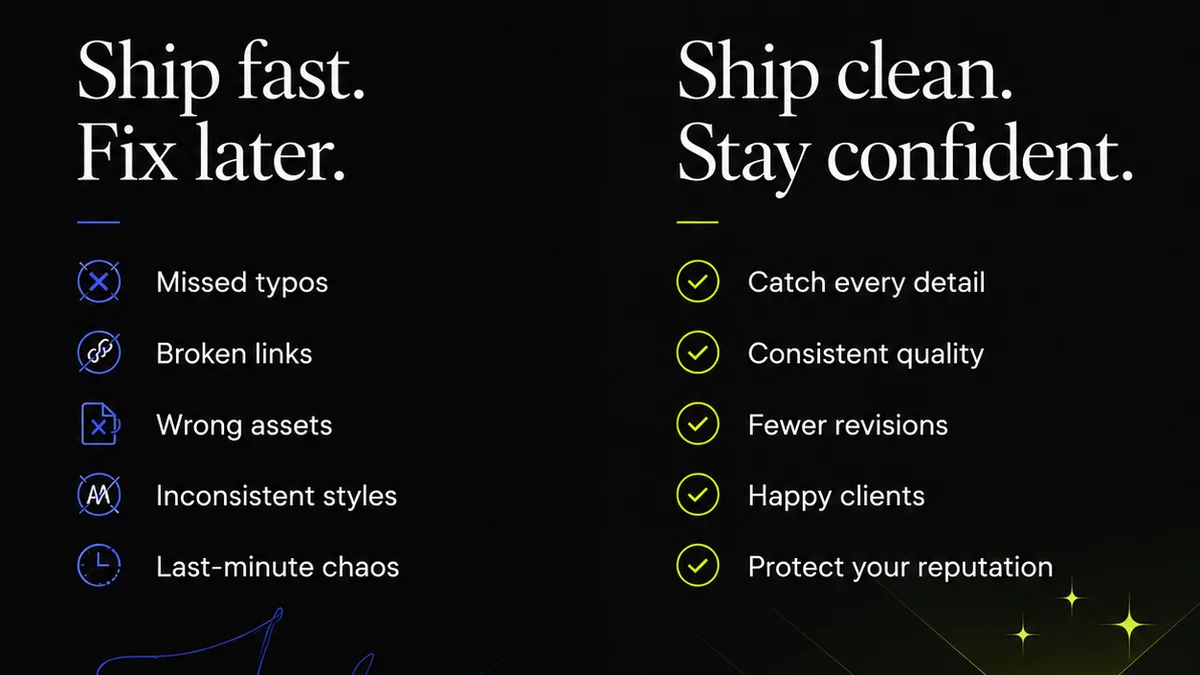
Most agencies think revision rounds software is just about collecting comments. They think it’s a digital whiteboard for clients. Or a fancy way to track versions.
None of that is wrong. But it’s incomplete.
The hard truth? The right revision rounds software doesn’t just manage feedback; it fundamentally reshapes your agency’s relationship with clients and your internal team. It’s the central nervous system for creative delivery.
1. Beyond Comments: The Real Need for Clarity
Clients want to give feedback. And they want it to be easy for them. That’s the assumption. But what they *really* need is to feel heard, understood, and confident that their input is being acted upon correctly.
What agencies *really* need is to eliminate ambiguity. Every comment needs context. Every change needs a clear owner and a defined purpose.
The Problem with Email Chains and Shared Drives
We’ve all been there. A client sends a massive email thread with subjective notes:
- “Make it pop more.”
- “I don’t love that shade of blue.”
- “Can we try something a bit more… exciting?”
Then there’s the version control nightmare. Is V5 the latest? Or V5.1? Or V5_Final_Really_This_Time?
This chaos leads to wasted hours, scope creep, and frustrated teams. It’s a direct hit to profitability.
What to Look For: Context is King
Your revision rounds software must provide granular context. This means:
- Visual Annotation: The ability to click directly on an image, video, or PDF and leave a comment precisely where it matters.
- Clear Versions: A robust system for tracking every iteration, showing what changed, when, and by whom.
- Consolidated Feedback: All comments, from all stakeholders, in one single, organized place.
- Stakeholder Roles: Differentiating between client feedback, internal reviews, and final approvals.
This isn’t about making clients happier; it’s about making their feedback actionable and verifiable.
2. Streamlining Approvals: The Bottleneck Buster
Many agencies treat approvals as a final step. A formality. This is a critical error.
The real goal of approval tracking isn't just to get a signature. It's to create an indisputable record of what was signed off, preventing disputes down the line.
The Cost of Ambiguous Approvals
What happens when a client claims they never approved a certain direction? Or that a change was made without their knowledge?
Without clear, auditable approval trails, you’re left arguing. This eats up management time and can damage client relationships.
It also means you might be doing work that was never truly agreed upon, leading to unpaid revisions and lost profit.
What to Look For: Audit Trails and Statuses
Effective revision rounds software must offer:
- Formal Approval Workflows: A clear process for marking assets as
Frequently asked questions
What is the main benefit of using revision rounds software?
The main benefit is streamlining the feedback and approval process. It centralizes comments, provides context, tracks versions, and creates an auditable trail, saving time and preventing disputes.
How does revision rounds software help with client communication?
It provides a single, clear platform for clients to give feedback visually and for agencies to respond. This reduces miscommunication often found in email chains and ensures everyone is working from the most current information.
Can revision rounds software prevent scope creep?
Yes, by clearly defining review and approval stages, tracking all feedback, and providing an auditable record of what was signed off, it helps establish clear boundaries and makes it easier to identify and manage out-of-scope requests.
What are the key features to look for in revision rounds software?
Key features include visual annotation, robust version control, consolidated feedback dashboards, clear approval workflows with audit trails, and integration capabilities with other project management tools.