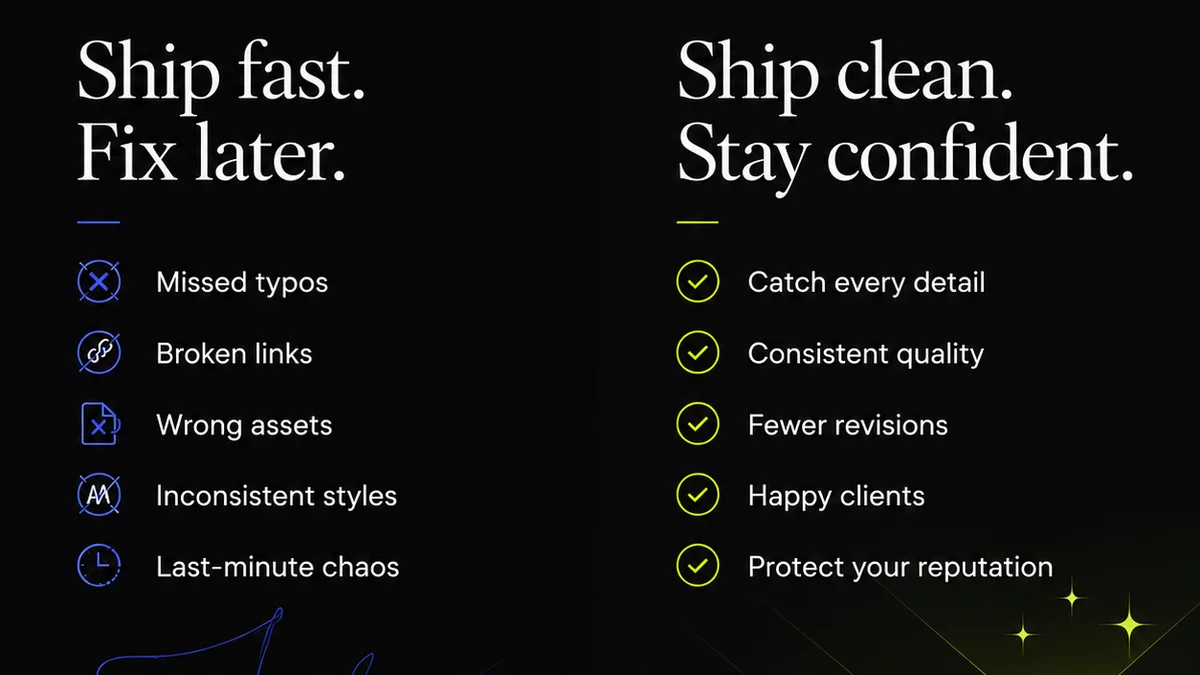
Everyone agrees that tracking revisions is important. You probably think it’s about keeping a clear history, right? So you can point fingers when things go sideways, or just have a tidy record for the archives. None of that is wrong. But it’s incomplete.
The hard truth is that revision tracking isn’t just about history. It’s about current, real-time operational efficiency. It’s the engine that drives your creative projects from start to finish without sputtering out.
1. Define Your Revision Process Before You Start
You wouldn’t build a house without a blueprint. You shouldn’t manage creative revisions without a defined process. This isn’t just for onboarding new hires; it's for keeping everyone on the same page, every single project.
What does a defined process look like? It covers:
- Who is authorized to give feedback?
- What constitutes a formal revision request?
- What are the turnaround times for feedback and revisions?
- How are approvals documented?
- What happens if feedback is contradictory or unclear?
This clarity prevents scope creep and endless back-and-forth. It sets expectations from day one.
The Kickoff Meeting is Crucial
Use your project kickoff meeting to walk through the revision process. Don’t assume clients know agency best practices. Explain how feedback should be submitted, who will review it, and what the next steps are. This proactive approach saves countless hours later.
2. Centralize All Feedback and Communication
Scattered feedback is the enemy of efficient revision tracking. Emails, Slack messages, random notes scribbled on a napkin – these are all black holes for critical project details.
When feedback lives in multiple places, you lose context. You spend time hunting for that one comment buried in an email chain from three weeks ago. This is a massive drain on productivity.
One Source of Truth is Non-Negotiable
Your goal should be a single, centralized system for all client feedback and design revisions. This system should:
- Allow stakeholders to leave comments directly on the creative asset.
- Timestamp all feedback and mark who provided it.
- Maintain a clear history of all changes made.
- Facilitate easy comparison between different revision stages.
This eliminates ambiguity and ensures everyone is working from the latest version. It’s foundational for effective revision tracking.
3. Implement Clear Version Control
Mistakes happen. But with proper version control, they don’t have to derail your project. You need a system that makes it obvious which version is the latest, and allows you to roll back if necessary.
Think of it like saving your work in a word processor. You have `document_v1.doc`, `document_v2_final.doc`, `document_v2_final_really.doc`. It’s chaos. Creative projects demand a more robust approach.
Automate Where Possible
Good tools automatically manage versions as new revisions are uploaded or comments are resolved. This means:
- No more confusing file names.
- Clear visibility into the progression of the design.
- The ability to revert to previous versions if a new direction proves unworkable.
This structured approach to file management is a core component of effective revision tracking.
4. Standardize Approval Gates
Not all feedback is created equal. Some comments are minor tweaks, while others represent a significant shift in direction. You need clear gates for formal approval.
Without defined approval stages, projects can linger in a perpetual state of “almost done.” This is often due to unclear expectations about what constitutes final sign-off.
Define What
Frequently asked questions
What is the primary benefit of effective revision tracking?
The primary benefit is streamlined operations. It reduces ambiguity, minimizes back-and-forth, and speeds up project delivery by ensuring everyone is aligned on feedback and approvals.
How does version control relate to revision tracking?
Version control is a critical component of revision tracking. It ensures that all stakeholders are working with the correct, most up-to-date version of a creative asset, preventing confusion and errors.
Can revision tracking help prevent scope creep?
Yes. By clearly defining the feedback and revision process, and documenting all changes and approvals, you create a clear record that helps identify and manage requests that fall outside the original project scope.
What is the role of client communication in revision tracking?
Clear communication is essential. Educating clients on the revision process from the outset, explaining how to provide feedback, and setting expectations for turnaround times are key to successful revision tracking.