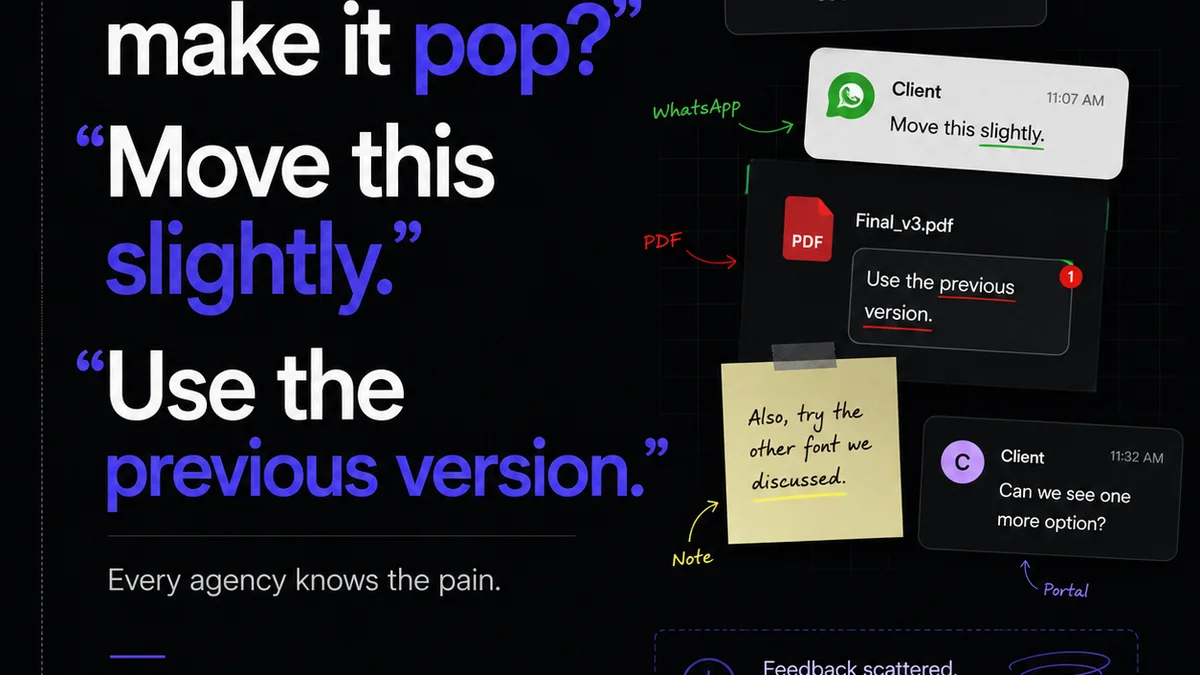
Everyone thinks they know what revision tracking is. It’s that spreadsheet, right? Or maybe a shared document with a bunch of notes. It’s about keeping a list of changes that need to be made.
None of that is wrong. But it’s incomplete.
The hard truth is that basic revision tracking is just a symptom of a larger problem: a lack of process and visibility in the creative review cycle. This isn’t just about logging changes; it’s about managing the entire feedback and approval workflow to ensure quality, hit deadlines, and keep clients happy.
1. The Illusion of Control: Spreadsheets and Email Chains
Most teams start with simple tools. Spreadsheets are the go-to for logging feedback. Emails are where the conversations happen. Maybe a project management tool is involved, but often it’s just another place to dump tasks without context.
This approach feels organized at first. You have a list. You have a record. But what happens when:
- Feedback is vague or contradictory?
- Multiple stakeholders provide conflicting notes?
- The original brief gets lost in translation?
- You can’t easily see which version is the latest approved one?
- A critical detail slips through the cracks because it was buried in an email thread?
This isn't revision tracking; it's reactive damage control. It creates a false sense of control while the actual workflow remains chaotic and prone to errors. You’re tracking *what* changed, but not *why*, or *who* approved it, or *how* it impacts the project timeline.
2. The Real Cost of Poor Revision Management
Think about the last time a project went sideways. Chances are, it involved messy revisions. This isn't just about wasted time; it's about tangible business costs.
Consider:
- Scope Creep: Uncontrolled feedback loops lead to endless small changes that weren't in the original scope.
- Missed Deadlines: Back-and-forth revisions eat into critical launch or delivery dates.
- Client Dissatisfaction: When clients feel their feedback isn't being heard or managed effectively, their trust erodes.
- Team Burnout: Constantly chasing down feedback, clarifying notes, and redoing work is exhausting and demoralizing for your creative team.
- Reduced Profitability: Every hour spent on rework that could have been avoided is money lost.
These aren't minor inconveniences. They are systemic issues that directly impact your agency’s bottom line and your team’s well-being.
3. Building a Robust Revision Workflow
Effective revision tracking is part of a larger, more strategic workflow. It’s about embedding clarity and accountability at every stage. This requires moving beyond simple lists and embracing a more integrated approach.
3.1. Centralize All Feedback
Feedback should live in one place, tied directly to the creative asset. This means moving away from scattered email threads and chat messages. Every comment, every annotation, every approval needs to be logged contextually.
3.2. Define Clear Review Stages
Establish distinct phases for feedback and approval. Who needs to review at each stage? What is the expected turnaround time? What are the criteria for moving to the next stage?
This prevents ad-hoc feedback from derailing progress. It sets expectations for stakeholders and your team.
3.3. Empower Stakeholders with Context
Provide reviewers with all the necessary information: the brief, previous feedback, current goals, and the specific version being reviewed. When stakeholders understand the context, their feedback is more focused and actionable.
3.4. Standardize Annotation and Commenting
Encourage specific, actionable feedback. Instead of “I don’t like this,” aim for “This headline doesn’t clearly communicate the value proposition; can we try X?” Tools that allow for direct annotation on the creative asset are invaluable here.
3.5. Implement Version Control
This is non-negotiable. Every iteration needs a clear version number and status. It should be immediately obvious which version is the latest, which is approved, and which is currently under review. No more “final_final_v3.docx.”
3.6. Formalize Approvals
Don’t rely on a verbal “looks good” or a casual email reply. Implement a clear approval mechanism. This should be a deliberate action, logged with a timestamp and the approver’s name. This protects both the agency and the client.
4. Where Revue Fits In
Managing this entire revision process demands a system built for creative workflows. Trying to cobble it together with generic tools leads to the chaos we’ve already discussed.
Revue provides a centralized hub for client feedback and creative approvals. It’s designed to eliminate ambiguity and streamline the entire revision cycle.
With Revue, you can:
- Centralize Feedback: All comments and annotations are captured directly on the creative asset, eliminating scattered communication.
- Manage Revisions Visibly: Track every iteration, see what’s been changed, and understand the history of feedback. No more digging through emails.
- Streamline Approvals: Implement clear, documented approval steps, ensuring accountability and reducing the risk of missed details.
- Enhance Quality Checks: By having a clear, documented history of feedback and approvals, you can more easily ensure that all requirements have been met before final delivery.
It’s about bringing order to the creative chaos, ensuring that feedback serves the project, not hinders it.
5. Final Thought
Revision tracking isn't just about managing changes; it's about managing communication, expectations, and quality. It’s the engine that drives successful creative projects to completion.
Are you simply logging revisions, or are you actively managing your creative workflow for efficiency and client satisfaction?
Frequently asked questions
What's the difference between revision tracking and a simple to-do list?
A to-do list typically tracks tasks. Revision tracking, in a creative context, tracks changes to specific assets, including who requested them, why, the feedback context, and the approval status, all linked to the asset itself.
Can I use my existing project management tool for revision tracking?
You can try, but generic PM tools often lack the specific features needed for visual feedback, annotation, and version control tied directly to creative assets. This often leads to workarounds that are inefficient and prone to errors.
How does better revision tracking improve client satisfaction?
By providing a clear, centralized, and documented process for feedback and approvals, clients feel heard and confident that their input is managed effectively. This transparency reduces misunderstandings and builds trust.
What are the signs of poor revision tracking in a creative agency?
Common signs include endless email chains for feedback, conflicting client requests, missed deadlines due to rework, scope creep, team frustration over unclear instructions, and difficulty pinpointing the latest approved version.