You're looking at project management software. Maybe you've heard of ClickUp. Maybe you've heard of Revue. You're comparing them feature-for-feature, trying to find the best tool for your agency.
None of that is wrong. But it’s incomplete.
The real difference isn't just what a tool *can do*. It's about what it *should do* for your specific creative operations.
The Hard Truth: Functionality vs. Workflow Fit
ClickUp is a behemoth. It's designed to be an all-in-one platform for almost any kind of work. It excels at task management, CRM, docs, and yes, project management.
Revue, on the other hand, is built for a very specific purpose: streamlining client feedback and approval processes for creative work.
Comparing them feature-for-feature is like comparing a Swiss Army knife to a surgical scalpel. Both are tools, but their intended use cases are vastly different.
The danger of focusing only on features is that you end up with a tool that does *a lot* but doesn't do the *critical things* your agency needs, efficiently.
Understanding ClickUp's Scope
ClickUp aims to be the single source of truth for your entire business. This can be powerful, but also overwhelming.
The All-in-One Appeal
The promise of ClickUp is to consolidate everything: tasks, bugs, goals, documents, conversations. No more switching between apps. This sounds like a dream for efficiency.
But for creative agencies, this can become a double-edged sword.
Potential Pitfalls for Creatives
When a tool tries to do everything, it often doesn't do the niche, critical functions perfectly. For creative teams, this can manifest in:
- Overly complex task structures that don't map to creative deliverables.
- Difficulty in visualizing visual feedback directly on assets.
- A steep learning curve for a tool that's more general than specialized.
- Information silos within the larger platform, despite its 'all-in-one' promise.
- Generic reporting that doesn't capture creative project nuances.
ClickUp's strength is its breadth. Its weakness, for a specific creative workflow, can be its lack of depth in areas that matter most to designers, copywriters, and art directors.
Understanding Revue's Focus
Revue is built from the ground up for creative feedback loops. It understands that creative projects aren't just tasks; they're iterative processes involving subjective input and visual review.
The Core Problem Revue Solves
Creative agencies and in-house teams struggle with:
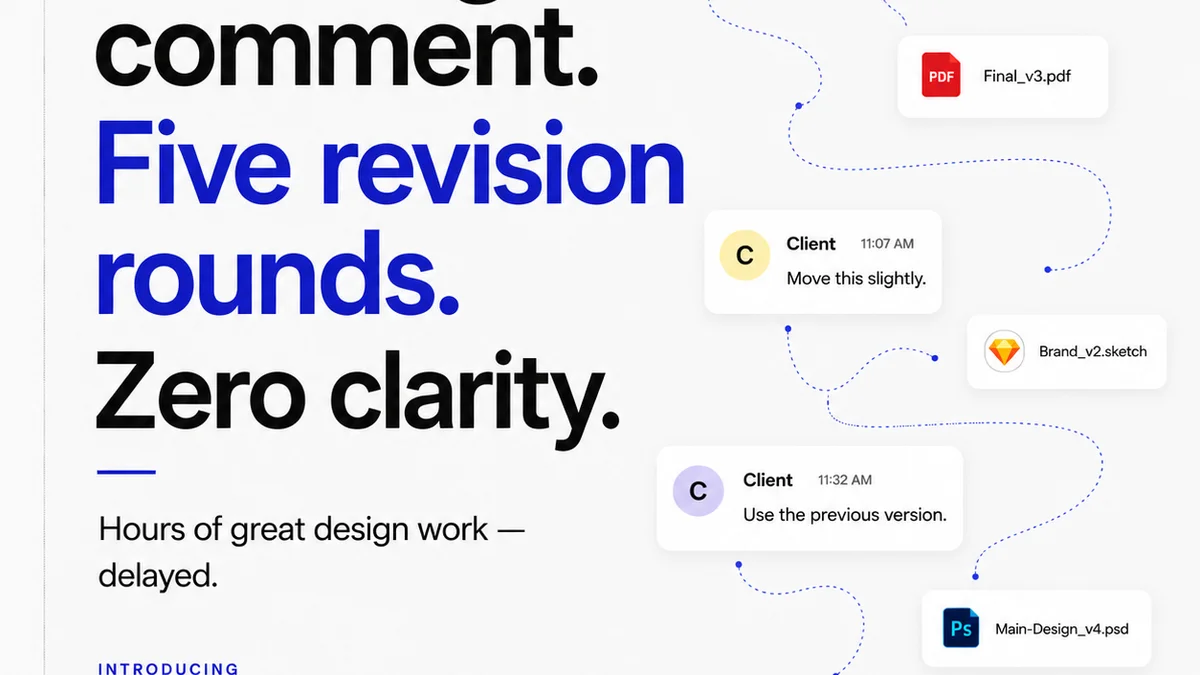
- Unclear, scattered client feedback across emails, Slack, and video calls.
- Endless revision cycles due to miscommunication.
- Lack of a clear audit trail for approvals and feedback.
- Difficulty in ensuring quality and consistency before final delivery.
Revue targets these pain points directly.
Key Differentiators for Creative Workflows
- Centralized Feedback Hub: All client comments and stakeholder input live in one place, tied directly to the creative asset.
- Visual Annotation: Pinpoint feedback directly on images, videos, and PDFs. No more
Frequently asked questions
Is ClickUp bad for creative agencies?
ClickUp isn't inherently 'bad.' It's a powerful, versatile tool. However, its generalist approach might not be the most efficient or intuitive solution for the specific, visual feedback-driven workflows common in creative agencies compared to specialized tools.
What is Revue best suited for?
Revue is best suited for creative teams and agencies that need a streamlined way to manage client feedback, track revisions, and obtain approvals on visual assets like designs, videos, and websites.
Can Revue handle task management?
Revue's primary focus is on feedback and approvals. While it facilitates workflow management within that context, it's not designed to be a comprehensive task management system like ClickUp, which offers broader project planning and task delegation features.
How does Revue improve client communication?
Revue centralizes all client feedback on specific creative assets, provides clear visual annotation tools, and establishes an unambiguous approval process, reducing miscommunication and endless revision cycles often caused by scattered feedback.